Winter Photography in Glacier National Park: Snow, Ice & Frozen Lakes
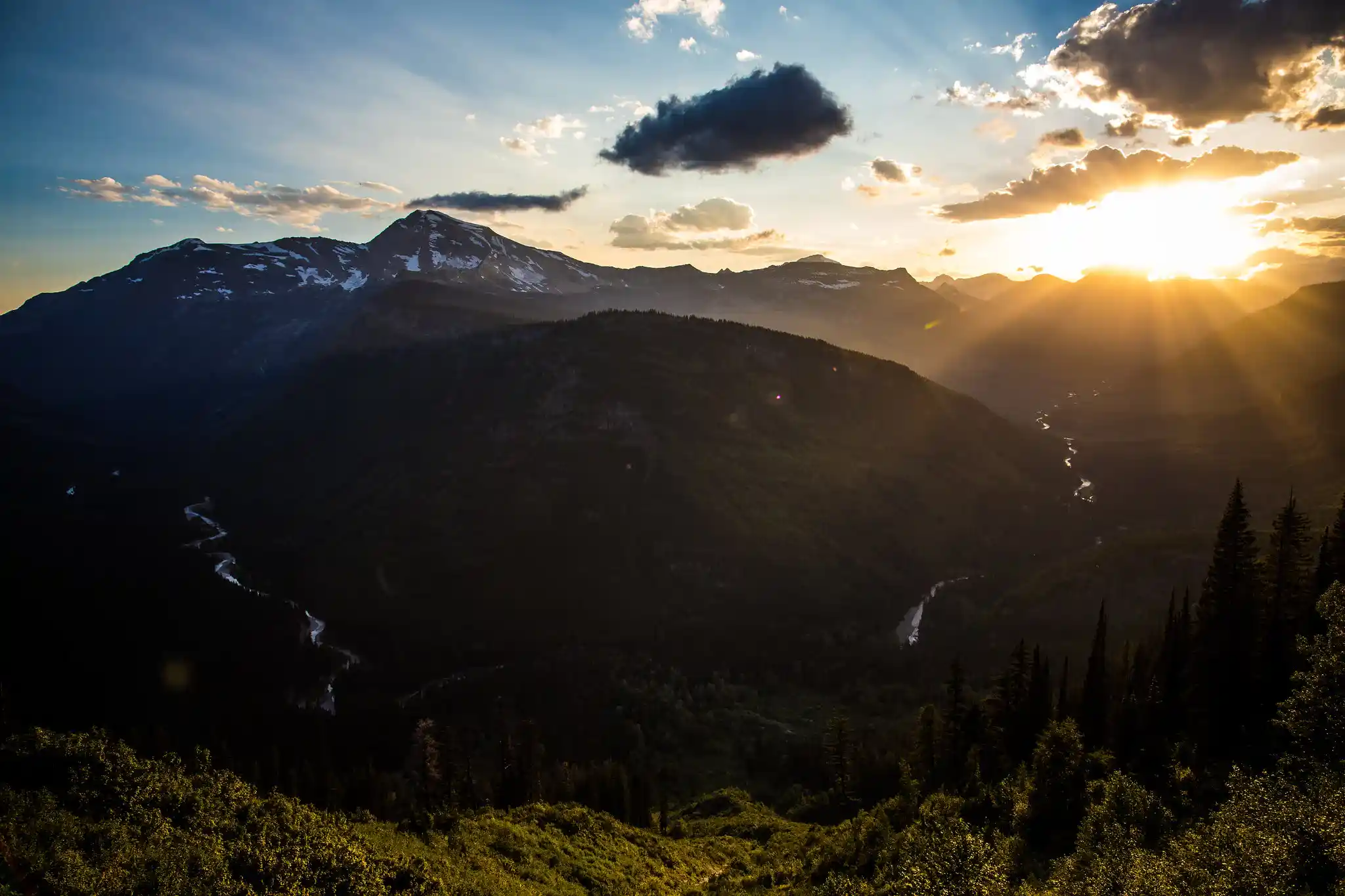
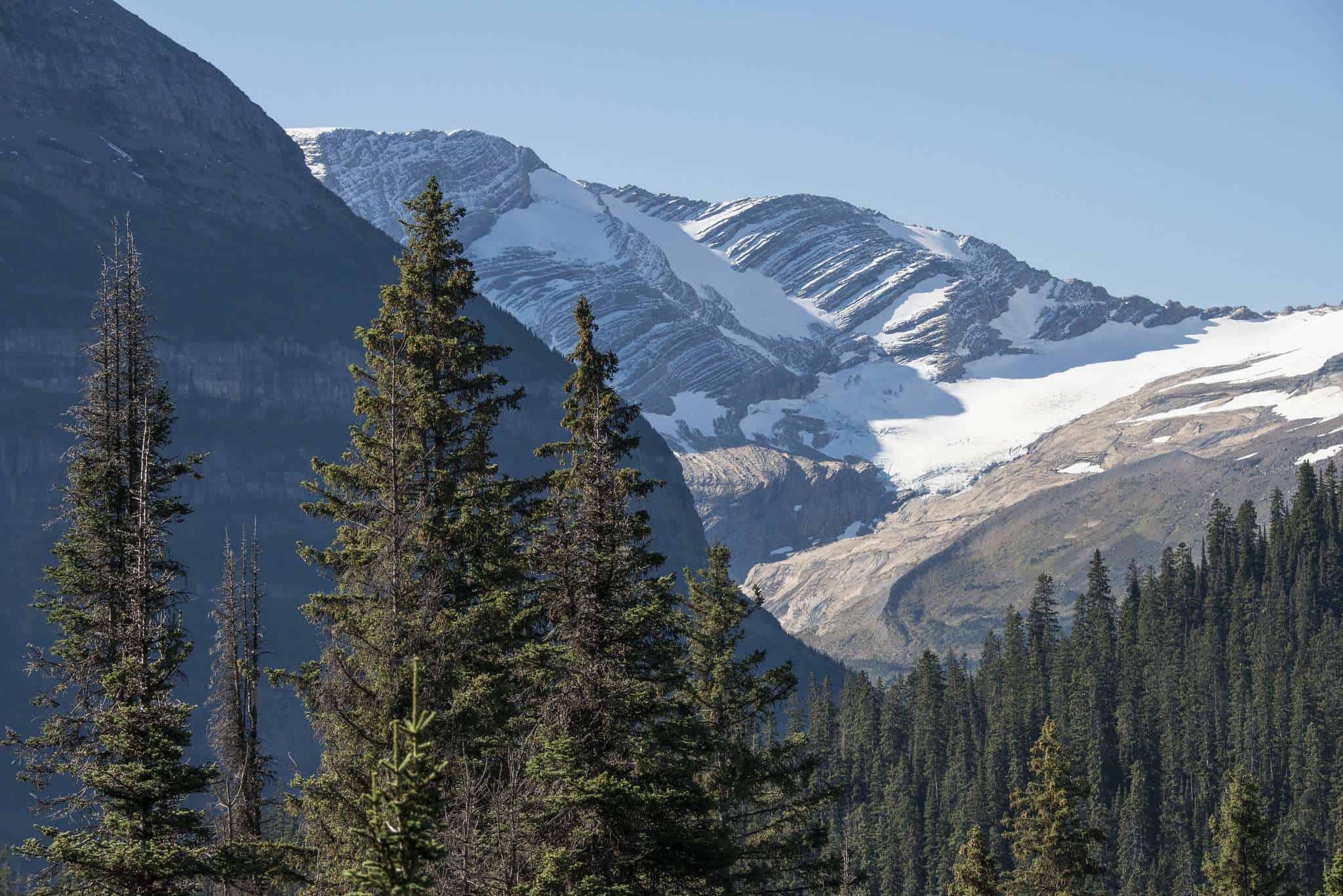
Winter transforms Glacier National Park into one of the most photogenic landscapes in North America — frozen lake edges at Apgar, alpenglow on snow-buried peaks, and some of the darkest skies in the lower 48 for chasing the northern lights. The Going-to-the-Sun Road closes to vehicles beyond Lake McDonald Lodge from November through late spring, but the west-side corridor, Bowman Lake, and St. Mary entrance remain accessible for photographers willing to embrace the cold.
Winter entrance fees drop to $25 per vehicle (November 1–April 30), no vehicle reservations are required, and crowds are negligible. What you get instead: long golden hours (sunrise as late as 8:29 AM in December), frozen ice formations along Lake McDonald’s shallows, and a real shot at photographing the aurora reflected in still lake water.
- Winter vehicle fee: $25 (Nov 1–Apr 30) — no reservation needed
- West entrance to Lake McDonald Lodge (10 miles) stays plowed and open year-round
- Lake McDonald last froze almost completely in 2007 — shallow south end near Apgar freezes more reliably
- Aurora photography peak: October–March, after 10 PM; Apgar Village offers road access + dark skies
- Bowman Lake (ski-in only): best dark-sky aurora location, ~5-mile ski from Polebridge
- Carry 2–3 extra batteries — cold drains them rapidly below 20°F
- 37 avalanche paths cross GTSR — never enter the closed road zone during or after storms
Best Time to Visit for Winter Photography
December through February offers the longest dark periods for aurora, the most reliable ice conditions on Lake McDonald’s south end, and the greatest chance of fresh snowfall on peak faces. Daylight is short — sunrise comes as late as 8:29 AM and sunset as early as 4:40 PM in mid-December — but that compression means the entire morning shoot happens in warm golden-hour light per timeanddate.com.
November is transition month: unpredictable snow, some roads still closing, but crowds vanish after Labor Day. March lengthens to 12 hours of daylight and temperatures moderate slightly while snowpack remains. April brings the plowing season — avoid GTSR’s avalanche zones until the NPS officially reopens sections.
| Month | Sunrise (approx.) | Sunset (approx.) | Best For |
|---|---|---|---|
| November | 7:00–7:40 AM | 4:50–4:55 PM | Fresh snow, early aurora season |
| December | 8:00–8:29 AM | 4:40–4:55 PM | Longest nights, aurora peak, Lake McDonald ice |
| January | 8:00–8:15 AM | 4:55–5:20 PM | Deep freeze conditions, ice formations |
| February | 7:00–7:30 AM | 5:30–6:00 PM | Bowman Lake ski-in, reliable snow cover |
| March | 6:15–7:16 AM | 6:03–7:20 PM | Wildlife emerging, balanced daylight |
Best Photography Spots (Winter-Accessible)
The Going-to-the-Sun Road is closed to vehicles beyond Lake McDonald Lodge from approximately November through late June. That restriction concentrates winter photographers into a handful of reliable corridors — each with distinct subjects and access requirements per NPS.gov.
Some links below are affiliate links.
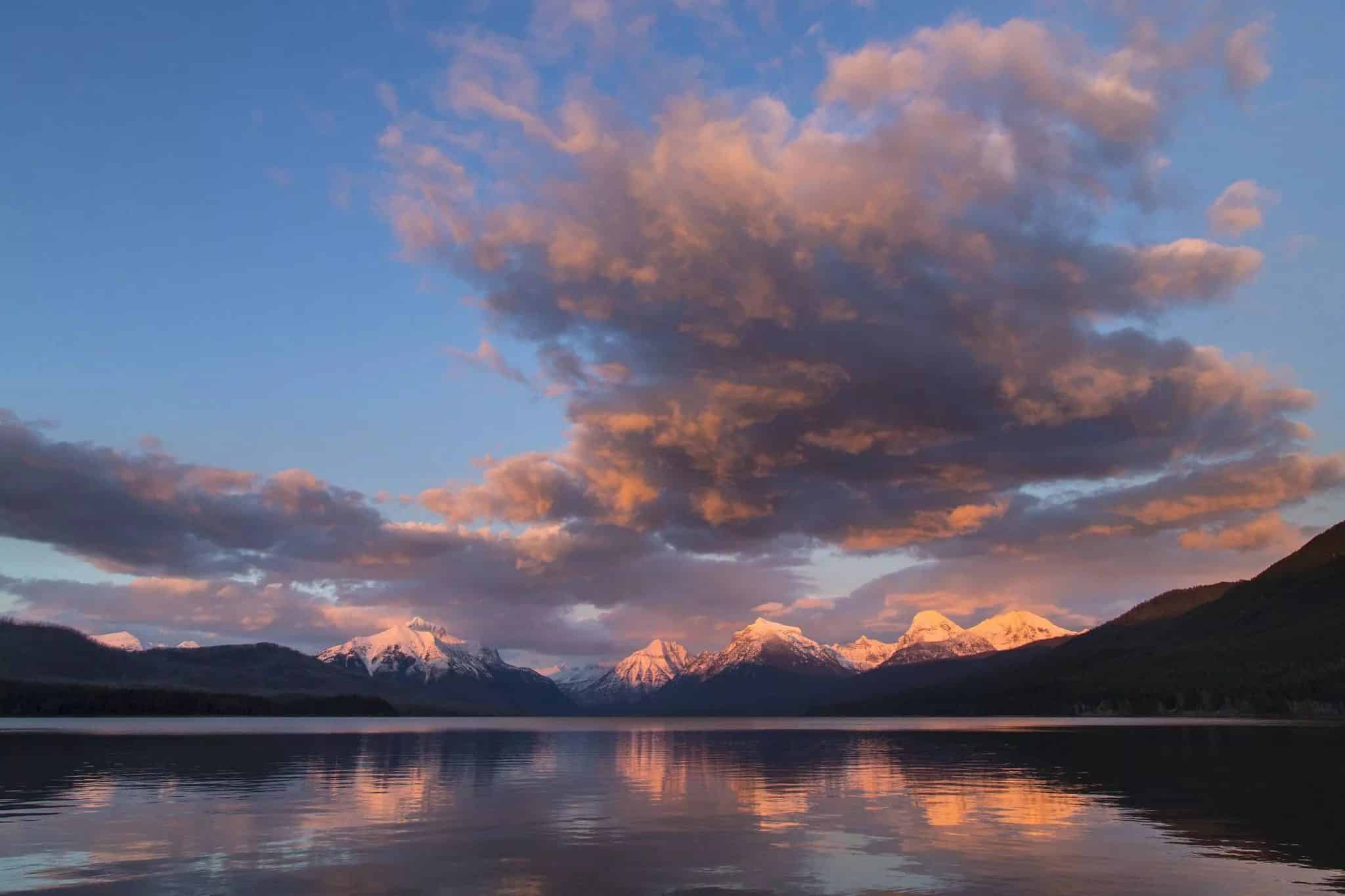

Lake McDonald & Apgar Village (Vehicle Access)
The 10-mile stretch from the West Entrance to Lake McDonald Lodge is plowed and open year-round. Apgar Village sits at the lake’s south end with unobstructed north-facing views across the water toward Stanton, Vaught, and Cannon peaks. Alpenglow hits these summits 15–20 minutes before official sunrise — position yourself on the Apgar boat dock for the reflection shot.
The Apgar Visitor Center is open weekends in winter for updated trail conditions. Note: all in-park lodging (Village Inn at Apgar, Lake McDonald Lodge, Many Glacier Hotel) is closed from October through late May. Base in Whitefish (25–30 miles west) or Kalispell (20 miles from West Entrance) instead.
Bowman Lake, North Fork Corridor (Ski-In Required)
Bowman Lake offers the most dramatic winter photography in the park — but it requires a 5-mile ski from the Polebridge Entrance. The North Fork Road closes to vehicles from mid-October through mid-May. At 4,026 feet elevation, the lake freezes more reliably than Lake McDonald, and the surrounding peaks create a classic foreground-to-background composition. Zero cell service; download offline maps via Gaia GPS before entering.
A February 2024 documented trip found the lake “fully frozen with snow-covered mountains and light fog over the skyline” per Glacier Guides. Plan for a backcountry overnight permit if you want dawn-to-dusk coverage of this dark-sky corridor.
St. Mary Entrance (East Side, Vehicle Access)
The St. Mary entrance is accessible year-round, with the road extending roughly 1 mile past the entrance station in winter. At 4,484 feet elevation on the drier east side of the Continental Divide, temperatures are colder and snowpack more consistent. The Two Dog Flats adjacent to the entrance host large elk herds throughout winter — the top vehicle-accessible wildlife photography location in the park during winter months.

Frozen Lake Photography
Lake McDonald almost never freezes completely. At 10 miles long, 1–1.5 miles wide, and 460 feet at maximum depth, the lake holds enough thermal mass to resist full surface freezing — water reaches maximum density at 39°F before ice can form on top. The last near-complete freeze on record was 2007, per NPS.gov.
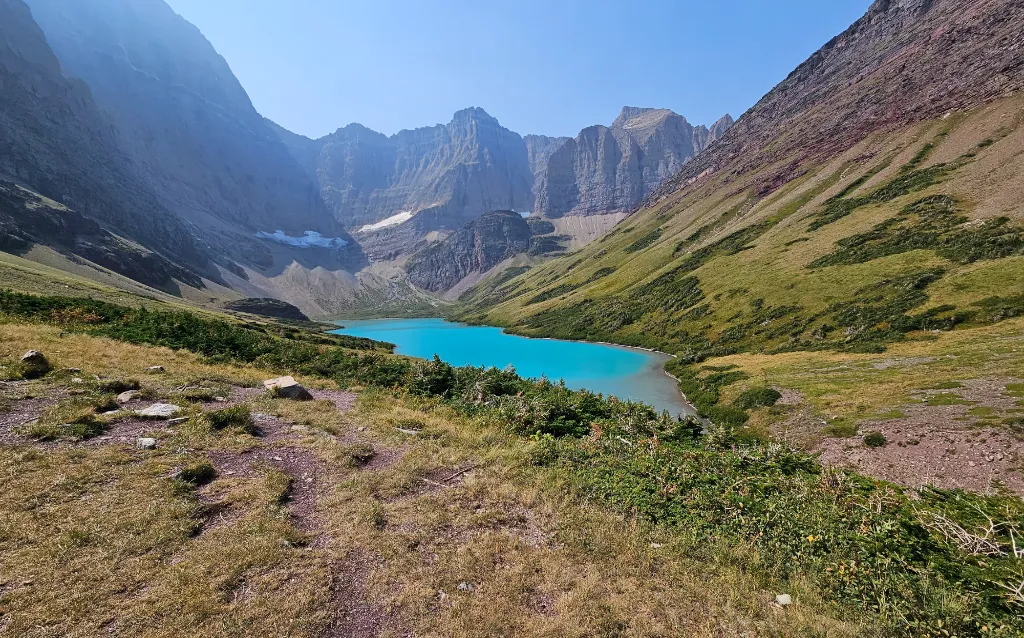
What reliably freezes is the shallow south end near Apgar Village, especially after extended sub-zero cold snaps. At -10°F to -20°F over several consecutive nights, large sheets of ice form along the shoreline. Look for pressure ridges, frost feathers on emergent rocks, and ice bubbles trapped in clear shelf ice — close-up detail shots in early morning before foot traffic disturbs the surface.
Bowman Lake at higher elevation freezes more reliably and is suitable for foreground ice photography after the ski-in. St. Mary Lake on the colder east side also freezes more completely than Lake McDonald — accessible from the entrance area. For long-exposure ice reflection shots, the sweet spot is the 30-minute window around civil twilight when the sky is lit but the sun has not yet cleared the horizon.
Northern Lights Photography
Glacier National Park sits at 48.7°N latitude — far enough north that the aurora is a genuine seasonal subject from October through March. The 2025–2026 solar cycle is near maximum, making conditions unusually favorable per NOAA Space Weather Prediction Center.
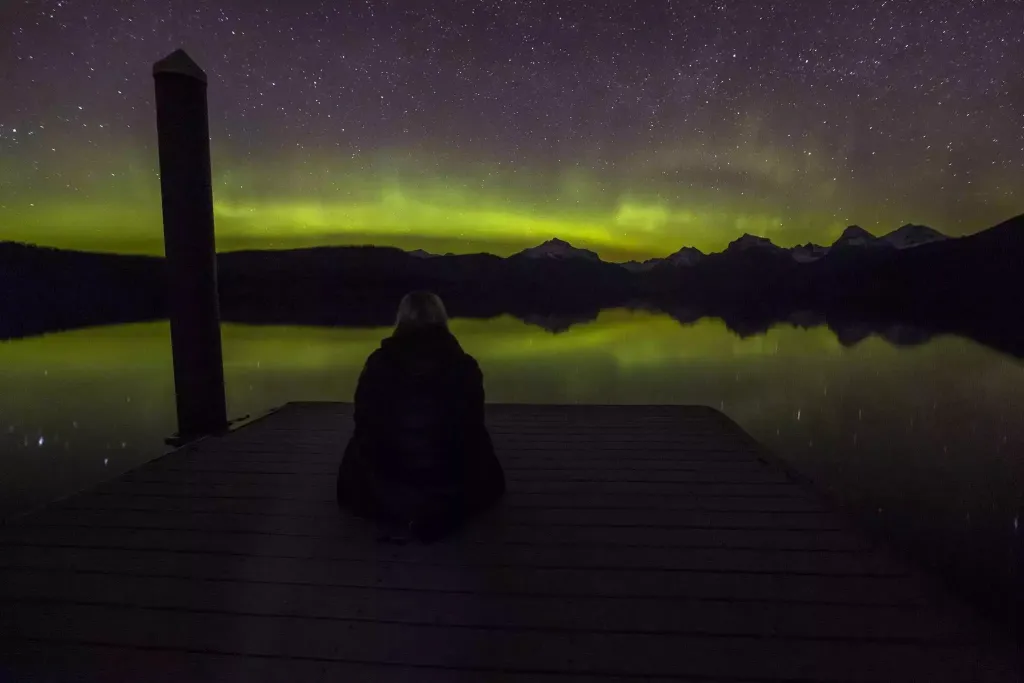
At this latitude, a Kp index of 4–5 can produce faint aurora visible to the naked eye; Kp 7 or higher delivers vivid color. Monitor the NOAA 30-minute aurora forecast for real-time Kp alerts, or use the Space Weather or My Aurora Forecast apps. Peak viewing: after 10 PM, strongest around midnight through 6 AM.
| Location | Winter Access | Why It’s Good |
|---|---|---|
| Apgar Village / Lake McDonald south shore | Vehicle (year-round) | Open northern sky, aurora reflects in lake water on calm nights |
| Bowman Lake (North Fork) | 5-mile ski-in from Polebridge | Darkest sky in region, zero artificial light, mountain backdrop |
| Kintla Lake (North Fork) | Longer ski-in beyond Bowman | Most remote, total darkness, zero cell reception |
| Looking Glass Road / Hwy 49 | Vehicle (Blackfeet Recreation Permit required) | Open sightlines, east-side access, multiple pullouts |
Winter Wildlife Photography
Winter concentrates wildlife in lower-elevation corridors — bears and most ground squirrels hibernate, but elk, bighorn sheep, moose, and wolves remain active subjects. Early morning and late afternoon (within 30 minutes of sunrise and sunset) are the highest-probability windows per Summit Mountain Lodge.
| Species | Best Location | Winter Access | Notes |
|---|---|---|---|
| Elk | Two Dog Flats / St. Mary entrance | Vehicle | Large herds visible from road at dawn |
| Bighorn sheep | Many Glacier road, St. Mary, Two Medicine | Vehicle or ski-in | Active year-round near rocky terrain |
| Moose | Two Medicine, Bullhead Lake area | Ski-in | Best moose habitat in the park |
| Wolves (gray) | North Fork corridor | Ski-in beyond road closure | Very elusive; early morning only; 100-yard minimum |
| Great horned owl | East Glacier Village, Reservoir Road | Vehicle | Active at dusk and dawn |
Legal minimum distance is 100 yards from bears and wolves, 25 yards from all other wildlife per NPS.gov. A 400–600mm telephoto is ideal for wolves and elk at safe distance. Most grizzlies hibernate by November, but carry bear spray on all east-side trails — some individuals remain active through early December and re-emerge in late March. See our full Glacier photography guides for summer wildlife locations.
Camera Settings for Snow and Ice
Snow photography has one universal trap: your camera’s metering system will underexpose it, rendering white snow as middle gray. Apply +1.0 to +2.5 EV exposure compensation on every snow-dominant shot. Check the histogram — expose until snow pushes close to the right edge without blowing highlights per Digital Photography School.
| Condition | Exposure Comp | ISO | White Balance | Aperture |
|---|---|---|---|---|
| Sunny, all-snow scene | +1.5 to +2.0 EV | 100–200 | Daylight (5500K) | f/11–f/16 |
| Overcast, flat light | +0.7 to +1.5 EV | 200–400 | Cloudy (6500K) | f/8–f/11 |
| Golden hour / alpenglow | +0.3 to +1.0 EV | 400–800 | Shade (7000K) | f/8–f/11 |
| Falling snowflakes (freeze) | Meter carefully | 400–800 | Cloudy | f/5.6; 1/1000s+ |
| Aurora / night | Manual only | 1600–6400 | Auto or 3800K | f/2.8 (widest) |
For frozen lake reflections at dawn, shoot at 1–10 seconds on a tripod to capture the still water before wind picks up after sunrise. A circular polarizing filter reduces ice glare and deepens sky contrast on sunny days — rotate slowly until reflections pop. Shooting RAW is essential for winter scenes: white balance and highlight recovery are substantially easier in post than with JPEG.
Cold-Weather Camera Gear
West Glacier temperatures range from typical lows of 10–25°F in December–February to extreme cold snaps reaching -36°F (the park’s record low, set December 2, 1958 per NPS.gov). The east side runs consistently colder with wind chills routinely reaching -20°F to -40°F. Camera batteries lose charge exponentially faster below 20°F — plan accordingly.

Access, Fees & Road Conditions
Winter entrance fees are lower than summer: $25 per private vehicle (November 1–April 30) versus $35 in summer per NPS.gov. No timed-entry vehicle reservation is required in winter. The America the Beautiful Annual Pass ($80 for US residents) covers all national parks and pays for itself in three winter visits.
| Pass Type | Winter Fee | Summer Fee |
|---|---|---|
| Private vehicle (7-day) | $25 | $35 |
| Motorcycle (7-day) | $20 | $30 |
| Per person / bicycle (7-day) | $15 | $20 |
| America the Beautiful Annual | $80 (US residents) | $80 |
| Senior Annual Pass | $20 | $20 |
Road access summary: West Entrance to Lake McDonald Lodge (10 miles) is plowed and open weather-permitting all winter. Camas Road, Many Glacier Road, Two Medicine Road, and the North Fork Road are all closed to vehicles — ski and snowshoe access only. Always verify current conditions at nps.gov road conditions page before every visit.
FAQ: Winter Photography at Glacier National Park
Does Lake McDonald freeze in winter?
Can you see the northern lights at Glacier National Park?
Is Going-to-the-Sun Road open for photography in winter?
What wildlife can I photograph at Glacier in winter?
What is the entrance fee for Glacier National Park in winter?
How We Researched This Guide
- NPS.gov Glacier National Park — Visiting in Winter, Fees & Passes, Safety, Lake McDonald Ice Conditions, Road Conditions
- NOAA Space Weather Prediction Center (swpc.noaa.gov) — Aurora Kp forecasts and 30-minute alerts
- Montana Avalanche Center (mtavalanchecenter.org) — GTSR avalanche path data (37 paths documented)
- Glacier Guides — documented February 2024 Bowman Lake winter ski-in trip report
- Glacier Park Collection — northern lights viewing locations guide for the Crown of the Continent
- Summit Mountain Lodge — winter wildlife photography spots guide
- Digital Photography School — snow exposure compensation and winter camera techniques
- Timeanddate.com — winter sunrise/sunset times for West Glacier, MT (lat 48.5°N)
- Missoulian — historical Lake McDonald partial freeze documentation and ice safety incident
Road opening dates vary year-to-year based on snowpack and weather. Always verify current road conditions at nps.gov/glac before visiting. Lake McDonald ice conditions are highly variable and should not be inferred from historical patterns — check NPS current conditions on every trip.
Plan your winter visit to Glacier National Park with the official NPS trip planner