Wildlife Photography Tips for Glacier National Park
Glacier National Park is one of the most rewarding wildlife photography destinations in North America — home to grizzly bears, mountain goats, bighorn sheep, moose, and over 270 bird species, all accessible from roadside pullouts and short trails. The key to success is knowing where to go, when to arrive, and how to stay a safe distance while still filling your frame.
This guide covers the five best shooting locations, the precise times and seasons when wildlife activity peaks, the camera settings professionals use, and the NPS distance rules that keep both you and the animals safe. Whether you’re shooting with a kit lens or a 600mm prime, these tips apply.
- Logan Pass and Many Glacier are the two highest-probability wildlife zones in the park.
- NPS rules require 100 yards from bears and wolves, 25 yards from all other wildlife.
- Dawn is the single best time to photograph wildlife — animals are most active and light is warmest.
- Goat Lick Overlook on US-2 is free to visit and reliably draws mountain goats from April through August.
- A telephoto lens of 200–600mm is essential. You cannot safely get close enough without one.
- Park entrance fee: $35/vehicle. No special photography permit required for personal use.
Best Wildlife Photography Spots in Glacier
Glacier has over 1 million acres to explore, but wildlife is not distributed evenly. These five locations consistently produce sightings of iconic species and offer the shooting angles and light conditions photographers need.
Some links below are affiliate links.
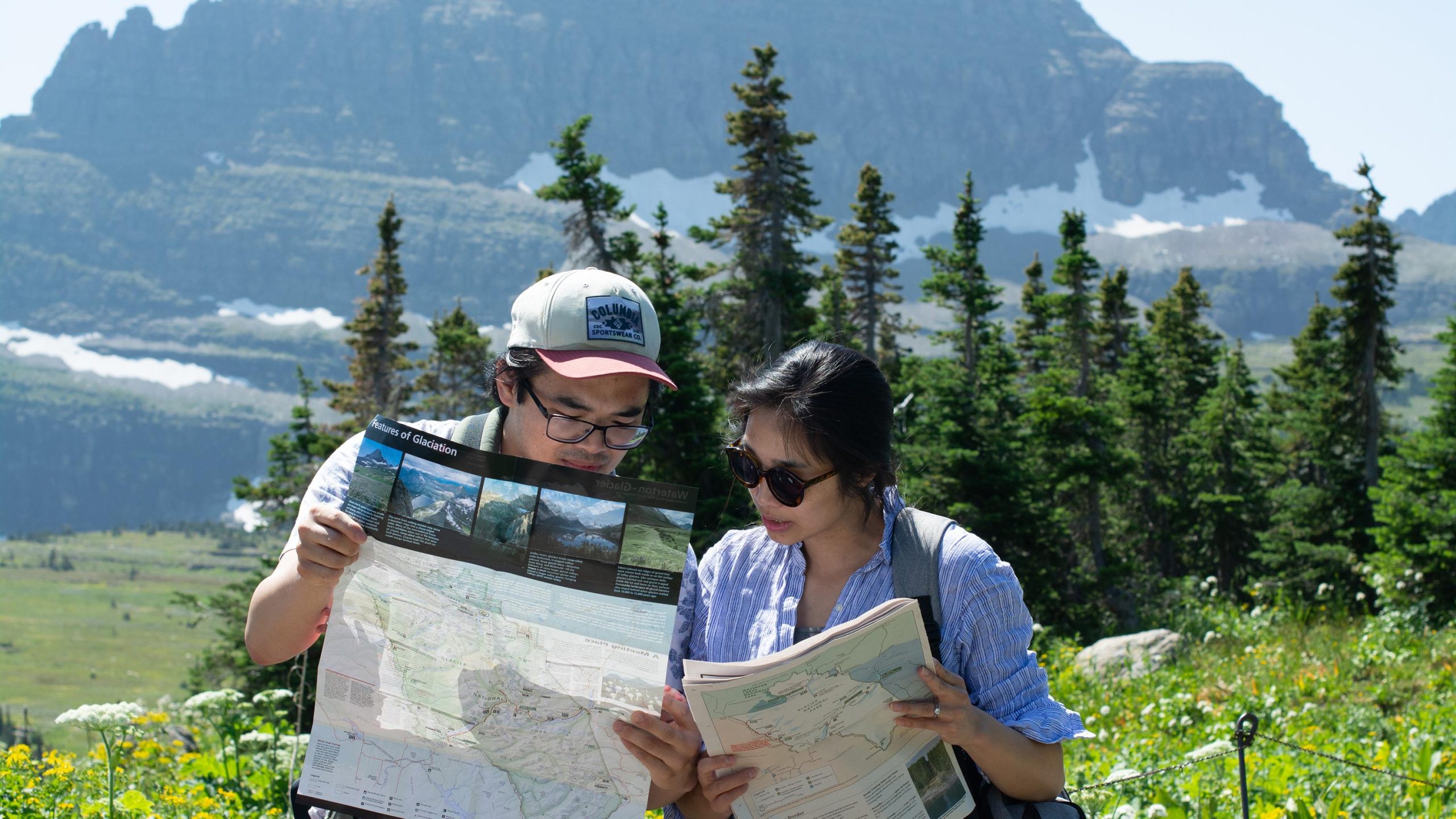

1. Logan Pass (6,646 ft) — Mountain Goats, Bighorn Sheep, Grizzly Bears
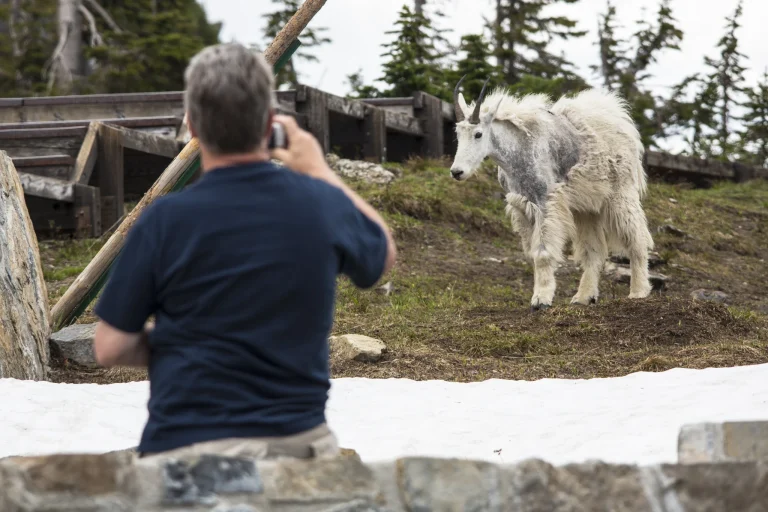
Logan Pass is the single most productive wildlife photography location in the park, per NPS.gov. Mountain goats frequently wander through the visitor center parking lot. Scan the Oberlin Bend Overlook for bighorn sheep and check the meadows east of the parking lot at dawn for grizzlies moving across open slopes.
Reach Logan Pass via Going-to-the-Sun Road — check current road status before planning your visit, as the road has a seasonal closure each year. The pass is accessible roughly July through mid-October. Early morning arrivals before 7 AM beat both crowds and midday heat that pushes wildlife into tree cover.
2. Many Glacier Valley — Grizzly Bears, Moose, Black Bears, Elk
Many Glacier is widely considered the wildlife capital of the park. Grizzly bears and black bears are commonly spotted along Many Glacier Road and the trails branching off it. The easy 1-mile walk to Fishercap Lake is a reliable moose spot — they feed in the shallow lake from June through September. Arrive before 7 AM for the highest probability of sightings.
For a broader sweep, drive the Many Glacier Road at dawn and pull over at every turnout. Bears are regularly seen from the road itself, particularly in berry season (August–September). A 300mm or longer lens lets you shoot safely from your vehicle without disturbing the animals.
3. Hidden Lake Overlook Trail — Mountain Goats, Bighorn Sheep
This 2.7-mile roundtrip hike from Logan Pass Visitor Center to the Hidden Lake Overlook is the best short trail in the park for mountain goats and bighorn sheep. Sheep concentrate on the boulder slopes of Clements Mountain, while goats frequently approach the overlook railings. Allow 2 hours and bring a minimum 200mm lens for frame-filling shots at close range.
4. Goat Lick Overlook — Mountain Goats (April through August)
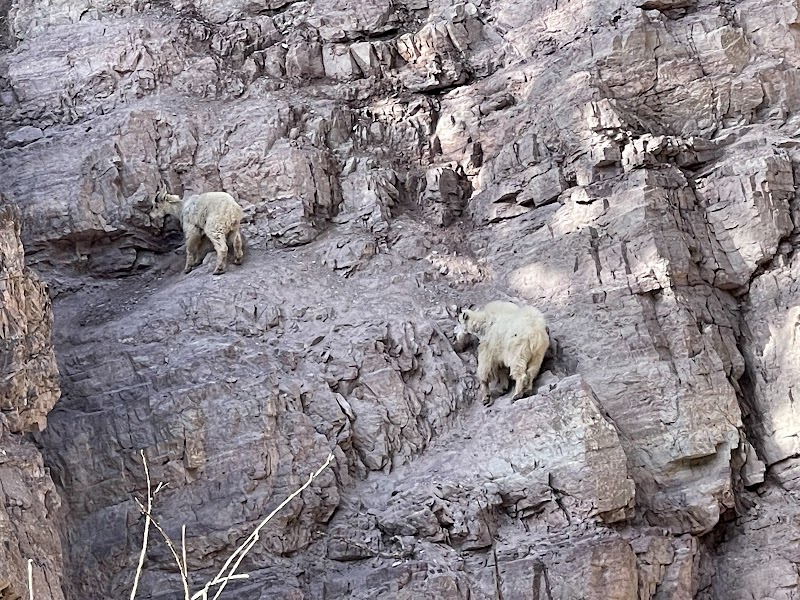
Goat Lick Overlook sits on US Highway 2, approximately 2 miles southeast of the Walton Ranger Station. Mountain goats descend to lick mineral-rich exposed rock along the Middle Fork of the Flathead River. During June and July, dozens can gather at once — no hiking required. Dawn and dusk are the most active windows, as mountain goats are crepuscular by nature, per Glacier Highline.
This location costs nothing beyond park admission. Because you shoot from a paved observation platform across the river, 400mm or longer gives the best framing. The congregation peaks late June through July before goats retreat to high country for the rest of summer.
5. Lake McDonald Area — Otters, Bald Eagles, Moose
Lake McDonald’s western shore offers a different kind of wildlife photography. River otters, bald eagles, and osprey are common along the shoreline. Early morning moose sightings happen along McDonald Creek. The lake’s famous colored rocks also provide stunning foreground compositions for wildlife-and-landscape double exposures at dawn when the water is glassy.
See our guide to photographing Lake McDonald’s rainbow rocks for specific pullout locations and best light angles along the western shore.
Best Season for Wildlife Photography
Each season in Glacier offers distinct wildlife photography opportunities. Summer (July–September) is peak season for alpine species when high-country trails are snow-free, but spring and fall deliver unique subjects and far fewer crowds competing for parking and shooting positions.
| Season | Best Species | Top Locations | Access |
|---|---|---|---|
| Spring (May–June) | Grizzly bears (emerging), elk, waterfowl | Many Glacier Valley, Lake McDonald | Lower valleys only; GTSR closed |
| Summer (July–Sept) | Mountain goats, bighorn sheep, bears, moose, wildflowers | Logan Pass, Hidden Lake, Many Glacier, Goat Lick | Full park access (GTSR open) |
| Fall (Oct–Nov) | Elk rutting, bears (hyperphagia), mule deer | Many Glacier, St. Mary Valley | GTSR closes mid-October |
| Winter (Dec–Apr) | Mountain lions, wolves, wintering birds | US-2 corridor, lower valleys | Limited; no GTSR access |
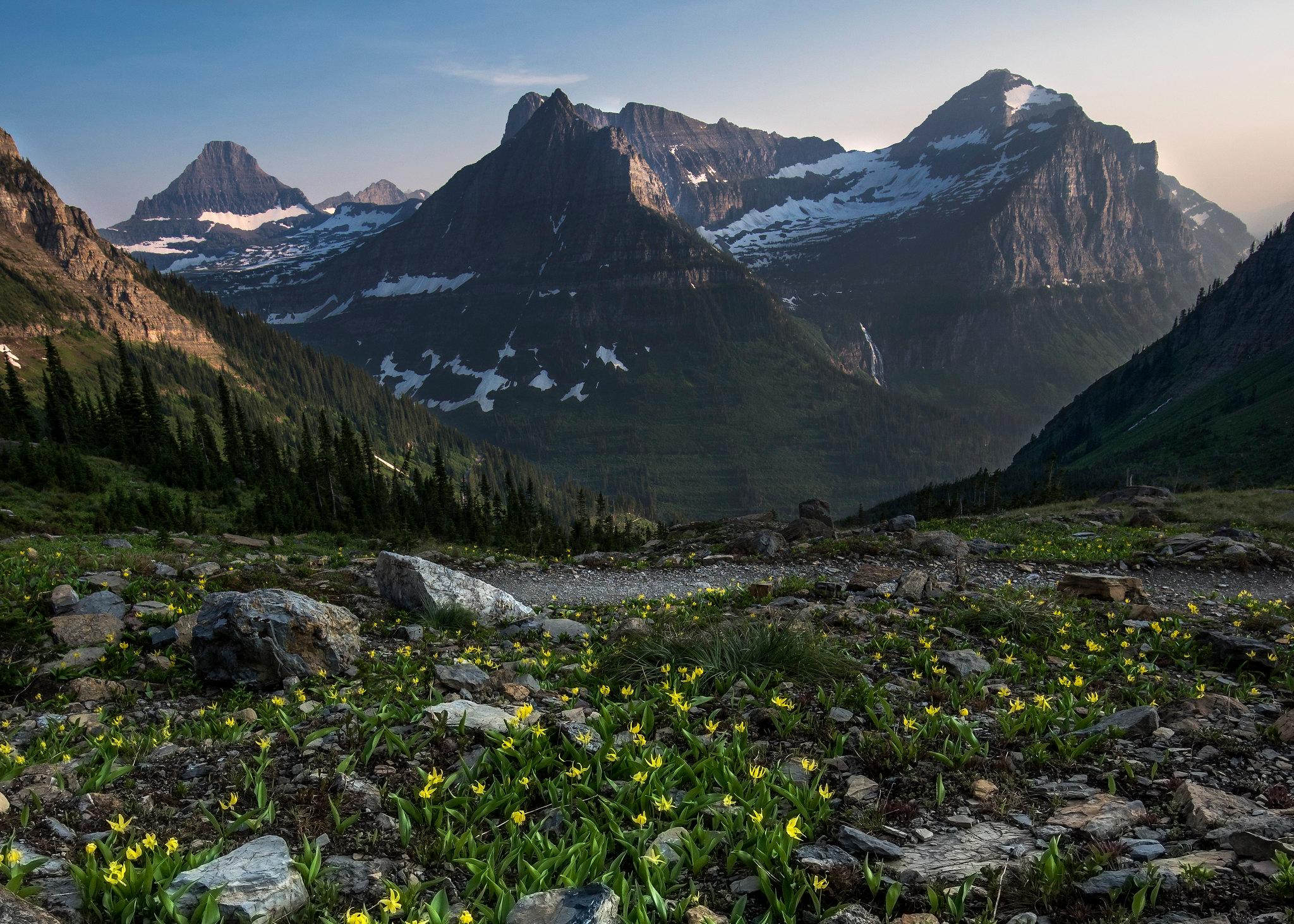

Best overall window: mid-July through late August. Going-to-the-Sun Road is typically fully open, wildflowers are blooming at alpine elevations, and species like mountain goats and bighorn sheep are highly visible in open terrain. The Goat Lick congregation also peaks in July.
Spring is underrated for bears. Grizzlies emerge from hibernation in May and June, often foraging in open meadows with excellent light and minimal crowd competition for parking. See our wildflower photography guide for bloom timing by elevation — wildflowers and wildlife activity are closely correlated.
Golden Hour and Dawn Shooting
Dawn is the single most productive time for wildlife photography in Glacier. Wildlife is most active in the first two hours after sunrise, light is warm and directional, and crowds are minimal — especially at Logan Pass and Many Glacier, which fill quickly after 9 AM in summer.
Golden hour lasts approximately 30–45 minutes after sunrise and before sunset. At Logan Pass, the east-facing meadows catch warm directional light immediately after sunrise — ideal for animals moving through the grass. Many Glacier faces southwest, making it a stronger location for late afternoon and sunset when bears forage in berry patches.
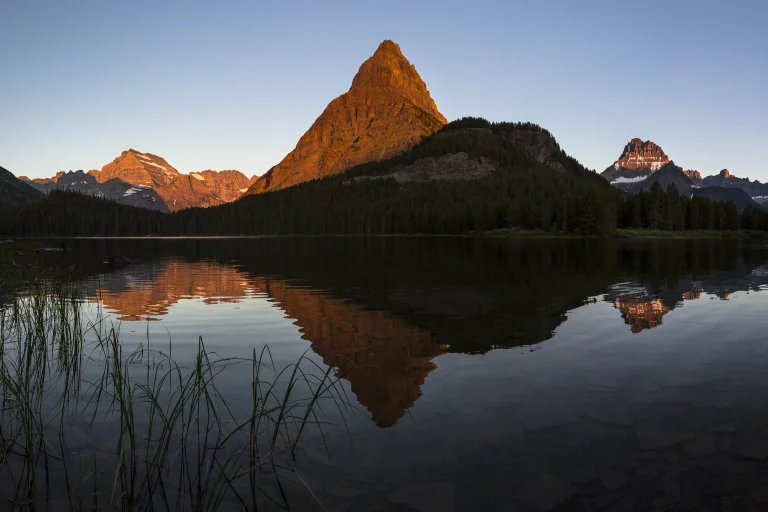
Mornings at Hidden Lake are often still, with glassy water reflecting Clements Mountain. This combination of calm water and dawn light creates high-value landscape-wildlife compositions if goats or sheep descend to the lake’s edge. A tripod is essential for these conditions — a 1/30s handheld shot at 400mm loses sharpness at any focal length.
Camera Gear and Settings for Wildlife Photography
The right lens changes everything. NPS distance rules mean you will be shooting from at least 25 yards for most species and 100 yards for bears — at 100 yards, a 200mm lens renders a bear as a small shape. A 400–600mm equivalent is necessary for frame-filling images from legal distances.
| Lens Range | Best For | Example Models |
|---|---|---|
| 70–200mm f/2.8 | Goat Lick (close goats), birds at Lake McDonald | Nikon Z 70-200, Canon RF 70-200 |
| 100–400mm f/4.5–5.6 | Logan Pass sheep and goats, versatile trail use | Canon RF 100-400, Nikon 100-400 Z |
| 150–600mm f/5–6.3 | Bears at Many Glacier, eagles, frame-filling at safe distance | Sigma 150-600 Contemporary, Tamron 150-600 G2 |
Recommended Camera Settings
Wildlife moves unpredictably, so prioritize shutter speed. Use shutter priority (Tv/S mode) or manual with auto ISO. For a moving bear or goat at 400mm, start at 1/800s to freeze motion. For stationary animals in golden-hour light, 1/400s at ISO 800 is workable. Enable burst mode — 10+ fps gives you more keepers during fast action.
| Condition | Shutter Speed | Aperture | ISO |
|---|---|---|---|
| Golden hour, stationary animal | 1/400s | f/5.6 | 400–800 |
| Golden hour, moving animal | 1/800s | f/5.6–f/8 | 800–1600 |
| Midday, bright sun | 1/1600s | f/8 | 100–400 |
| Pre-dawn, dim light | 1/250s minimum | Wide open (f/5.6) | 3200–6400 |
Enable single-point autofocus and place the focus point on the animal’s nearest eye. Activate continuous (servo/tracking) AF for moving subjects. Set white balance to “Cloudy” or “Shade” during golden hour to enhance warm tones. Shoot RAW for maximum flexibility in post-processing, especially in low-light dawn conditions.
Other Essential Gear
A carbon fiber or aluminum tripod is essential for pre-dawn telephoto shooting. Add a ball head rated for your longest lens. Bring a bean bag for shooting from your vehicle window — at Many Glacier, some of the best bear shots happen from the road without leaving your car. Pack extra batteries; cold alpine temperatures drain them faster.
Carry a 32GB+ memory card per session when shooting in RAW burst mode. Bear spray is required for backcountry travel in Glacier and is smart to carry on any trail. A rain cover for your camera bag protects gear during Glacier’s frequent afternoon storms.
NPS Safety Rules and Wildlife Distance Requirements
Federal law prohibits approaching wildlife too closely in national parks. Glacier enforces specific distances to protect both visitors and animals that can become habituated to human presence, per NPS.gov. Violations are subject to citation and fines.
| Wildlife Category | Minimum Distance | Species |
|---|---|---|
| Bears and wolves | 100 yards (91 m) | Grizzly bear, black bear, gray wolf |
| All other wildlife | 25 yards (23 m) | Mountain goat, bighorn sheep, moose, elk, deer, marmot, eagle |
A telephoto lens is the ethical solution to distance requirements. At 100 yards, a 500mm lens on a full-frame sensor renders a grizzly bear large enough to fill roughly 25% of the frame — workable with careful composition. At 25 yards, a 200mm lens is adequate for goats and sheep. This is why 200–600mm is the professional standard for Glacier wildlife photography.
Never bait or feed wildlife. Habituated animals are often euthanized by park staff. Never use flash on crepuscular or nocturnal species — it disrupts natural behavior. If an animal changes its behavior because of your presence (moving away, stopping feeding, showing stress), you are too close regardless of the official minimum distance.
Photography Permits: What You Need to Know
Personal photography in Glacier requires no permit. You can photograph anything visible from publicly accessible areas — trails, roads, overlooks — with any personal gear without special authorization. The $35/vehicle entrance fee is the only cost for recreational photography in 2026.
Commercial photography requiring models, crew, or props does require a permit through the park’s Film, Photography, and Sound Recording program, per NPS.gov. Shooting stock images solo without models or props does not require a permit, even for commercial sale. Drone photography always requires a separate permit — see our complete guide to photo permits and drone rules in Glacier.
FAQ
What is the best place to see grizzly bears in Glacier National Park?
What lens do I need for wildlife photography in Glacier?
When is the best time to visit Glacier for wildlife photography?
Is the Goat Lick Overlook worth visiting for photography?
Do I need a photography permit for Glacier National Park?
How We Researched This Guide
- NPS.gov/glac photo tips and wildlife safety distance rules
- NPS.gov film and photography permit requirements for Glacier
- Glacier Highline — Goat Lick Overlook seasonal timing and crepuscular behavior data
- Improve Photography — Location-specific tips for Glacier wildlife spots
- Nature TTL, Steve Creek Wildlife Photography — Golden hour camera settings
- Paolo Sartori Photography, Magic Eagle — Wildlife telephoto focal length guidance
Wildlife sightings are inherently unpredictable. Location reliability ratings reflect historical patterns, not guarantees. Going-to-the-Sun Road opening dates vary by year — always verify current status before planning Logan Pass visits. Camera gear recommendations are current as of early 2026; models change frequently.
Ready to plan your Glacier photography trip? Check current road conditions, trail status, and visitor alerts before you go.