
Wild Goose Island Overlook
The park's most-photographed view — a tiny island holding a frame of towering peaks. A short walk from the car; sunrise is the hour.
Open to everything · Saved in this browser
A FEW CHOICES. A TRIP THAT FEELS LIKE YOU.
What could your Glacier trip look like?
Choose what excites you. We’ll use it to filter your Glacier ideas—not rewrite the guide you came to read.
What draws you here?
Choose as many as you like—or leave it open to see everything.
When might you go—and for how long?
We’ll point you to the matching trip length. Season choices add access reminders; they do not confirm anything is open.
Have you chosen a side to stay on?
We’ll flag ideas that need a transfer from your chosen side. This is a preference, not a hotel booking.
Choices save automatically in this browser only. No account. Your answers are not sent to our servers.
Ideas for your Glacier trip
Showing all Glacier experiences. Your saved places and essential access information are never filtered.
An idea to explore—not a must-do.
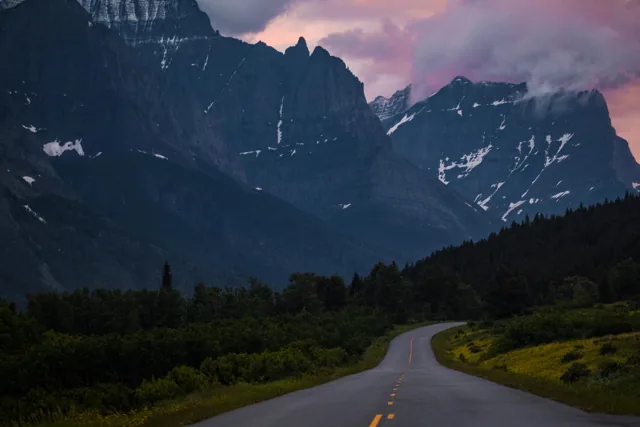
The full road crossing depends on seasonal access—even in summer.
An idea to explore—not a must-do.
An idea to explore—not a must-do.
The classic composition is slightly downhill from the main viewpoint — walk the short path toward the water for the postcard angle.
Natural Attraction
Wild Goose Island Overlook is the view. A speck of an island — a few trees on a knuckle of rock — sits in the middle of St. Mary Lake while mountains rise on every side, and somehow the tiny thing holds the whole frame together. It's the most photographed scene in Glacier, the image on half the park's postcards, and the opening shot of The Shining. The pullout at mile 43 makes it effortless: park, walk, done. The view faces west down the lake, which makes sunrise the masterpiece hour — first light igniting the peaks while the island floats in shadow-dark water.
MAKE ROOM FOR A MEMORABLE STOP
Is this stop worth your time?
Why go
- What Youll See
- A small rocky island rising 14 feet from the lake surface, surrounded by glacially sculpted peaks and St. Mary Lake's blue water
- Unique Characteristics
- One of Glacier's most recognizable and frequently photographed scenes
When to go
- Best Visit Times
- Sunrise - calm water, first light on the peaks, fewer people than midday.
- Seasonal Access
- Late June to mid-October when Going-to-the-Sun Road is open
Getting there and doing it
- How To Get There
- Located on Going-to-the-Sun Road between St. Mary entrance and Logan Pass. Well-marked pullout with parking access on the eastern shore of St. Mary Lake.
- Parking Availability
- Full-size marked lot at mile 43 - built for the crowds, and even at busy hours it turns over fast because the stop is short.
Getting there & parking
- Road Type
- Paved
- GPS Coordinates
- 48.6911253091,-113.530964164
When to go
- Best Time To Visit
- Sunrise, without question — the west-facing view means first light paints the peaks while the lake holds still. Sunset works too; midday flattens it. Less crowded at dawn than you'd fear.
- Sunrise Sunset Quality
- One of the great sunrise views in the park system: west-facing down the lake, so dawn light ignites the surrounding peaks while the island floats on dark, still water. Sunset silhouettes work in reverse.
What you will experience
- Attraction Type
- The park's most-photographed view
- Main Features
- Glacial island 14 feet high, St. Mary Lake, surrounding peaks, accessible paved viewing area, parking
- Photo Opportunities
- The classic frame is from the short path below the main overlook. Dawn for reflections; storm light over the lake is the connoisseur's version. A long lens compresses the island against Fusillade Mountain.
- Geological Formation Type
- Bedrock knob isolated in the glacially deepened St. Mary Lake trough
- Scientific Interest
- Demonstrates glacial differential erosion—the island's resistance to ice scouring explains its survival as a knob while the surrounding valley was excavated hundreds of feet deeper
Facilities, fees & access
- Entry Fees
- $35 per private vehicle (7-day pass) for park entrance; valid when road is open
- Permits Required
- No
- Accessibility
- Full-size lot with the main view steps from parking — among the most accessible signature views in any national park.
- Accessibility Level
- Drive-up view—no hiking required
- Nearby Services
- Rising Sun (store, restaurant, restrooms) to the east.
- Nearby Facilities
- None at the overlook. Rising Sun (store, restaurant, restrooms) is to the east; Sun Point picnic area to the west.
- Family Friendly Notes
- Effortless and safe — marked overlook, short path, big payoff. The lower path has loose gravel; watch small kids near the water.
Safety
Nearby
- Nearby Attractions
- Golden Staircase pullout just east. Rising Sun and the boat tour to the east - the tour passes the island at water level. Sun Point to the west.
Planning advice
- Insider Tips
- The classic composition is slightly downhill from the main viewpoint — walk the short path toward the water for the postcard angle.
- Wind is the enemy of reflections; dawn is calmest.
- Movie buffs: the aerial shots opening The Shining were filmed along this lake with the island in frame.
- The boat tour from Rising Sun passes the island at water level — a completely different reading of the same scene.
- Tips Advice
- Observe the isolated island rising 14 feet above the lake surface—it's a glacial remnant showing how rock resistance determined erosion patterns during the ice age.
- Notice the steep walls of the surrounding valley, characteristic of glacial sculpting.
More details
- Park Area
- Going-to-the-Sun Road corridor
- Recent Updates
- 2026: Going-to-the-Sun Road opens late June and closes mid-October (exact dates vary annually). Check NPS.gov for current opening/closing dates before visiting.
Continue the drive
Location
Photos

Frequently asked questions
Why is Wild Goose Island so famous?
Scale contrast — a tiny island against towering peaks in every direction. It's Glacier's most-photographed view and appears in the opening credits of The Shining.
When is the best light?
Sunrise — the view faces west, so first light hits the peaks while the lake stays calm and dark. It's the most reliable great photo hour in the park.
How far is the walk from parking?
A short walk — the overlook is marked and sits just off the pullout at mile 43. A short path drops toward the water for the classic angle.
Can I get to the island?
No — it sits out in St. Mary Lake and is left to the geese that named it. The boat tour from Rising Sun passes near it.
Is it worth stopping if I'm not a photographer?
It's a quick stop for the most famous view in the park — there is no version of the drive where skipping it makes sense.
More at Glacier National Park

Pyramid Peak
Peak sharpened by glacial ice above Mokowanis Lake; an off-trail scramble deep in the Belly River backcountry.

Grace Lake
Grace Lake: glacial cirque lake at 3,966 ft, reached via the Logging Lake Trail.

Rising Sun Picnic Area
A practical east-side pause where Glacier’s mountains meet the prairies.

Two Medicine Picnic Area
Two Medicine’s lake and peaks reward a future picnic; road access is closed as of September 8, 2026.

Monument Falls
A partly hidden waterfall above Avalanche Lake, distinct from the taller headwall cascades. Plan for lake-and-basin views, not a waterfall-base visit.

Lake McDonald
A west-side lakeshore pause: choose Apgar or Lake McDonald Lodge, then leave room for a separate walk or boat outing.
Sources
- National Park Service
- YourNPGuide Editorial
Editorial review: YourNPGuide Editorial Team. Information is compiled from official sources, verified traveler reviews, and editorial research; no firsthand visit is implied unless explicitly documented. Learn how YourNPGuide works.
Last updated July 2026. Report an issue.