
Going-to-the-Sun Mountain
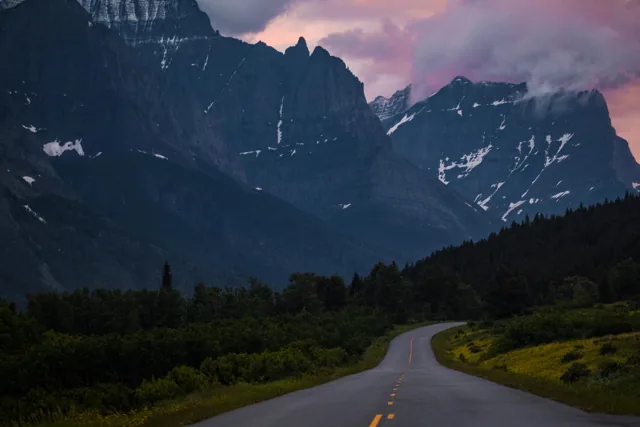
Snowfields crown a Lewis Overthrust peak; view from Logan Pass along Going-to-the-Sun Road.
Open to everything · Saved in this browser
A FEW CHOICES. A TRIP THAT FEELS LIKE YOU.
What could your Glacier trip look like?
Choose what excites you. We’ll use it to filter your Glacier ideas—not rewrite the guide you came to read.
What draws you here?
Choose as many as you like—or leave it open to see everything.
When might you go—and for how long?
We’ll point you to the matching trip length. Season choices add access reminders; they do not confirm anything is open.
Have you chosen a side to stay on?
We’ll flag ideas that need a transfer from your chosen side. This is a preference, not a hotel booking.
Choices save automatically in this browser only. No account. Your answers are not sent to our servers.
Ideas for your Glacier trip
Showing all Glacier experiences. Your saved places and essential access information are never filtered.
An idea to explore—not a must-do.
The full road crossing depends on seasonal access—even in summer.
An idea to explore—not a must-do.
An idea to explore—not a must-do.
Arrive early for parking;
Use park shuttle to minimize drive time;
Alpenglow on ridges; dramatic lighting during sunrise and sunset
Gravity: rockfall and cliff exposures; Temperature: alpine cold; Road: narrow with drop-offs; Bear spray recommended; Weather can change rapidly; Wear sturdy f…
Natural Attraction
From Logan Pass, Going-to-the-Sun Mountain rises in a jagged silhouette, its east face flecked with snow. That vertical drama encodes a tectonic ascent—the Lewis Overthrust pushed Precambrian rocks over younger layers, later sculpted by glaciers into the alpine skyline. The ascent to the summit is a strenuous hike with rockfall hazards; the landscape is a living record of deep time.
MAKE ROOM FOR A MEMORABLE STOP
Is this stop worth your time?
Why go
- What Youll See
- Logan Pass overlook and GTTS Road pullouts; exposed sedimentary cliffs; alpine snowfields and rugged ridges
- Unique Characteristics
- Lewis Overthrust fault exposure; Precambrian rocks thrust over younger strata; dramatic vertical expression from uplift and glacial sculpting
When to go
- Best Visit Times
- Early morning and late afternoon
- Peak Fill Times
- Mid-morning parking pressure; peak season (summer) aligns with road status
Getting there and doing it
- How To Get There
- Drive to Logan Pass via Going-to-the-Sun Road; mountain is visible from the road; park at Logan Pass Visitor Center and walk to overlooks.
- Parking Availability
- Logan Pass parking tends to fill by mid-morning in peak season.
Getting there & parking
- Distance From Entrance
- Logan Pass area; distance/time vary by entry; parking can be tight in peak season; plan ahead.
- Road Type
- Paved; narrow in places with steep drop-offs; guardrails in many sections; occasional avalanche-prone gaps.
- GPS Coordinates
- 48°41′27″N 113°38′11″W
When to go
- Best Time To Visit
- Late June through September; golden hour mornings and late afternoons offer softer light and fewer crowds.
- Sunrise Sunset Quality
- Alpenglow on ridges; dramatic lighting during sunrise and sunset
- Best Season
- Late June through September
- Busiest Season
- Summer
- Seasonal Access
- Late June through September; winter closures mid-October to late June.
- Road Opening Dates
- Late June opening; typically open through September; check year-specific conditions
- Snow Lingering
- Snow lingers on upper slopes into early summer; snowfields persist into July
- Winter Access
- Limited; winter access mainly for snow activities; not recommended for casual visits
- Weather Patterns
- Rapid weather shifts; afternoon storms; cold at altitude; wind gusts
- Wildflower Peak
- Mid-July to August
- Fall Colors Peak
- Late September to early October
What you will experience
- Attraction Type
- Geological Formation
- Main Features
- Prominent peak; Lewis Overthrust exposure; Precambrian sedimentary rocks; east-face snowfields
- Photo Opportunities
- Golden-hour silhouettes on the east face; snowfields illuminated at sunrise/sunset; rugged, vertical rock faces
- Photography Spots
- Logan Pass overlook; GTTS Road pullouts; sunrise light on east face
- Best Viewpoints
- Logan Pass overlook; GTTS Road pullouts; Logan Pass Visitor Center area
- Common Wildlife
- Mountain goats, bighorn sheep; bears (grizzly and black) on the eastern side
- Best Wildlife Times
- Early morning and late afternoon
- Geological Formation Type
- Overthrust-block mountain exposing Precambrian sedimentary rocks (Lewis Overthrust)
- Scientific Interest
- Visible Lewis Overthrust fault; Precambrian geology; glacial geomorphology; alpine uplift
- Stargazing Quality
- Good to excellent under dark skies away from city lights
Facilities, fees & access
- Entry Fees
- Included with park entrance fee
- Permits Required
- No
- Restrooms Available
- Yes
- Restroom Type
- No restrooms on the Going-to-the-Sun Mountain itself; visitor facilities are at Logan Pass along the Going-to-the-Sun Road.
- Picnic Areas
- Yes
- Water Available
- Yes
- Cell Service
- Very limited or none along most of the Going-to-the-Sun Road
- Interpretive Signs
- Yes
- Accessibility
- Paved GTTS Road; viewing viewpoints accessible; trails uneven; some facilities accessible
- Accessibility Level
- Drive-up viewpoint; GTTS Road is paved; trails may have uneven surfaces; Logan Pass generally accessible.
- Nearby Services
- Logan Pass Visitor Center; restrooms; potable water; interpretive signs
- Nearby Facilities
- Logan Pass Visitor Center; restrooms; potable water; interpretive signs
- Family Friendly Notes
- Viewing areas safe for kids; summit hike is not recommended for young children; bear safety
Safety
Nearby
- Nearby Attractions
- Logan Pass, Going-to-the-Sun Road, Logan Pass Visitor Center
- Connecting Trails
- Highline Trail network connects to Logan Pass; summit access via strenuous routes with rockfall hazards
- Trailheads Here
- Logan Pass area; routes to the summit described as challenging; rockfall hazards
Planning advice
- Insider Tips
- Arrive early for parking;
- Use park shuttle to minimize drive time;
- Watch for rockfall at overlooks;
- Check GTTS Road status before leaving
- Tips Advice
- Arrive before mid-morning for Logan Pass parking or use the park shuttle.
- Observe rockfall zones from safe distances; stay on designated viewpoints.
- Bear spray is recommended; store food securely; hike with companions.
- Dress in layers; alpine weather can swing fast; sturdy footwear required.
More details
- Park Area
- Glacier National Park
- Recent Updates
- GTTS Road status stable; no major changes reported this season
- Elevation Feet
- 9647
- Visitor Center Present
- Yes
- Guided Tours Available
- No
- Fishing Nearby
- No
- Swimming Allowed
- No
- Boating Allowed
- No
- Climbing Areas
- No
- Review Summary
- 4.9 stars from 74 reviews reflect dramatic alpine scenery and accessible road vantage, tempered by parking constraints and real hiking hazards.
Location
Photos


Frequently asked questions
Do I really need to arrive before mid-morning to get parking at Logan Pass?
Yes. Logan Pass parking fills quickly; plan to arrive early or use the park shuttle to reach overlooks with the best light.
Is it worth the hike to the summit given the terrain?
The hike is strenuous and has rockfall hazards, but the panoramic alpine views and geological context make the effort worthwhile for prepared hikers.
Will my cell service be reliable along Going-to-the-Sun Road?
No. Cellular service is very limited or none along most of the Going-to-the-Sun Road.
Are there accessible viewpoints for someone with limited mobility?
Yes. Logan Pass viewing areas and the Visitor Center are generally accessible, but the summit hike is not.
Is the road typically open through the season?
The Going-to-the-Sun Road is usually open from late June through September; check current-year advisories for winter closures.
More at Glacier National Park

Pyramid Peak
Peak sharpened by glacial ice above Mokowanis Lake; an off-trail scramble deep in the Belly River backcountry.

Grace Lake
Grace Lake: glacial cirque lake at 3,966 ft, reached via the Logging Lake Trail.

Rising Sun Picnic Area
A practical east-side pause where Glacier’s mountains meet the prairies.

Two Medicine Picnic Area
Two Medicine’s lake and peaks reward a future picnic; road access is closed as of September 8, 2026.

Monument Falls
A partly hidden waterfall above Avalanche Lake, distinct from the taller headwall cascades. Plan for lake-and-basin views, not a waterfall-base visit.

Lake McDonald
A west-side lakeshore pause: choose Apgar or Lake McDonald Lodge, then leave room for a separate walk or boat outing.
Sources
- wikipedia.org
- peakvisor.com
- nps.gov
- usgs.gov
- enjoyyourparks.com
- mtmemory.org
- glaciermountaineers.com
- glacierparkcollection.com
- glaciertourbase.com
- wanderlog.com
- shakaguide.com
- glacierguides.com
- heatherscompass.com
- adventureswithgoatboy.com
- carleton.edu
- glacier.org
- glacierbearcabin.com
- undercanvas.com
- explorenborgen.com
- actiontourguide.com
- saltandstoneadventurephoto.com
- usgs.gov
- npshistory.com
- mattandkaren.com
- mnwdestinations.com
- greatnorthernresort.com
- glaciermt.com
- blackfeetculturecamp.com
- Google Reviews
- YourNPGuide Editorial
Editorial review: YourNPGuide Editorial Team. Information is compiled from official sources, verified traveler reviews, and editorial research; no firsthand visit is implied unless explicitly documented. Learn how YourNPGuide works.
Last updated December 2025. Report an issue.