
Flinsch Peak
Yellow limestone horn above Two Medicine; hike from the Two Medicine trailhead, parking fills early.
Open to everything · Saved in this browser
A FEW CHOICES. A TRIP THAT FEELS LIKE YOU.
What could your Glacier trip look like?
Choose what excites you. We’ll use it to filter your Glacier ideas—not rewrite the guide you came to read.
What draws you here?
Choose as many as you like—or leave it open to see everything.
When might you go—and for how long?
We’ll point you to the matching trip length. Season choices add access reminders; they do not confirm anything is open.
Have you chosen a side to stay on?
We’ll flag ideas that need a transfer from your chosen side. This is a preference, not a hotel booking.
Choices save automatically in this browser only. No account. Your answers are not sent to our servers.
Ideas for your Glacier trip
Showing all Glacier experiences. Your saved places and essential access information are never filtered.
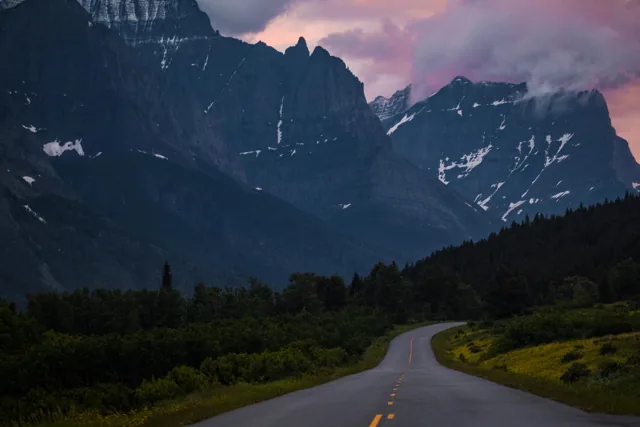
An idea to explore—not a must-do.
The full road crossing depends on seasonal access—even in summer.
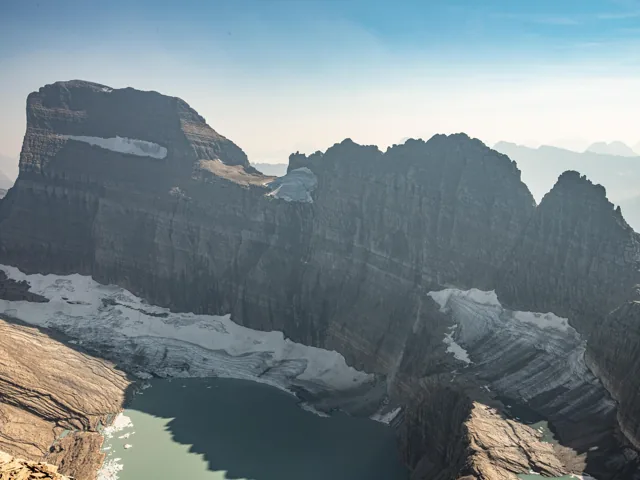
An idea to explore—not a must-do.
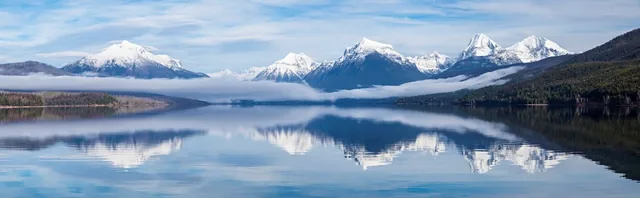
An idea to explore—not a must-do.
Park at dawn to see Flinsch Peak’s horn catch the first light. Oldman Lake yields a mirror-like reflection of the peak, especially on calm mornings. Carry bear spray; hike in grou…
Alpenglow paints the horn at sunrise and sunset
Gravity governs the slopes—stick to the trail to avoid slips. Hypothermia risk exists due to cold meltwater and rapidly changing mountain weather. Bears and mo…
Best May–September; high passes may hold snow into June/July. Sunrise and sunset light the horn dramatically.
Natural Attraction
Flinsch Peak is a glacial horn in Glacier National Park’s Lewis Range, standing 9,225 ft. Access comes via a Dawson Pass scramble linked to the 18.8-mile Pitamakan–Dawson Loop, with prime views from Oldman Lake and Dawson Pass.
MAKE ROOM FOR A MEMORABLE STOP
Is this stop worth your time?
Why go
- What Youll See
- Yellow limestone faces; jagged summit; alpine talus; Oldman Lake vantage; distant peaks
- Unique Characteristics
- Glacial horn formed by ice on three sides; accessible vantage from Oldman Lake
When to go
- Best Visit Times
- May–September; avoid mid-day glare and wildfire haze
- Peak Fill Times
- Early morning; parking and crowds peak at dawn during the peak season
Getting there and doing it
- How To Get There
- Park at the Two Medicine Trailhead; follow the Pitamakan-Dawson Loop toward Dawson Pass; side ascent to Flinsch Peak is common on the loop; plan for a long day.
- Parking Availability
- Limited; popular trailheads fill early; arrive early.
Getting there & parking
- Distance From Entrance
- 18.8 miles round-trip (Pitamakan-Dawson Loop)
- Road Type
- Paved
- GPS Coordinates
- 48.4983003°N, -113.4662138°W
When to go
- Best Time To Visit
- Best May–September; high passes may hold snow into June/July. Sunrise and sunset light the horn dramatically.
- Sunrise Sunset Quality
- Alpenglow paints the horn at sunrise and sunset
- Best Season
- May–September
- Busiest Season
- June–September
- Seasonal Access
- Generally May–Sept; higher elevations snow-bound into late June/July
- Road Opening Dates
- High country routes open late spring; expect snow into June; lower elevations typically open earlier
- Snow Lingering
- Snow lingers to late June/early July at the summit region
- Winter Access
- Winter access via skiing/snowshoeing; conditions severe; plan accordingly
- Weather Patterns
- Summer storms possible in the afternoon; wildfire smoke can obscure views; cool, rapidly changing conditions
What you will experience
- Attraction Type
- Geological Formation (horn)
- Main Features
- Yellowish limestone horn of the Lewis Range; sculpted by glacial erosion on three sides; prominent from Oldman Lake and Dawson Pass
- Photo Opportunities
- Golden hour on the horn; reflections in Oldman Lake; long-distance peaks across the cirque
- Photography Spots
- Oldman Lake vantage; Dawson Pass overlook; summit approach from the loop
- Best Viewpoints
- Dawson Pass overlook; Oldman Lake viewpoint; along the Pitamakan-Dawson Loop where the ridge shows the horn
- Common Wildlife
- Mountain goats; grizzly and black bears; pikas
- Best Wildlife Times
- Meadows and slopes; mornings often best
- Geological Formation Type
- Horn; yellow limestone; Lewis Range
- Scientific Interest
- Glacial horn formation; long geologic history from Precambrian to Jurassic; Lewis Overthrust ~60–70 million years ago
- Stargazing Quality
- Good; dark skies with limited light pollution in the surrounding valleys
Facilities, fees & access
- Entry Fees
- Included with park entrance fee
- Restrooms Available
- Yes
- Restroom Type
- Vault
- Picnic Areas
- Yes
- Water Available
- Yes
- Cell Service
- Unreliable; expect spotty coverage
- Accessibility
- Rugged, steep; not ADA accessible
- Accessibility Level
- Rugged, steep, high-elevation trail; not wheelchair accessible; conditioning required.
- Nearby Services
- Two Medicine trailhead amenities; vault restrooms; water not guaranteed; ranger presence nearby
- Nearby Facilities
- Two Medicine trailhead restrooms; nearby ranger station; water carry advised
- Family Friendly Notes
- The route to Flinsch Peak includes steep, rocky sections, and the final ascent requires scrambling. Families with small children should assess readiness and stay close to adults near exposed cliff edges.
Safety
Nearby
- Nearby Attractions
- Oldman Lake, Dawson Pass, Pitamakan-Dawson Loop, Two Medicine area
- Connecting Trails
- Part of the Pitamakan-Dawson Loop; connects with Two Medicine trails toward Dawson Pass and Oldman Lake
- Trailheads Here
- Two Medicine Trailhead
Planning advice
- Insider Tips
- Park at dawn to see Flinsch Peak’s horn catch the first light. Oldman Lake yields a mirror-like reflection of the peak, especially on calm mornings. Carry bear spray; hike in groups and make noise on approach to deter wildlife. Bring ample water; remote trailheads lack reliable spigots.
- Tips Advice
- Start early; parking is limited and trailheads fill fast
- Bring bear spray and layers; weather shifts quickly
- Carry water; water sources are not guaranteed at remote trailheads
- Stay on designated trails; crevasses and unstable rock lurk in snowfields
More details
- Park Area
- Glacier National Park
- Elevation Feet
- 9225
- Visitor Center Present
- Yes
- Climbing Areas
- Yes
- Review Summary
- Rated 5 stars from 6 reviews, Flinsch Peak earns praise for its dramatic horn silhouette and expansive alpine scenery. Hikers note the reward of long approaches and striking views toward Oldman Lake and Dawson Pass, balanced against parking challenges and variable mountain weather.
Location
Photos


Frequently asked questions
Do I really need to arrive early to get parking?
Parking is limited and trailheads fill early; to avoid overflow, plan to arrive before mid-morning during peak season.
Is the hike worth the 13.7-mile climb with 5,679 feet of gain?
Yes. The summit delivers panoramic alpine views and a clear demonstration of glacial erosion; prepare for a strenuous day with proper gear.
Is the hike suitable for an older adult in my group?
Trails are steep and rugged with high elevation; assess fitness level and consider shorter PRs or companion pacing to minimize fatigue.
Will wildlife encounters affect my trip, and how should I prepare?
Bear safety is essential—carry bear spray and travel in groups. Stay alert; maintain distance from wildlife and keep noise on the trail.
Can I rely on cell service along the trail?
Cell coverage is unreliable; plan accordingly and download maps offline before you go.
Is there water available at the trailhead?
Water sources are not guaranteed at remote trailheads; carry sufficient water for the day.
When is the peak time to see the Horn in good light?
Golden hour around sunrise or sunset provides the most dramatic lighting on Flinsch Peak.
More at Glacier National Park

Pyramid Peak
Peak sharpened by glacial ice above Mokowanis Lake; an off-trail scramble deep in the Belly River backcountry.

Grace Lake
Grace Lake: glacial cirque lake at 3,966 ft, reached via the Logging Lake Trail.

Rising Sun Picnic Area
A practical east-side pause where Glacier’s mountains meet the prairies.

Two Medicine Picnic Area
Two Medicine’s lake and peaks reward a future picnic; road access is closed as of September 8, 2026.

Monument Falls
A partly hidden waterfall above Avalanche Lake, distinct from the taller headwall cascades. Plan for lake-and-basin views, not a waterfall-base visit.

Lake McDonald
A west-side lakeshore pause: choose Apgar or Lake McDonald Lodge, then leave room for a separate walk or boat outing.
Sources
- wanderlog.com
- wikipedia.org
- peakvisor.com
- enjoyyourparks.com
- bigskywalker.com
- anugara.net
- npshistory.com
- nps.gov
- lonelyplanet.com
- sonnybou.ca
- Google Reviews
- YourNPGuide Editorial
Editorial review: YourNPGuide Editorial Team. Information is compiled from official sources, verified traveler reviews, and editorial research; no firsthand visit is implied unless explicitly documented. Learn how YourNPGuide works.
Last updated December 2025. Report an issue.