
Big Bend
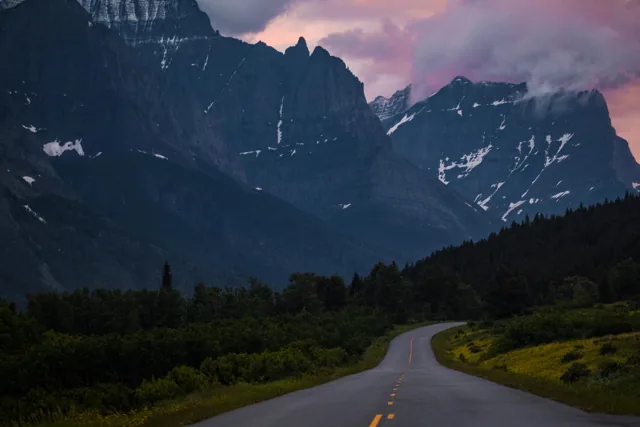
The road's giant alpine hairpin below Logan Pass — huge pullout, valley-wide views of Heavens Peak, early-season waterfall, best sunset on the road.
Open to everything · Saved in this browser
A FEW CHOICES. A TRIP THAT FEELS LIKE YOU.
What could your Glacier trip look like?
Choose what excites you. We’ll use it to filter your Glacier ideas—not rewrite the guide you came to read.
What draws you here?
Choose as many as you like—or leave it open to see everything.
When might you go—and for how long?
We’ll point you to the matching trip length. Season choices add access reminders; they do not confirm anything is open.
Have you chosen a side to stay on?
We’ll flag ideas that need a transfer from your chosen side. This is a preference, not a hotel booking.
Choices save automatically in this browser only. No account. Your answers are not sent to our servers.
Ideas for your Glacier trip
Showing all Glacier experiences. Your saved places and essential access information are never filtered.
An idea to explore—not a must-do.
The full road crossing depends on seasonal access—even in summer.
An idea to explore—not a must-do.
An idea to explore—not a must-do.
If the smaller alpine pullouts are full, hold out for Big Bend — it is the biggest lot on the climb and usually turns over.
Come back for sunset: most visitors drive the road midday and never see its best hour.
Best sunset pullout on Going-to-the-Sun Road - the valley alignment sends evening light straight onto Heavens Peak. Also a strong sunrise stop, with the advantage of a large lot a…
The pullout sits on the outside of the curve beside genuine drop-offs - keep children close and stay off the wall. Watch traffic when walking the lot edge for…
Golden hour — this is widely considered the best sunset stop on the road, and it works at sunrise too. Mid-morning to afternoon is fine for the views but busie…
Natural Attraction
Big Bend is where Going-to-the-Sun Road runs out of mountainside and folds back on itself — a huge U-shaped hairpin carved into the wall about three miles below Logan Pass. The road swings wide around a bowl of wildflowers and avalanche-scoured slopes, and the pullout on the outside of the curve looks straight across the valley at Heavens Peak, with Mount Oberlin and Mount Cannon stacked above the bend. Early in the season a snowmelt cascade pours down the cliffs right at the turn, close enough to hear over the engine. This is one of the largest pullouts on the entire road — which matters, because it's also the stretch of pavement everyone remembers.
MAKE ROOM FOR A MEMORABLE STOP
Is this stop worth your time?
Why go
- What Youll See
- The full sweep of the glacially carved valley with Heavens Peak straight across, Mount Oberlin and Mount Cannon rising above the curve, and the road itself threading the cliff face in both directions - Big Bend is one of the few places where the engineering of Going-to-the-Sun Road is part of the view. Early summer adds a waterfall pouring off the cliffs at the turn and heavy wildflower color on the slopes.
- Unique Characteristics
- The most dramatic single curve on Going-to-the-Sun Road, and a working landmark: NPS spring plowing updates report progress by whether crews have pushed past Big Bend. Doubles as the road's most practical alpine stop - biggest lot on the climb, with restrooms.
When to go
- Best Visit Times
- Evening for sunset light on Heavens Peak; early morning for quiet and sunrise; late June and July for the snowmelt waterfall and wildflowers.
- Seasonal Access
- Open only while the alpine section of Going-to-the-Sun Road is open - typically late June through mid-October, varying with snowpack. Big Bend is a named milestone in the park's spring plowing updates: when plows push past Big Bend, opening is getting close.
Getting there and doing it
- How To Get There
- On the west-side alpine section of Going-to-the-Sun Road, about 3 miles west of (below) Logan Pass - roughly 29 miles from the West Glacier entrance and 21 miles from St. Mary. The pullout sits on the outside of the huge U-shaped bend; it is unmistakable in both directions. Accessible only while the alpine section of the road is open, typically late June through mid-October.
- Parking Availability
- One of the largest pullouts on Going-to-the-Sun Road, so a spot usually turns up even in peak season when smaller alpine pullouts are full. No timed limit here (the 3-hour rule applies at Logan Pass, not Big Bend).
Getting there & parking
- Road Type
- Paved Going-to-the-Sun Road, west-side alpine section. The hairpin itself is the road feature - traffic swings wide and slow through the curve.
When to go
- Best Time To Visit
- Golden hour — this is widely considered the best sunset stop on the road, and it works at sunrise too. Mid-morning to afternoon is fine for the views but busiest; early season (right after the road opens) adds the waterfall at full flow.
- Sunrise Sunset Quality
- Best sunset pullout on Going-to-the-Sun Road - the valley alignment sends evening light straight onto Heavens Peak. Also a strong sunrise stop, with the advantage of a large lot and restrooms for early arrivals.
- Road Opening Dates
- Alpine section typically opens late June (June 22 in 2026) and closes in mid-October, varying with snowpack. Spring plowing updates use Big Bend as a progress landmark.
- Snow Lingering
- Deep drifts and avalanche debris linger at the bend well into June - it is one of the harder stretches for spring plow crews. The cliffside cascade runs strongest while the snow above is still melting, then fades through late summer.
- Weather Patterns
- Alpine-section weather: afternoon thunderstorms are common in summer, wind is routine on the exposed curve, and conditions change fast. Snow can close the alpine section briefly even in shoulder months.
What you will experience
- Attraction Type
- Alpine hairpin pullout and viewpoint
- Main Features
- Giant U-shaped hairpin curve, one of the road's largest pullouts, valley-wide views of Heavens Peak, Mount Oberlin and Mount Cannon overhead, early-season snowmelt waterfall at the bend, wildflower and avalanche slopes, restrooms
- Photo Opportunities
- Sunset is the headline - the light drops straight down the valley and lights Heavens Peak. Sunrise works from the same spot. The curve of the road with vehicles rounding it makes the classic engineering shot; the early-season waterfall at the bend and wildflower foregrounds carry mid-summer. Restrooms and the big lot mean unhurried tripod time.
- Geological Formation Type
- Glacially steepened valley wall; the hairpin rounds the head of a carved bowl beneath Mount Oberlin and Mount Cannon
Facilities, fees & access
- Entry Fees
- $35 per private vehicle (7-day summer pass) for park entrance. No additional fee at the pullout.
- Permits Required
- No
- Restrooms Available
- Yes
- Restroom Type
- Vault toilets at the pullout
- Picnic Areas
- No
- Accessibility
- Roadside pullout with the full view available from the parking area — no trail or boardwalk required. Surface is paved and generally level along the viewing edge.
- Nearby Services
- Logan Pass Visitor Center about 3 miles east (rangers, water, flush restrooms). Vault toilets at the Big Bend pullout itself. Full services in West Glacier or St. Mary at either end of the road.
- Nearby Facilities
- Large paved pullout with vault toilets. No water, food, or fuel — the closest of any of those is Logan Pass (water) and the road's end towns (everything else).
- Family Friendly Notes
- An easy, zero-walking stop with restrooms — one of the most practical family breaks on the alpine climb. The drop-offs beyond the wall are real; keep kids inside the pullout.
Safety
Nearby
- Nearby Attractions
- The Weeping Wall (just down the road to the west) - the cliff that sprays the inside lane in early summer. Triple Arches (just above the bend) - the road's signature masonry. Oberlin Bend and Logan Pass about 3 miles up. Bird Woman Falls Overlook a short drive west.
Planning advice
- Insider Tips
- If the smaller alpine pullouts are full, hold out for Big Bend — it is the biggest lot on the climb and usually turns over.
- Come back for sunset: most visitors drive the road midday and never see its best hour.
- Right after the road opens, the waterfall at the bend is at full blast and the snow walls are still cut high — the most dramatic week or two of the year here.
- The classic photo is the road itself: stand at the west end of the pullout and shoot back across the curve as cars round it.
- Restrooms here beat waiting for Logan Pass, where the lot and facilities queue up by mid-morning.
Continue the drive
Location
Photos


Frequently asked questions
Where exactly is Big Bend on Going-to-the-Sun Road?
On the west-side alpine climb, about 3 miles west of (below) Logan Pass — it's the huge U-shaped hairpin where the road doubles back on itself. You can't miss it from either direction.
Is there parking and a bathroom?
Yes — Big Bend is one of the largest pullouts on the entire road and has vault toilets, which makes it the most practical stop on the alpine section.
When can I see the waterfall at Big Bend?
Early season, roughly late June through mid-July, while snowmelt is heavy. The cascade pours off the cliffs right at the turn, then fades as the high snow disappears in late summer.
Is Big Bend really the best sunset spot on the road?
It's the consensus pick: the valley lines up with the evening light and Heavens Peak catches the last color. The big lot and restrooms make it an easy place to wait for it.
Do I need a reservation or ticket to stop here?
No. In 2026 there are no vehicle reservations anywhere in the park, and pullouts like Big Bend have no fees or time limits — just the regular park entrance fee.
Why do the park's spring updates mention Big Bend?
It's a plowing milestone. The bend collects deep drifts and avalanche debris, so when crews report pushing past Big Bend, the road's opening is usually getting close.
More at Glacier National Park

Pyramid Peak
Peak sharpened by glacial ice above Mokowanis Lake; an off-trail scramble deep in the Belly River backcountry.

Grace Lake
Grace Lake: glacial cirque lake at 3,966 ft, reached via the Logging Lake Trail.

Rising Sun Picnic Area
A practical east-side pause where Glacier’s mountains meet the prairies.

Two Medicine Picnic Area
Two Medicine’s lake and peaks reward a future picnic; road access is closed as of September 8, 2026.

Monument Falls
A partly hidden waterfall above Avalanche Lake, distinct from the taller headwall cascades. Plan for lake-and-basin views, not a waterfall-base visit.

Lake McDonald
A west-side lakeshore pause: choose Apgar or Lake McDonald Lodge, then leave room for a separate walk or boat outing.
Sources
- National Park Service
- YourNPGuide Editorial
Editorial review: YourNPGuide Editorial Team. Information is compiled from official sources, verified traveler reviews, and editorial research; no firsthand visit is implied unless explicitly documented. Learn how YourNPGuide works.
Last updated August 2026. Report an issue.