History of Glacier National Park
Glacier National Park was established on May 11, 1910, when President William Howard Taft signed the bill creating the nation’s 10th national park. The story behind that founding stretches back more than 10,000 years — from the first Indigenous peoples who called these mountains home, to the conservationists who fought for decades to protect them.
Today the park spans more than 1 million acres in northwest Montana, contains 26 named glaciers, and anchors the Crown of the Continent Ecosystem — one of the most ecologically intact temperate regions on Earth. Here is how it all came to be.
- Glacier was established May 11, 1910 — the nation’s 10th national park, signed by President Taft.
- Indigenous peoples — Blackfeet, Salish, Kootenai, and Pend d’Oreille — lived here for over 10,000 years before European contact.
- George Bird Grinnell, editor of Forest and Stream, spent 25 years advocating for the park after his first visit in 1885.
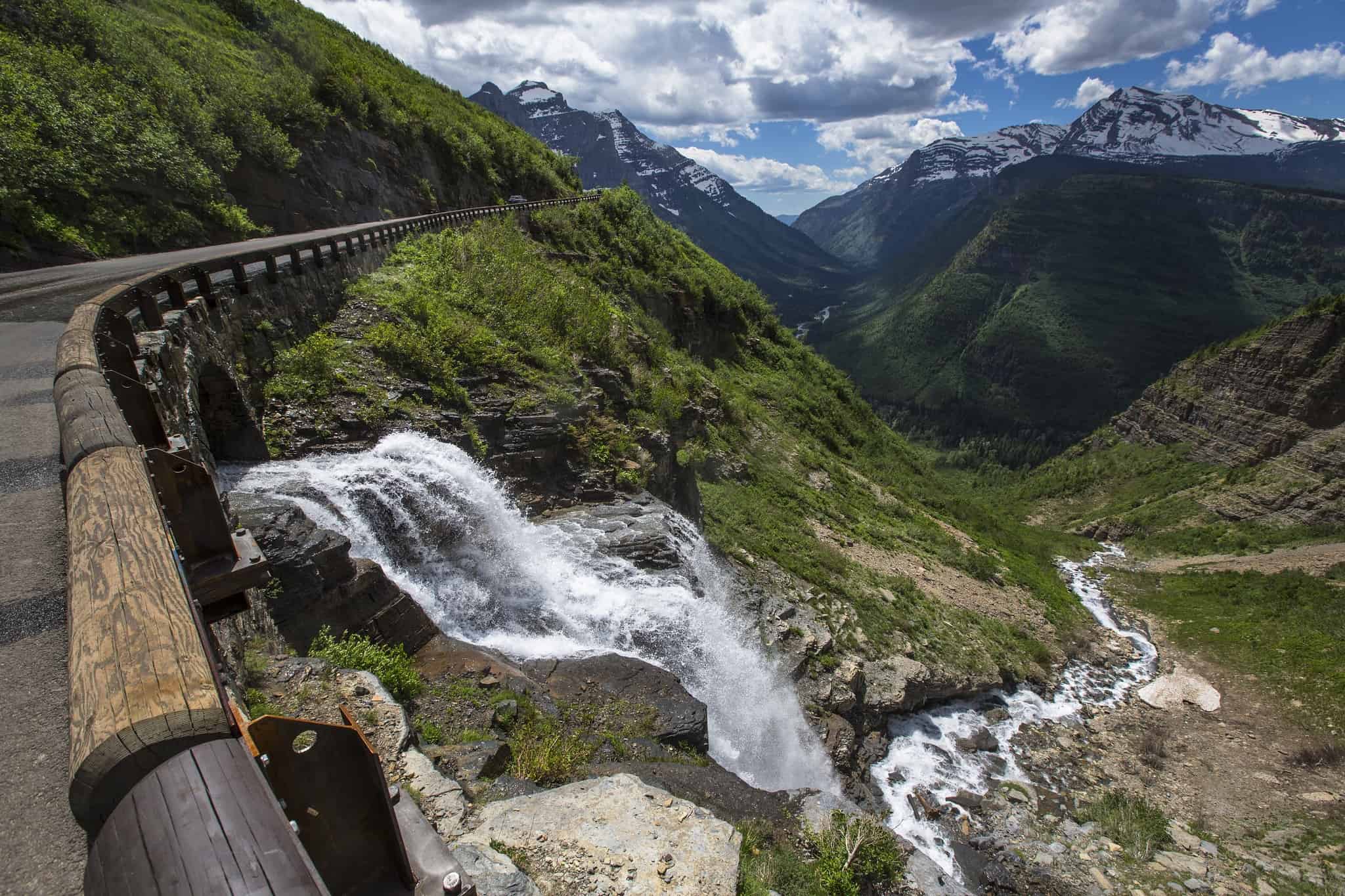
- Going-to-the-Sun Road was completed in 1932 and formally dedicated July 15, 1933 — one of the greatest road-engineering feats in U.S. history.
- The park had approximately 150 glaciers in 1910. Only 26 named glaciers remain today due to climate change.
- Waterton-Glacier became the world’s first International Peace Park in 1932 and a UNESCO World Heritage Site in 1995.
Indigenous Heritage: 10,000 Years of Stewardship
Some links below are affiliate links.
Archaeological evidence places the first human inhabitants of the Glacier region more than 10,000 years ago, per NPS.gov. These were not casual visitors — they were permanent stewards whose cultures were inseparable from the land.
The Blackfeet Nation (Niitsitapi) dominated the eastern prairies and valleys. Their territory once stretched from present-day Alberta to the Yellowstone River. Sacred sites like Chief Mountain, Two Medicine, and Many Glacier were — and remain — central to their creation stories and spiritual practices.
On the western slopes, the Salish, Pend d’Oreille, and Kootenai peoples lived in close relationship with the mountain forests and river valleys. These tribes traveled seasonally across mountain passes, hunting bison on the eastern plains and gathering roots, berries, and medicinal plants in the alpine meadows. The NPS notes all four tribes maintained extensive trail systems that pre-dated any European roads by thousands of years.
When Glacier was established in 1910, the park boundary effectively severed many tribes from traditional homelands and seasonal practices without consent. This legacy of displacement is now acknowledged by the National Park Service, which is actively working to restore Indigenous place names and strengthen tribal partnerships.
European Exploration & the Railroad Era
European fur trappers first reached the Glacier region in the early 1800s, drawn by abundant beaver populations. Their presence introduced trade networks but caused minimal landscape disruption compared to what would follow. By mid-century, U.S. government survey parties were mapping the region for potential transportation corridors.
The single event that transformed the Glacier region from wilderness to tourist destination was the completion of the Great Northern Railway through Marias Pass in 1891. The railroad, led by James J. Hill and later his son Louis Hill, punched through one of the lowest passes in the northern Rockies at just 5,213 feet elevation. Within a decade, passenger trains were depositing tourists at the park’s doorstep.
Louis Hill became one of the park’s most aggressive promoters. The Great Northern Railway built a series of Swiss-style “chalets” within the park boundary starting around 1910, modeled after European alpine resorts. This infrastructure — Glacier Park Lodge, Many Glacier Hotel, and a network of trail camps — established the tourism economy that sustains the region to this day.
George Bird Grinnell & the Fight for a Park
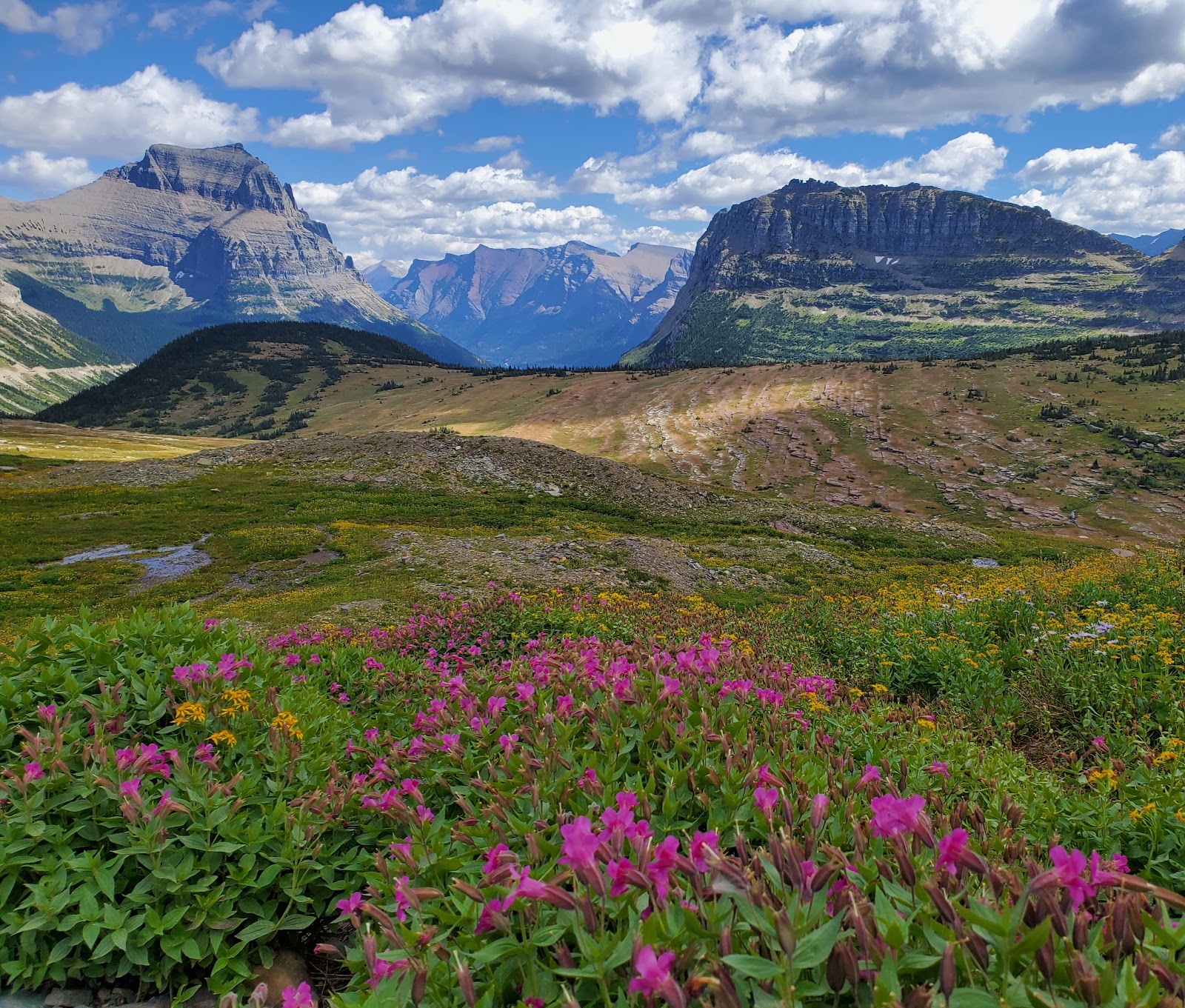

No single person did more to create Glacier National Park than George Bird Grinnell. As editor of Forest and Stream magazine, Grinnell was already a leading conservation voice when he first visited the St. Mary and Swiftcurrent valleys in 1885. He returned nearly every year for two decades, exploring, naming landmarks, and writing articles that captivated the American public.
In 1901, Grinnell coined the phrase that still defines the region: “Crown of the Continent.” The term captured what he saw — an intact ecosystem where prairie, forest, and glacier converged at the top of the continent, the source of rivers draining to three oceans. Per NPS.gov, Grinnell spent the next decade lobbying Congress through his writing, building a coalition that eventually secured the park’s creation.
Congress designated the region a forest preserve in 1897, providing interim protection. But Grinnell pushed for full national park status — a designation that would permanently bar mining, logging, and homesteading. His persistence paid off when President Taft signed the park bill on May 11, 1910.
The Park’s Early Years (1910–1932)
When Glacier became a national park in 1910, it had no paved roads, no visitor center, and no dedicated management agency. The National Park Service itself didn’t exist until 1916 — six years after Glacier’s founding. Before that, the U.S. Army supervised the park, as it did Yellowstone and Yosemite.
The early park economy ran almost entirely on rail tourism. The Great Northern Railway transported visitors to Glacier Park Station (now East Glacier) and Belton Station (now West Glacier). From there, horse-back trips along a growing trail network reached the backcountry chalets. At its peak in the 1920s, the railway’s “See America First” campaign made Glacier National Park one of the most-visited parks in the country.
The park’s first permanent naturalist, George “Doc” Ruhle, was hired in 1932. His interpretive programs — guided hikes, campfire talks, and natural history lectures — became the template for the ranger-led experience visitors still enjoy today. See current ranger-led programs in Glacier National Park that carry on this tradition.

Going-to-the-Sun Road & the International Peace Park
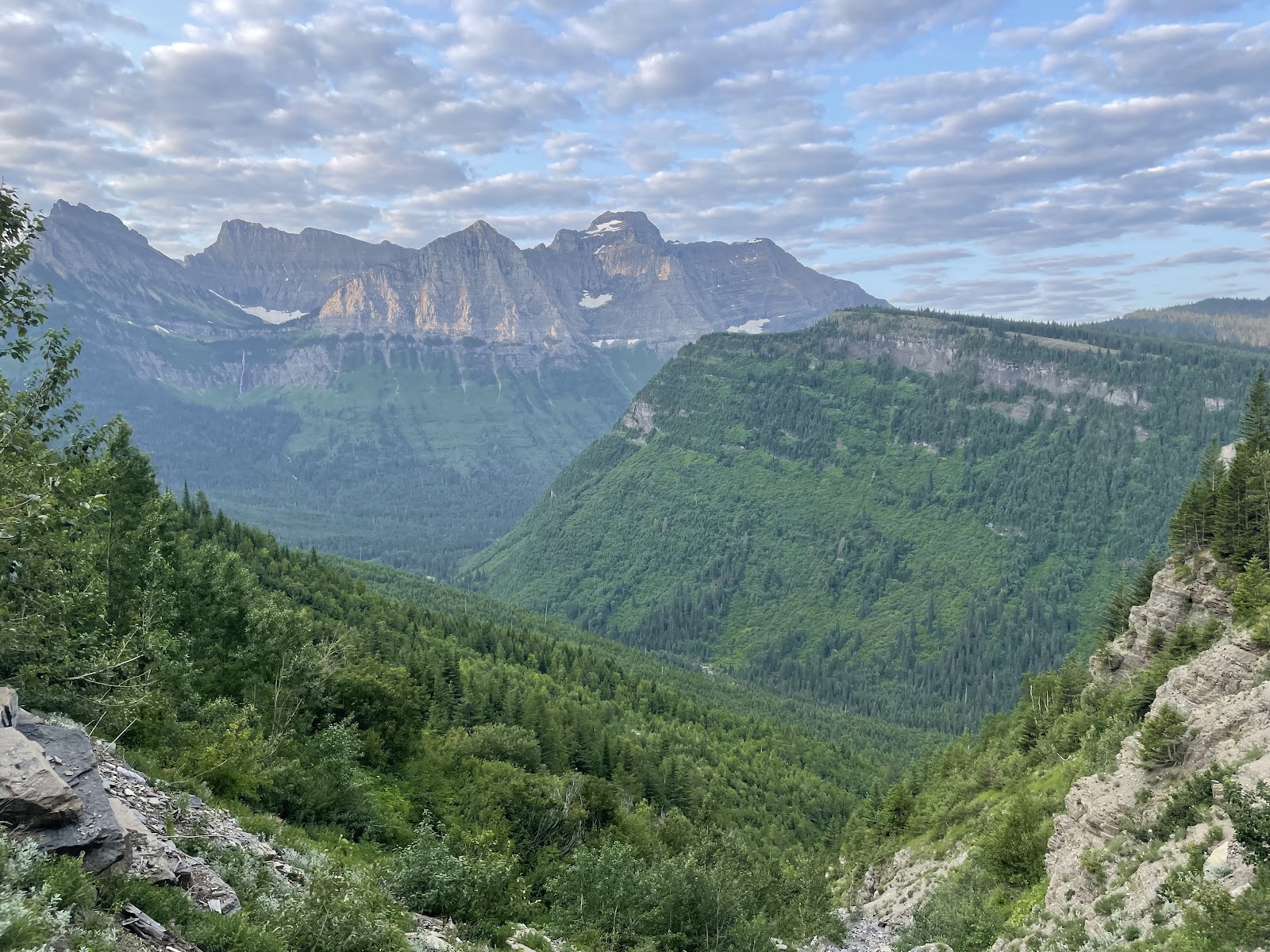
The Going-to-the-Sun Road is arguably the greatest public works achievement in Glacier’s history. Construction began in 1921, requiring workers to blast and carve a 50-mile roadway across the Continental Divide through terrain that had no accessible precedent. Three workers died during construction; many more quit when confronted with sheer cliff faces and year-round avalanche risk.
The road was completed in late 1932 and formally dedicated on July 15, 1933, at a cost of $2.5 million — roughly $60 million in today’s dollars. It crosses Logan Pass at 6,646 feet elevation, the highest point on the Continental Divide accessible by paved public road in Montana. Per NPS.gov, the road is now a National Historic Landmark and an ASCE National Historic Civil Engineering Landmark.
Just months before the road’s dedication, on June 18, 1932, Glacier and Canada’s Waterton Lakes National Park were officially joined as the Waterton-Glacier International Peace Park — the world’s first international peace park. The union was championed by Rotary International members from Alberta and Montana, recognizing that wildlife and watersheds do not respect national borders, per NPS.gov.
The Modern Era: UNESCO Designation & Climate Change
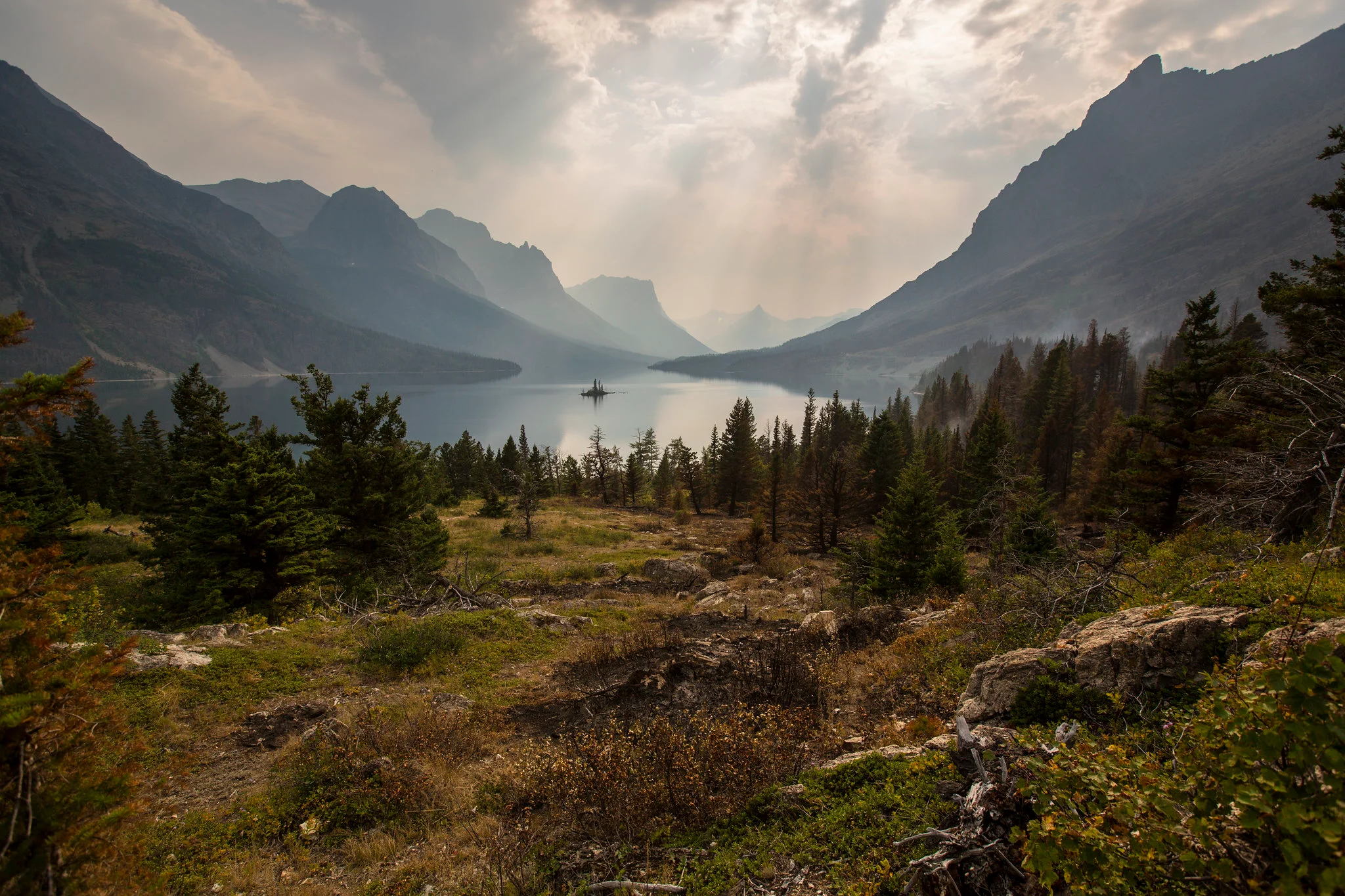

In 1995, the Waterton-Glacier International Peace Park received UNESCO World Heritage Site designation, formally recognizing its status as an area of “outstanding universal value.” The park was cited for its extraordinary biodiversity: over 300 terrestrial animal species, more than 250 bird species, and over 1,000 vascular plant species, per UNESCO.
Yet the park’s most defining feature — its glaciers — is disappearing. When the park was established in 1910, it contained approximately 150 glaciers. By 2015, only 26 named glaciers remained. Per the U.S. Geological Survey, every named glacier has shrunk since records began — some by as much as 80% of their original surface area, with an average loss of 40%.
Average temperatures in Montana have risen by nearly 2.5°F since 1900, with Glacier National Park warming at nearly twice the global average, per the U.S. EPA. Scientists project that if current trends continue, the park’s named glaciers could disappear entirely before 2100 — leaving a park named for features that no longer exist.
The park’s history is thus a story with an unresolved final chapter: from 10,000 years of Indigenous stewardship, through a century of protection and engineering triumph, to a defining test of whether the features that gave this place its name — and its meaning — can survive the 21st century.
Complete Historical Timeline
| Year | Event |
|---|---|
| ~8,000 BCE | Indigenous peoples first inhabit the Glacier region; Blackfeet, Salish, Kootenai, and Pend d’Oreille establish permanent presence |
| Early 1800s | European fur traders enter the region; minimal permanent settlement |
| 1885 | George Bird Grinnell makes his first visit to St. Mary and Swiftcurrent valleys |
| 1889 | Surveyor John F. Stevens officially “discovers” Marias Pass |
| 1891 | Great Northern Railway completed through Marias Pass; commercial tourism begins |
| 1897 | Region designated a federal forest preserve |
| 1901 | Grinnell coins the phrase “Crown of the Continent” |
| May 11, 1910 | President Taft signs the bill establishing Glacier as the 10th U.S. National Park |
| 1916 | National Park Service established; assumes management of Glacier from U.S. Army |
| 1921 | Construction begins on Going-to-the-Sun Road |
| June 18, 1932 | Waterton-Glacier International Peace Park established — world’s first international peace park |
| July 15, 1933 | Going-to-the-Sun Road formally dedicated ($2.5 million); CCC workers begin infrastructure improvements |
| 1995 | UNESCO World Heritage Site designation |
| 2015 | USGS confirms only 26 of the original ~150 glaciers remain |
| 2026 | Park entrance fee: $35/vehicle (7-day pass); annual visitation exceeds 3 million |
Frequently Asked Questions
When was Glacier National Park established?
Who is known as the “Father of Glacier National Park”?
Why is Glacier National Park losing its glaciers?
What was the world’s first international peace park?
How long did it take to build Going-to-the-Sun Road?
Which Indigenous nations have historical ties to Glacier National Park?
How We Researched This Guide
- NPS.gov Glacier History & Culture pages — official park history and Indigenous connections
- U.S. Geological Survey (USGS) — glacier count and surface area change data (1966–2015)
- U.S. EPA Climate Change Connections: Montana — temperature trend data since 1900
- UNESCO World Heritage Centre — designation record for Waterton-Glacier (List #354)
- NPS Going-to-the-Sun Road information page — construction history and road specifications
- National Park Trust — Waterton-Glacier International Peace Park history
Glacier counts vary slightly by source and year; we use the USGS 2015 figure of 26 named glaciers as the most recent peer-reviewed data. Indigenous oral histories and cultural connections are complex and ongoing — this article summarizes documented relationships and is not a substitute for direct tribal perspectives.
Ready to experience Glacier National Park for yourself? Avoid common mistakes and make the most of your trip with our Glacier National Park tips…