Glacier National Park Wildlife Guide: When & Where
Quick answer: When and where to see wildlife?
Glacier National Park Wildlife Guide: When & Where — Logan Pass, Many Glacier, and Two Medicine host the densest recent sighting clusters. According to NPS IRMA, Glacier National Park recorded 2,851,999 visitors in 2026.
Wildlife viewing is best in the early morning and late evening. NPSpecies lists 1,507 documented species in Glacier National Park, including grizzly bear (Ursus arctos horribilis) and black bear (Ursus americanus); sightings are commonly reported during those hours per NPS.gov wildlife pages.
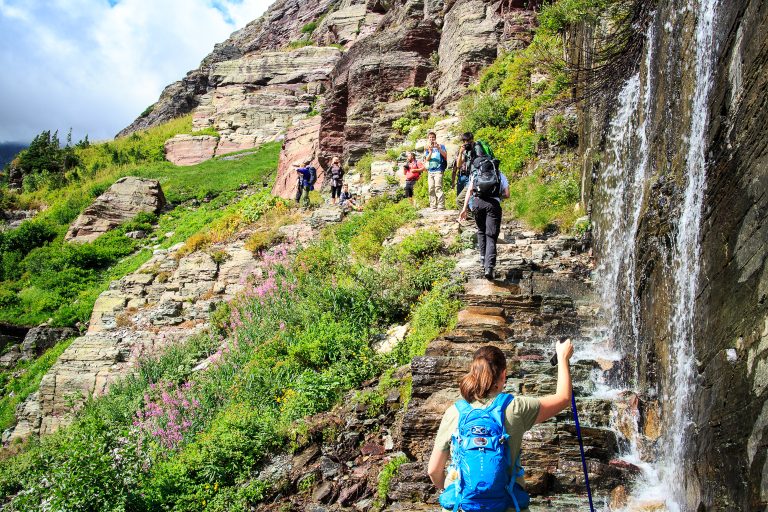
Primary hazards include close wildlife encounters, changing mountain weather, and steep trail sections like the Highline Trail. We recommend planning for sudden weather shifts and carrying bear spray where required by NPS.gov rules.
Use our interactive sightings map to pick a recent cluster and then choose a dawn or dusk window to go. According to NPS.gov, follow posted regulations for each area.
Glacier National Park — At a Glance
- Quick capsule
- According to NPS IRMA, 2,851,999 visitors in 2026; NPSpecies documents 1,507 species in Glacier National Park
- Park area
- 1,013,322 acres
- Documented species
- 1,507 (per NPSpecies)
- Annual visitors
- 2,851,999 (latest published NPS IRMA annual total)
- Busiest months
- July — through September
- Number of campgrounds
- 13 total (NPS API)
- Active alerts
- Seasonal closures on Going-to-the-Sun Road at times (see NPS.gov alerts)
- Entrance fee
- $35 per private vehicle (7-day pass) as of 2026, per NPS.gov
- 2026 non-resident surcharge
- $100/person (ages 16+) for non-US residents, on top of standard fees (NPS.gov, effective 2026)
Which species live here?
NPSpecies lists 1,507 documented species in Glacier National Park, and signature mammals include grizzly bear (Ursus arctos horribilis) and black bear (Ursus americanus), both reported across alpine and valley habitats.
Below we give short ID notes, habitats, and a conservation flag where notable. These notes use NPSpecies and NPS.gov records.
- Grizzly bear (Ursus arctos horribilis) —Large, hump on shoulders, long front claws. Listed as Threatened under the ESA. Found in subalpine meadows, river valleys, and forest edges near Many Glacier and Two Medicine. Observe from 100 yards (per NPS.gov safety guidance).
- Black bear (Ursus americanus) –Smaller than grizzly, rounder ears, no shoulder hump. Widespread in mixed forests and lakeshores. Keep food secured in campgrounds per NPS.gov rules.
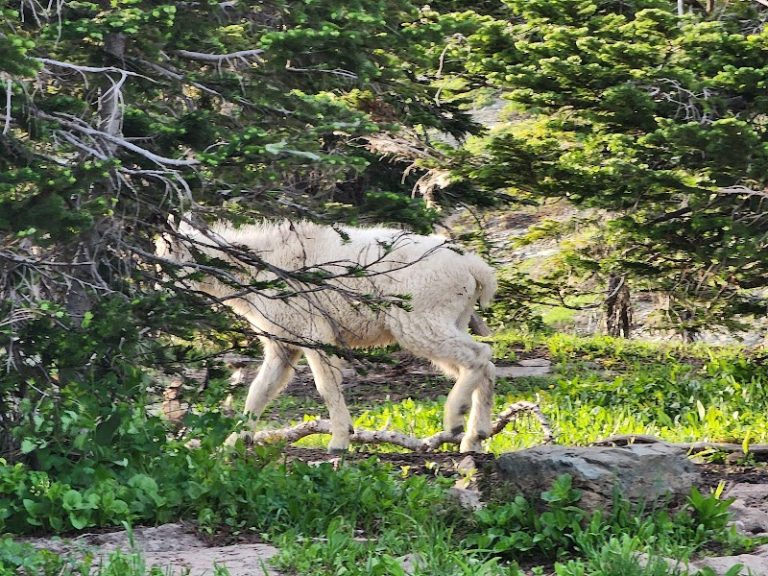
- Mountain goat (Oreamnos americanus) –White coat, short stubby horns. Common on exposed talus and alpine cirques near Logan Pass and along the Highline Trail. We note that goats are a common sight at dawn in these corridors, but typically graze on talus above the trail.
- Bighorn sheep (Ovis canadensis) –Stocky, curved horns on rams, sure-footed on cliff bands. Frequent around Many Glacier and steep limestone outcrops. Binoculars help; do not approach within 25 yards.
- Moose (Alces alces) –Very large, long legs, palmate antlers on bulls. Mostly in willow thickets and river valleys. Best seen at dawn along lowland ponds and creek corridors.
- Elk (Cervus canadensis) –Large deer with branching antlers. Herds use valley meadows and open forests in Many Glacier and Camas Creek zones.
- Marmot (Marmota flaviventris) –Yellow-bellied marmot common; chunky rodent with a loud whistle. Found on talus fields and alpine meadows near Logan Pass and Hidden Lake Overlook.
- Bald eagle (Haliaeetus leucocephalus) –Large raptor with white head. Seen near lakes and rivers. Species recovered under the ESA; still protected and best viewed from a distance.
What our data review highlights: mountain goats appear near the Highline Trail cable sections, often on talus above the trail rather than blocking the path. We recommend binoculars and a quiet approach, and staying on designated viewpoints.
Source citations: NPSpecies records, NPS.gov wildlife pages, and Glacier National Park management notes support the distributions above.
| Species | Best months | Top locations | Conservation status | Safe distance |
|---|---|---|---|---|
| Grizzly bear | Jun–Sep | Many Glacier, Two Medicine | Threatened (ESA) | 100 yards |
| Black bear | May–Oct | Lake McDonald, Polebridge | Least Concern | 100 yards |
| Mountain goat | Jun–Sep | Logan Pass, Highline Trail | Least Concern | 25 yards |
| Bighorn sheep | Jun–Oct | Many Glacier, cliff bands | Least Concern | 25 yards |
| Moose | May–Oct | Two Medicine, river valleys | Least Concern | 25 yards |
| Elk | May–Oct (rut: Sep) | Many Glacier, Camas Creek | Least Concern | 25 yards |
| Bald eagle | Year-round | Lakes and rivers | Recovered (ESA) | 100 yards |
Source: NPSpecies records and NPS.gov wildlife safety guidelines. Distances per NPS.gov regulations for Glacier National Park.
Where are the best viewing spots?
Glacier National Park concentrates wildlife viewing along the Logan Pass corridor and in the Many Glacier and Two Medicine regions. We summarize six reliable viewing areas, the species most often seen there, the best times of day, and practical considerations. Our guidance draws on NPSpecies sighting clusters and NPS.gov trail pages.
- Logan Pass / Hidden Lake Overlook — Mountain goats and marmots are commonly visible around dawn and dusk. Tip: arrive at sunrise for light and fewer visitors. Access requires crossing the Logan Pass area; check current conditions on NPS.gov before you go.
- Hidden Lake Trail junctions — Look for mountain goats and marmots along talus slopes; early morning is best for light and activity.
- Many Glacier area (Red Eagle Lake area) — Elk and moose along willow flats and river edges, especially at dawn.
- Two Medicine region — Grizzly and black bears reported in meadows near rivers; dawn and dusk are optimal for visibility with safer viewing distances.
- Lake McDonald area and shores — Common for bald eagles along lakeshores and diverse waterfowl; practice safe distances per NPS guidelines.
- Supplies and access routes along the Going-to-the-Sun Road view corridors — Periodic wildlife activity near roadside pullouts; stay behind guardrails and follow posted signs.
Safety note: always maintain the recommended distances and never attempt to feed wildlife. We recommend checking road status on NPS.gov/glac before you go, and using binoculars or a zoom lens for safe viewing.
Data and Sources
We base this guide on official park data and widely used reference pages to support accurate planning. Key data points and sources include:
- National Park Service IRMA: 2,851,999 visitors in 2026 for Glacier National Park. See: NPS IRMA — Annual Visitor Demographics
- NPSpecies: 1,507 documented species in Glacier National Park. See: NPSpecies
- NPS.gov: Wildlife safety guidelines and park pages for Glacier. See: NPS.gov/glac
Data points reflect the latest published data from NPS official sources and are intended to support practical planning for visitors. We continuously monitor official datasets to update these figures as new data are released.