Photo Permits & Drone Rules in Glacier National Park (2026)
Drones are banned park-wide in Glacier National Park with no exceptions for recreational or commercial pilots. Most photographers, though, need no permit at all — groups of eight or fewer with hand-carried gear can shoot freely, even for commercial purposes, under the EXPLORE Act (2025).
This guide walks through each rule step by step so you know exactly what is allowed, what requires paperwork, and what will get you a federal citation.
- No permit needed for groups of 8 or fewer using hand-carried gear in public areas — commercial or personal, same rules since January 2025.
- Drones are banned park-wide. Maximum penalty: $5,000 fine, 6 months in jail, equipment confiscation.
- A Special Use Permit ($125 application fee) is required for groups over 8, exclusive site use, or equipment beyond hand-carried.
- Photography workshops require a Commercial Use Authorization (CUA), separate from any film permit.
- Bears and wolves require 100 yards minimum distance; all other wildlife requires 25 yards.
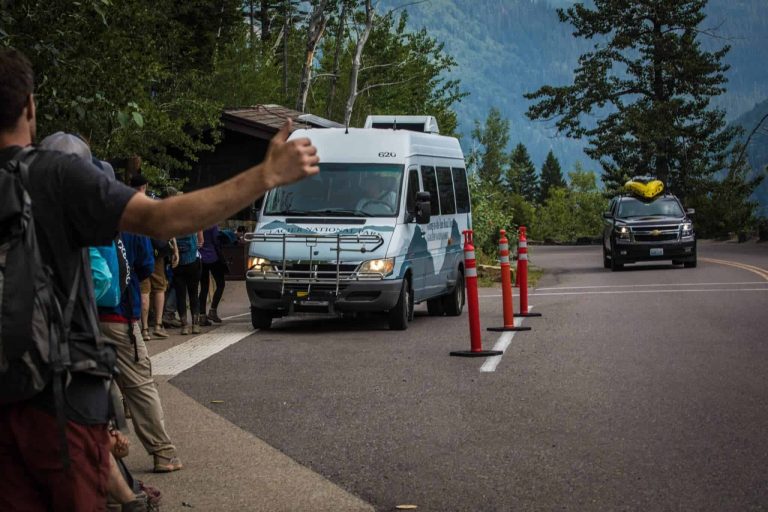
- Logan Pass has a 3-hour parking maximum starting July 1, 2026 — book the ticketed shuttle via Recreation.gov for extended sessions.
Step 1: Determine If You Need a Permit
The EXPLORE Act, signed January 4, 2025, eliminated the old commercial-versus-personal photography distinction in national parks. The NPS no longer cares whether your images will be sold, published, or monetized. What matters is group size, equipment type, and site impact.
| Your Situation | Permit Required? |
|---|---|
| Group of 8 or fewer, hand-carried gear, public area | No |
| Group larger than 8 people | Yes — Special Use Permit |
| Lighting rigs, scaffolding, or non-hand-carried equipment | Yes — Special Use Permit |
| Exclusive use of a site (clearing other visitors) | Yes — Special Use Permit |
| Activity causes adverse impact to resources or visitors | Yes — Special Use Permit |
| Commercial intent (film, advertising, content creation) | No — unless above thresholds met |
| News or media gathering | No — unless above thresholds met |
| Photography already covered by another permit (e.g., wedding) | No additional permit needed |
Why this matters: Before 2025, a travel photographer selling prints from Glacier could technically face a citation for working without a commercial permit. That distinction is gone. A blogger shooting a reel at Logan Pass with friends does not need paperwork — a production company with a 10-person crew and lighting rig does.
Step 2: Apply for a Special Use Permit (If Needed)
When your shoot crosses any permit threshold — group over 8, heavy equipment, or exclusive site access — you need a Special Use Permit (SUP) from Glacier’s superintendent office. The process is straightforward but requires lead time, per NPS.gov.
Step-by-step application process:
- Download form NPS-10-932 from the Glacier film permits page
- Email completed form to glac_sup@nps.gov
- Pay the $125 non-refundable application fee (covers 3 hours of NPS admin time)
- Allow minimum 20 business days (~4 calendar weeks) for processing
| Fee Type | Amount | Notes |
|---|---|---|
| Application fee (non-refundable) | $125 | Covers 3 hours of NPS admin time |
| Additional admin time | Billed at actual cost | Complex projects only |
| Location fee | Case-by-case | Required by federal law |
| Monitoring fee | Hourly rate + mileage | Only if NPS staff assigned to your shoot |
Gotcha: The 4-week minimum is exactly that — a minimum. Summer applications submitted in May or June for July dates frequently take longer as permit volume increases. Submit by late April for peak-season shoots. Winter and shoulder-season applications process faster.
Contact: Phone 406-888-7800. Mail: Superintendent, Glacier National Park, PO Box 128, West Glacier, MT 59936.
Step 3: Understand the Drone Ban
Drones are banned throughout Glacier National Park with zero designated fly zones inside park boundaries. The prohibition covers all unmanned aircraft — quadcopters, fixed-wing drones, FPV racers, model airplanes — under NPS Director’s Policy Memorandum 14-05, enforced via 36 C.F.R. § 1.5, per NPS.gov.
Launching, landing, or operating a drone anywhere inside Glacier — including parking lots and campgrounds — is a federal violation. Much of the park is designated wilderness, which carries additional motorized-equipment restrictions under the Wilderness Act.
| Penalty | Maximum |
|---|---|
| Fine | $5,000 (first offense typically ~$500) |
| Imprisonment | 6 months |
| Equipment | Drone, controller, and memory cards subject to confiscation |
| Classification | Federal misdemeanor |
Exceptions: NPS may use drones for search-and-rescue, fire operations, and scientific research. Visitors can apply for a Special Use Permit for scientific purposes, but recreational or commercial drone photography permits are effectively never granted.
Step 4: Follow Wildlife Distance Rules
Glacier’s wildlife regulations directly affect where you can position yourself for shots. The distances are strictly enforced — claiming you needed a better angle is not a defense, per NPS.gov.
Some links below are affiliate links.
| Species | Minimum Distance | Lens You Need |
|---|---|---|
| Bears and wolves | 100 yards (300 ft) | 400mm+ on full frame |
| All other wildlife (mountain goats, elk, moose, bighorn sheep, deer, nesting birds) | 25 yards (75 ft) | 100–200mm sufficient |

Why this matters: The policy also prohibits any approach within a distance that disturbs or displaces wildlife. Even at 110 yards, you can receive a citation if a grizzly visibly changes behavior — stops foraging, raises its head, or moves away. Rangers have cited photographers beyond the minimum distance when the animal’s reaction justified it.
Practical tip: Carry a 400mm or longer telephoto and plan for static positions. Moving toward an animal for a better frame is the most common cause of enforcement action. For the best wildlife viewing locations in Glacier, we recommend arriving early and waiting for animals to approach your position naturally.
Step 5: Know the Rules for Specific Locations
Logan Pass — New 2026 Parking Rules
Starting July 1, 2026, Logan Pass has a 3-hour parking maximum. No overnight parking except for permitted backcountry users and Granite Park Chalet guests. For photographers planning extended golden-hour sessions, the ticketed shuttle is the better option — it allows unlimited time at Logan Pass.
Shuttle tickets go on sale May 2, 2026 at 8 a.m. MDT on Recreation.gov (60-day rolling window). Next-day releases start June 30 at 7 p.m. MDT. A $1 processing fee applies per ticket. No vehicle reservations are required anywhere in the park in 2026.
Going-to-the-Sun Road
The full 52-mile road typically opens mid-June to early July, weather dependent. The road is open year-round to Avalanche Creek on the west side and St. Mary Visitor Center on the east side. Check current conditions on NPS.gov before departure. For timing your GTSR drive by month, 5–6 a.m. departures from the west entrance put you at key viewpoints during golden hour before crowds build.
Boardwalks and Overlooks
Tripods are allowed on boardwalks and overlooks, but you cannot block other visitors’ access. During peak hours at popular spots like the Wild Goose Island pullout, be prepared to share space. Setting up in a way that prevents others from reaching the viewpoint could result in a ranger asking you to move.
Step 6: Get a CUA for Photography Workshops
Running a paid photography workshop inside Glacier — where clients pay for instruction and you lead them to locations — requires a Commercial Use Authorization (CUA) separate from any film permit. This is an annual authorization managed through the NPS CUA system, per NPS.gov.
CUA application fees: $350 for first application, $250 for subsequent applications to the same park within the same season. Additional management and monitoring fees vary by project scope.
Key 2025 rule change: Photography workshops must now physically transport clients to all field locations within the park. Simply meeting clients at a trailhead no longer qualifies. Annual performance reports are due January 31 each year.
Application windows are seasonal and fill quickly. Contact glac_cua@nps.gov for current deadlines. The spring/summer 2026 window (February 10 – March 31) has already closed — plan ahead for 2027 if you missed it.
Step 7: Prepare Your Gear for Glacier’s Conditions
Glacier’s alpine environment — rapid weather changes, extreme contrast, and strict wildlife distance rules — demands specific gear choices. We’ve shot in the park across all four seasons and these are the essentials.
Lens Priorities
A 400mm telephoto is the single most impactful lens you can bring. At the mandatory 100-yard bear distance, 300mm provides barely usable framing on full frame. A 400mm prime or 100–500mm zoom gives frame-filling wildlife compositions while staying within legal limits. For landscapes, a 16–35mm wide-angle handles lake and meadow work; a 24–70mm covers everything else.

Filters
A circular polarizer (CPL) is essential at Lake McDonald — the colorful pebbled bottom is only visible when surface glare is eliminated. A 3–6 stop neutral density filter enables smooth waterfall exposures even in bright midday conditions. Graduated ND filters help manage the extreme contrast between dark forested valleys and bright snowcapped peaks.
Weather Protection
Battery performance drops fast in cold. Carry at least two spares and keep them warm in a jacket pocket until needed. Bring a rain cover for every camera body — weather shifts from clear to driving rain in under 20 minutes at elevation. A lens-cleaning air blaster plus microfiber cloths are essential after waterfall sessions.
For the complete packing list, see our Glacier hiking essentials guide.
Best Photo Spots in Glacier National Park
Sunrise: Many Glacier and Swiftcurrent Lake
Position at the Swiftcurrent Falls bridge by 5:45 a.m. in July for direct mountain light on Grinnell Point and Mount Gould. The Many Glacier Hotel facade reflects perfectly in calm morning water. Moose are regularly spotted along the lakeshore before 7 a.m. Arrive at the Many Glacier campground the night before — the parking lot fills by 7 a.m. in peak season.
Alpine Meadows: Hidden Lake Overlook at Logan Pass
The 2.7-mile round-trip trail from Logan Pass Visitor Center gains 1,335 feet to a viewpoint above Hidden Lake. Mid-July through early August brings carpets of beargrass and Indian paintbrush as natural foreground elements. Mountain goats frequent the approach trail year-round. Remember the 3-hour parking limit starting July 1, 2026 — book the shuttle for extended sessions.
Sunset: Lake McDonald at Apgar
Lake McDonald’s colorful pebble shoreline provides foreground interest unavailable at most alpine lakes. West-facing exposure makes it Glacier’s premier sunset location. Driftwood and exposed roots add compositional variety. Mosquitoes are heavy June through mid-August — bring repellent. Also a prime winter ice photography location in January.
Icons: Wild Goose Island on St. Mary Lake
The Wild Goose Island viewpoint on Going-to-the-Sun Road provides the park’s most reproduced image: a tiny pine-covered island centered in a lake framed by sawtooth peaks. Works from sunrise through blue hour. The adjacent Sun Point Nature Trail adds 2–3 additional angles unavailable from the roadside pullout.
Remote: Two Medicine Lake and Pitamakan Pass
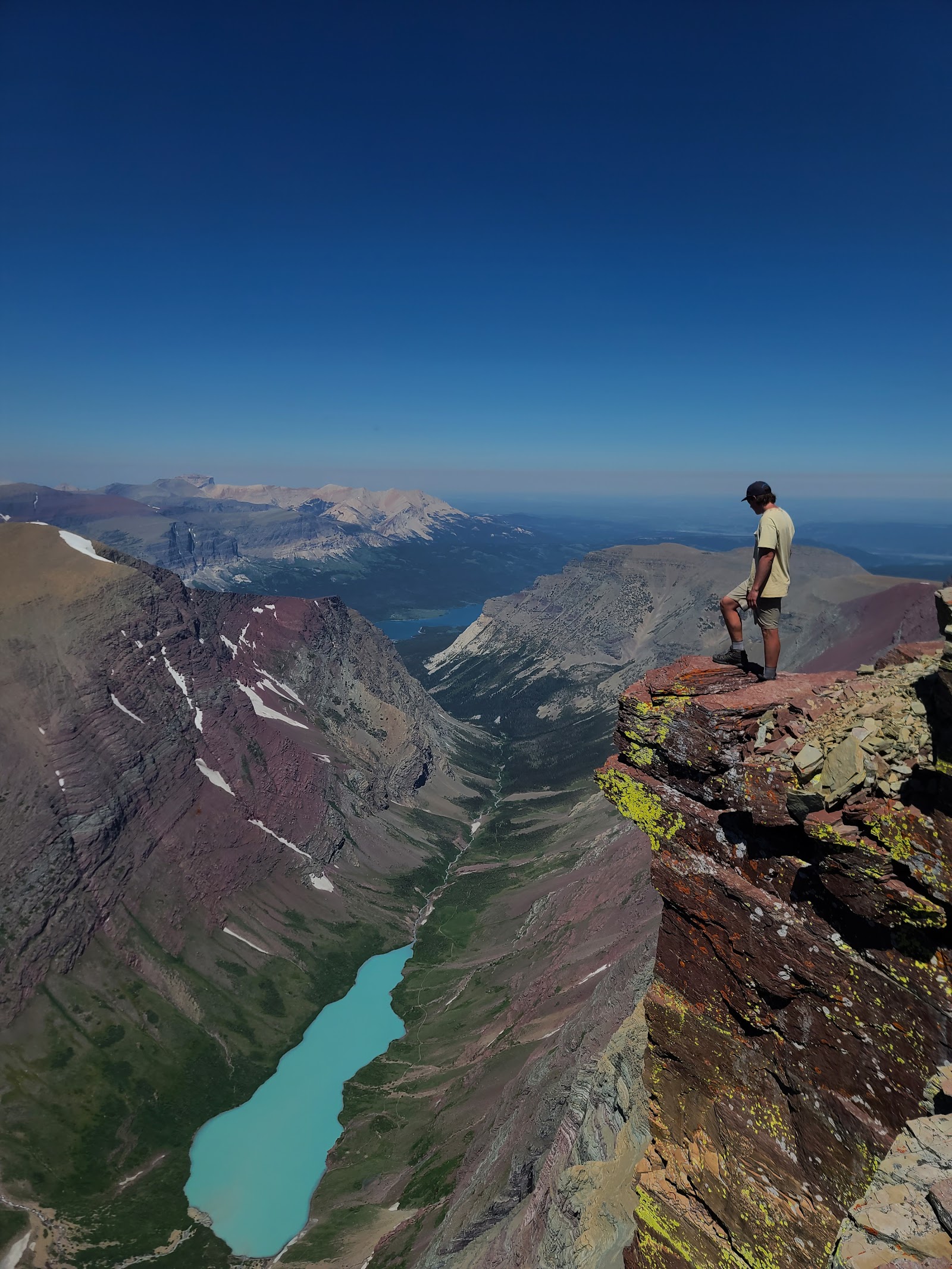
Two Medicine is the most underrated photography corridor in the park. The eastern shoreline provides wide-angle foreground for dramatic peak reflections. The 17-mile Pitamakan-Dawson Pass loop offers alpine scenery equal to Logan Pass with a fraction of the foot traffic — where experienced landscape photographers go when Logan Pass hits capacity.

FAQ
Do I need a permit to photograph in Glacier National Park?
Are drones allowed in Glacier National Park?
Can I use a tripod in Glacier National Park without a permit?
How do I handle the new Logan Pass parking rules as a photographer in 2026?
How close can I get to bears for photography in Glacier?
How We Researched This Guide
- NPS Glacier Film and Photo Permits — permit fees, application process, trigger thresholds
- NPS Filming, Still Photography, and Audio Recording — EXPLORE Act changes, national policy
- NPS Uncrewed Aircraft in the National Parks — drone ban authority and penalties
- NPS Visiting Glacier in 2026 — Logan Pass parking limits and shuttle booking windows
- NPS Glacier CUA — photography workshop authorization requirements
- NPS Glacier Laws and Policies — wildlife distance minimums
Going-to-the-Sun Road opening dates are weather-dependent and change annually. Verify current road status on NPS.gov before your visit. Permit fees and processing times are subject to NPS policy updates; confirm with glac_sup@nps.gov for current information.
Plan your complete Glacier National Park visit — trail conditions, shuttle bookings, campground availability, and seasonal highlights