Glacier National Park in March: What to Expect, What’s Open & What to Do
March is Glacier National Park’s quietest month — no crowds, no timed-entry tickets, and a park blanketed in snow and silence. Most roads remain closed, but the Glacier National Park west entrance stays open year-round, giving access to Lake McDonald and ranger-led snowshoe tours departing every weekend from Apgar.
Expect unpredictable weather, limited facilities, and no in-park lodging — but also extraordinary solitude and the chance to see wildlife tracks fresh in the snow. This guide covers exactly what’s open, what to do, and how to prepare for a March visit.
- Park is open year-round; entrance fee is $35/vehicle even when booths are unstaffed — self-pay envelopes available at each entrance.
- Going-to-the-Sun Road opens only 11 miles from Apgar to Lake McDonald Lodge (west) and 1.5 miles from St. Mary (east). All other roads closed.
- No advance reservations or timed-entry tickets required in March.
- Ranger-led snowshoe walks run Saturdays and Sundays at 10:30 a.m. and 2:00 p.m. from Apgar — snowshoe rental is $2.
- Zero in-park lodging open; base in Whitefish (~26 miles), Columbia Falls, or Kalispell.
- Spring plowing of Going-to-the-Sun Road begins April 1, 2026 — March is the last true winter month.
March Weather & Conditions
Average high temperatures in March reach around 44°F (7°C), but the park can still receive heavy snowfall — particularly at higher elevations — and overnight lows regularly drop into the mid-20s°F. Per NPS.gov, snowpack at upper elevations is typically at or near its peak during March.
In recent years, late-March warm spells have accelerated snowmelt at lower elevations. In 2026, the Many Glacier valley reached just 5% of median snowpack by late March — meaning bare ground rather than deep snow in some valley areas. Weather can shift quickly: prepare for both powder snow days and above-freezing afternoons.
| Condition | West Side (Lake McDonald) | East Side (St. Mary / Many Glacier) |
|---|---|---|
| Avg High Temperature | 42–46°F (6–8°C) | 38–44°F (3–7°C) |
| Avg Low Temperature | 26–30°F (-3 to -1°C) | 18–25°F (-8 to -4°C) |
| Snowpack | Variable; valley can be bare late March | Variable; windier and colder |
| Road Access | Apgar to Lake McDonald Lodge open | 1.5 miles from St. Mary only |
| Crowds | Near-zero | Near-zero |
What’s Open in March
Some links below are affiliate links.

The park is open every day of the year, per NPS.gov, but almost all infrastructure is closed or minimally staffed in March. Here is a precise breakdown of what you’ll find:

| Feature | Status in March | Notes |
|---|---|---|
| Park entry | Open | $35/vehicle self-pay; no staffed booths |
| Going-to-the-Sun Road (west) | Open 11 miles | Apgar to Lake McDonald Lodge only |
| Going-to-the-Sun Road (east) | Open 1.5 miles | From St. Mary entrance only |
| Camas Road | Closed | Plowing begins April 1, 2026 |
| Many Glacier Road | Closed | Plowing begins April 1, 2026 |
| Two Medicine Road | Plowing started Mar 25, 2026 | Check conditions; may be open by late March |
| Apgar Visitor Center | Building closed | Restrooms and water available outside |
| In-park lodging | All closed | Lake McDonald Lodge opens mid-May |
| Restaurants and camp stores | All closed | Stock up in Whitefish or Kalispell |
| Timed-entry tickets | Not required | Only needed once GTSR opens to vehicles |

The active NPS alert for 2026 confirms the Going-to-the-Sun Road Seasonal Closure is in effect. Per NPS Current Conditions, spring plowing of GTSR begins April 1, 2026 — gated road sections will open to hikers and cyclists as plowing progresses, but vehicles must wait for the full opening, typically late May or early June.
If you’re visiting because other Glacier roads are closed, see our guide on things to do in Glacier when Going-to-the-Sun Road is closed for additional ideas that don’t depend on high-elevation access.
Things to Do in Glacier in March
Limited road access doesn’t mean a boring visit. March offers some of the park’s most peaceful experiences, and several activities are uniquely possible only in winter.
Ranger-Led Snowshoe Walks
The signature March activity. Per NPS.gov, ranger-led snowshoe tours depart from Apgar on Saturdays and Sundays at 10:30 a.m. and 2:00 p.m. The two-hour walk follows McDonald Creek and the Oxbow area, looking for wildlife sign. Snowshoe rental is $2 at the Apgar Visitor Center — rentals are only available with the guided tour. Walks run from early January through late March; verify the 2026 end date on the NPS site.
Cross-Country Skiing on Going-to-the-Sun Road
The 11-mile open section of GTSR from Apgar to Lake McDonald Lodge is a prime cross-country skiing and snowshoeing corridor. Per NPS.gov, the route is mostly flat and accessible to beginners. A left turn off the road near the lodge leads to McDonald Falls — a dramatic payoff in under two miles round-trip. Bring your own skis and poles; no rentals are available for self-guided trips.
Snowshoeing to McDonald Falls
The trail to McDonald Falls begins at the Lake McDonald Lodge parking area and follows gentle terrain along the road. The falls are stunning in winter, with ice formations framing the rushing water. Round-trip from the lodge is about 1.5 miles on flat terrain — manageable for most fitness levels with or without snowshoes depending on conditions.
Lake McDonald Scenic Drive
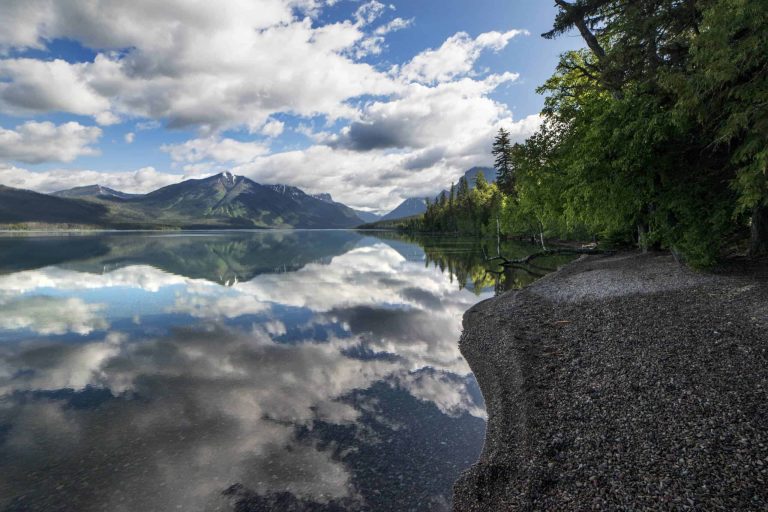
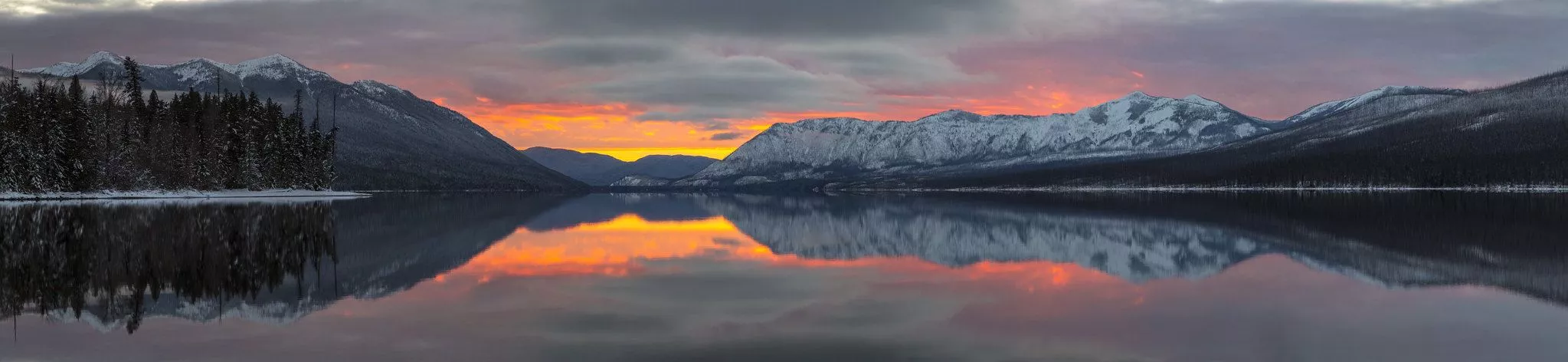
Even without snowshoes or skis, driving slowly along the open 11-mile stretch of GTSR offers stunning lake and mountain views. The road hugs the north shore of Lake McDonald with multiple pull-offs. On clear mornings, the lake perfectly mirrors the surrounding peaks. Check our Lake McDonald photography guide for the best viewpoints and light timing.
Winter Photography
March light at Glacier is exceptional — low-angle golden hour combined with snow-dusted peaks and fog over the lake. The absence of other visitors means unobstructed compositions at every viewpoint. Sunrise arrives around 7:00–7:30 a.m. in early March, shifting to about 6:15 a.m. by month’s end after daylight saving time begins on March 8, 2026. Sunset extends to 7:30–8:00 p.m.
Wildlife Viewing in March
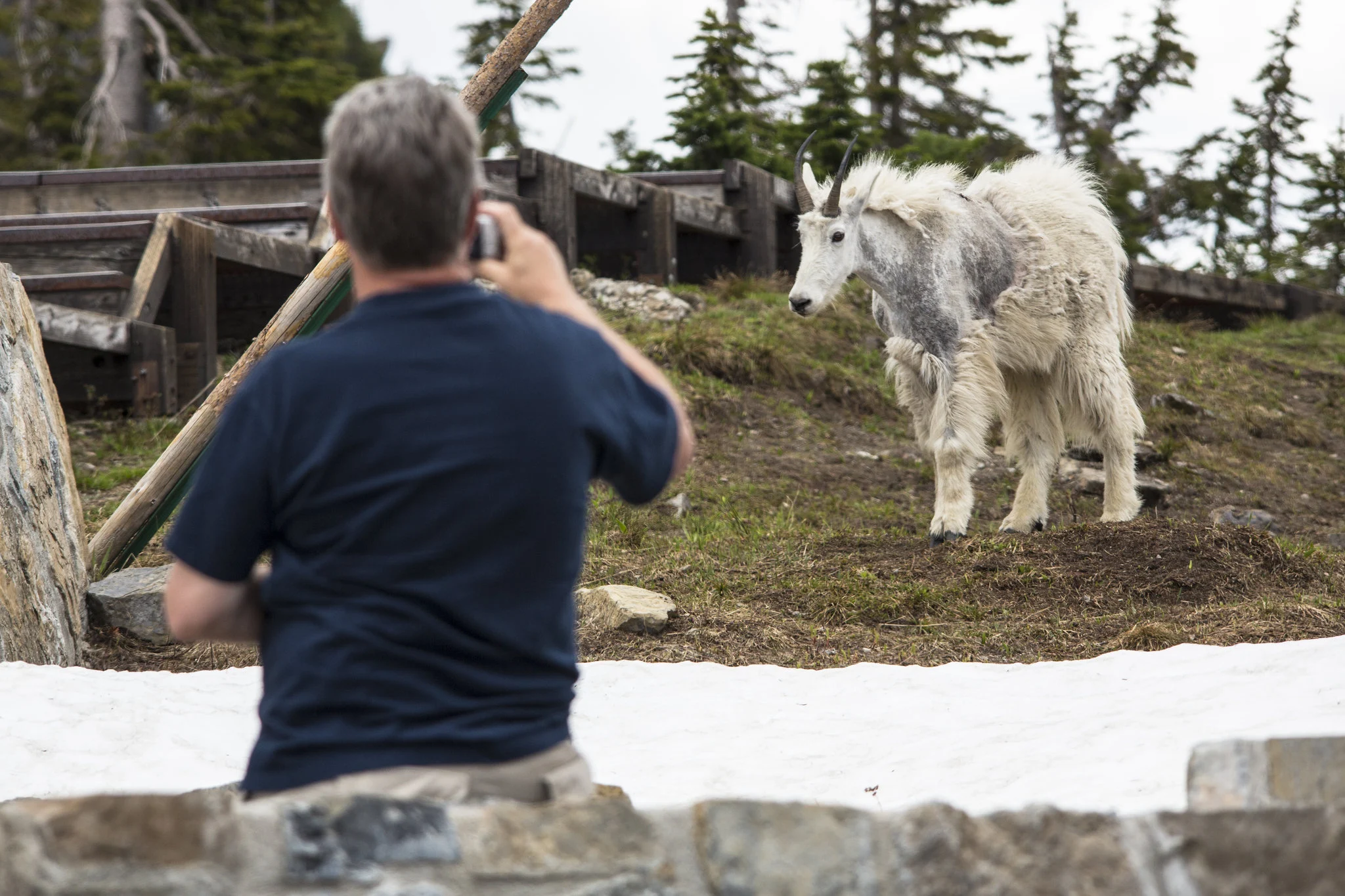
March is a transition month for wildlife. The near-zero visitor numbers mean animals are less habituated to human presence — they range more freely, often closer to the road. Per Glacier National Park Conservancy, late March can bring the first grizzly and black bear sightings of the year as bears begin emerging from dens at lower elevations.
| Species | Where to Look | Likelihood in March |
|---|---|---|
| Elk | Apgar meadows, lower McDonald Creek | High — present in valley most of winter |
| White-tailed deer | Apgar Village area, road shoulders | High |
| Mountain goat | Rocky outcrops above Lake McDonald Lodge | Moderate — visible with binoculars |
| Grizzly bear | Lower elevation slopes near entrances | Low to moderate (late March emergence) |
| Gray wolf | North Fork area (closed roads; tracks only) | Low — possible at dawn/dusk |
| Bald eagle | McDonald Creek corridor | Moderate |
Tracking animals in fresh snow is one of March’s unique rewards. The ranger snowshoe tours specifically look for wolf, fox, otter, and mink tracks along McDonald Creek. Even self-guided visitors can read the story of the night’s wildlife activity in the snow beside the road each morning.
Where to Stay Near Glacier in March
No in-park lodging opens until May. All gateway communities are within 45 minutes of the Apgar west entrance, and March rates are 50–70% lower than summer peak.
| Town | Distance to West Entrance | Best For |
|---|---|---|
| Whitefish | ~26 miles (35 min) | Best hotel and restaurant selection; ski resort access |
| Columbia Falls | ~14 miles (20 min) | Budget motels, grocery stores, closer to park |
| Coram | ~8 miles (12 min) | Closest to west entrance; very limited selection |
| Kalispell | ~34 miles (40 min) | Full services, Glacier Park International Airport (FCA), big-box stores |
| East Glacier Village (east side) | ~2 miles to east entrance | Very limited winter services — call ahead |
Whitefish is the premier March base. Whitefish Mountain Resort typically operates through late March or early April, making it easy to combine a park snowshoe morning with afternoon ski runs. The walkable downtown has year-round restaurants and a full grocery store. Fly into Glacier Park International Airport (FCA) in Kalispell — a 35-minute drive to the west entrance — with direct service from Seattle, Salt Lake City, Denver, and Minneapolis.
What to Pack for Glacier in March
March conditions span 15°F to 50°F (-9°C to 10°C) within a single day. Layer aggressively and plan for both bluebird days and sudden snowstorms with wind off the lake.

| Category | Item | Notes |
|---|---|---|
| Base layer | Merino wool or synthetic long underwear | Avoid cotton — stays wet and cold |
| Mid layer | Fleece or down jacket | Down is warmer; fleece works when wet |
| Outer shell | Waterproof/windproof jacket and pants | Essential for wind off Lake McDonald |
| Footwear | Waterproof insulated winter boots | At least 400g insulation for cold days |
| Traction devices | Microspikes or Yaktrax | GTSR and trailheads can be sheet ice |
| Snowshoes | Optional (rent for $2 on guided tours) | Bring your own for self-guided snowshoeing |
| Sun protection | UV-blocking sunglasses + SPF 30+ sunscreen | Snow reflection intensifies UV exposure |
| Bear spray | 10 oz canister minimum | Required any time off pavement |
| Navigation | Downloaded offline maps (AllTrails, Gaia GPS) | Cell service unreliable throughout park |
| Food and water | Full day supply | No services inside park; stock up in Columbia Falls or Whitefish |

For a deeper list of what to avoid bringing and common planning pitfalls, see our Glacier National Park tips and mistakes guide — many apply year-round but are especially relevant in March when there are zero services inside the park to bail you out.
Frequently Asked Questions
Is Glacier National Park open in March?
Do I need a reservation to visit Glacier National Park in March?
What roads are open in Glacier National Park in March 2026?
Are there guided activities in Glacier in March?
Is Glacier National Park worth visiting in March?
How We Researched This Guide
- NPS.gov Glacier — Winter, Weather, Hours, Current Conditions, Guided Winter Activities, and Cross-Country Skiing pages
- Glacier National Park Conservancy (glacier.org) — winter conditions overview
- Coeur d’Alene Press — March 26, 2026 report on spring plowing start
- AccuWeather and US Climate Data — historical March temperature averages for Glacier NP
- Glacier Tourbase — month-by-month visitor conditions guide
Road opening dates and snowshoe tour end dates vary year to year. Always verify current conditions at NPS Current Conditions before your visit.
Ready to plan your March visit to Glacier? Check the NPS current conditions page for the latest 2026 road and facility updates before you head out.