Cell Service, WiFi & Connectivity in Glacier National Park
Most of Glacier National Park has no cell service — and that’s largely intentional. Only the gateway areas near West Glacier and St. Mary offer any reliable signal, and even there, coverage drops fast once you head toward the mountains. Plan accordingly: download everything before you arrive.
Verizon is the strongest carrier in and around Glacier. AT&T provides spotty service near the entrances. T-Mobile lags behind both. Inside the park — Going-to-the-Sun Road, Logan Pass, Many Glacier, Two Medicine, the North Fork — all carriers go dark. WiFi exists at two visitor centers and in the lobbies of five in-park lodges, but it runs on slow satellite connections and won’t support streaming.
- No cell service at Logan Pass, Many Glacier, Two Medicine, the North Fork, or anywhere on Going-to-the-Sun Road above the valley floor.
- Verizon has the best coverage at West Glacier, Apgar Village, and St. Mary. AT&T is a distant second. T-Mobile is weakest.
- Free public WiFi at Apgar and St. Mary visitor centers (30-minute limit). Lodge WiFi is satellite-only, lobby-only, and extremely slow.
- “The Phone Booth” — a pullout on Many Glacier Road ~11 miles from the hotel — is the last cell signal before the valley.
- Download Gaia GPS or AllTrails maps offline before leaving your hotel. Paper maps from visitor centers are your backup.
- Use the NPS Day Trip Plan to log your itinerary before heading into no-service zones.
Where You Have Cell Service
Cell coverage in Glacier concentrates in the two gateway communities and fades within a few miles of either entrance. Expect a strong-enough signal for calls and data only in these areas, per NPS.gov:
Some links below are affiliate links.
| Location | Coverage Quality | Notes |
|---|---|---|
| West Glacier (town) | Good | Best signal before entering the park on the west side |
| Apgar Village | Moderate | Near park entrance; Verizon strongest |
| Apgar Visitor Center | Moderate | Signal drops as you move toward Lake McDonald |
| St. Mary (town) | Moderate | East side gateway; Verizon gets usable data here |
| St. Mary Visitor Center parking lot | Moderate | Last reliable signal on the east entrance |
| East Glacier Park (town) | Fair | Outside the park boundary; Verizon and AT&T work |
| Whitefish (city) | Full | ~26 miles from West Glacier; full urban coverage all carriers |
| Browning (town) | Fair | East side; ~12 miles from St. Mary entrance |

Where There Is No Service


Once you pass Apgar Village headed east, or St. Mary headed west, signal disappears. All carriers lose coverage as you climb into the mountains. Per NPS.gov, these areas have no cell service:
| Location | Status |
|---|---|
| Going-to-the-Sun Road (most of it) | No service |
| Logan Pass (6,646 ft) | No service |
| Many Glacier Valley | No service |
| Two Medicine Valley | No service |
| North Fork (Polebridge area) | No service |
| Goat Haunt (remote backcountry) | No service |
| US Highway 2 (southern boundary) | No service |
| Highline Trail | No service |
| Grinnell Glacier Trail | No service |
| Avalanche Lake Trail | No service |
| All backcountry zones | No service |
Carrier Comparison: Verizon vs AT&T vs T-Mobile
Your carrier matters at Glacier. Coverage differences are significant — Verizon users get usable service at the entrances while T-Mobile users may drop to no signal in the same spot. Here’s how each carrier performs based on visitor reports compiled by DeadCellZones.com and traveler forums:
| Carrier | West Glacier / Apgar | St. Mary | Going-to-the-Sun Road | Many Glacier |
|---|---|---|---|---|
| Verizon | Good — calls + data | Moderate — usable data | No service | No service |
| AT&T | Fair — spotty drops | Poor — voice only | No service | No service |
| T-Mobile | Poor — frequent drops | Poor — very weak | No service | No service |
Bottom line: If you’re choosing a carrier for a Glacier trip, Verizon is the clear winner. AT&T offers marginal coverage at the gateway towns. T-Mobile users should download everything offline and treat Glacier as a completely offline environment from the moment they enter the park.
WiFi at Visitor Centers & Lodges
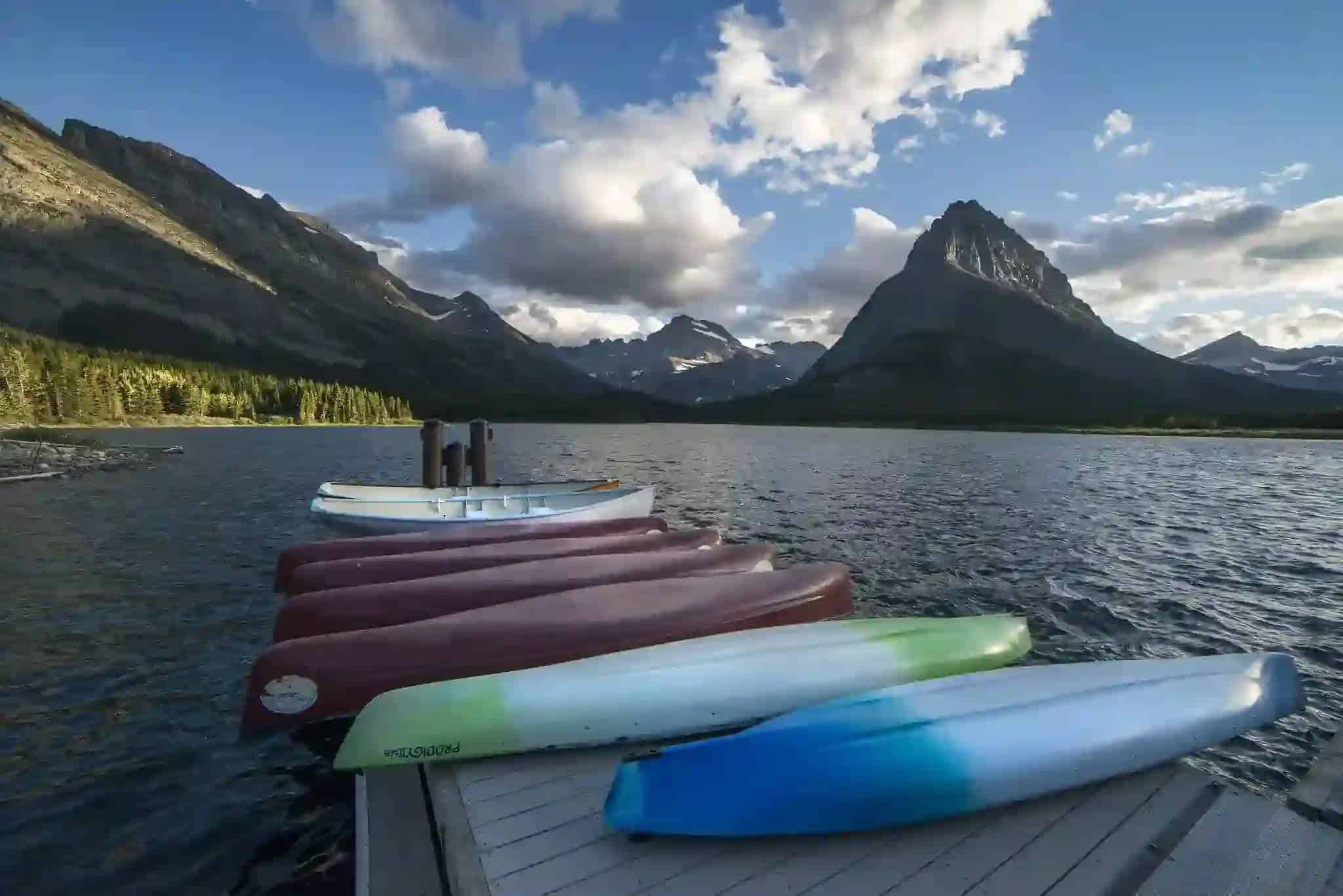
WiFi is available in the park, but it’s limited, slow, and designed for basic communication — not streaming or remote work. Here’s what each type of location provides, per Glacier National Park Lodges:
Visitor Centers (Free Public WiFi)
Two visitor centers offer free public WiFi with a 30-minute session limit per device. This is the best connectivity option inside the park — use it to send messages, check email, or upload photos before heading deeper into the park.
- Apgar Visitor Center — West entrance, open late May through mid-October (hours vary by season)
- St. Mary Visitor Center — East entrance, open late May through mid-October

In-Park Lodge WiFi (Guests Only)
All five in-park lodges offer WiFi, but only in lobbies and front desk areas — not in rooms. The connection runs on satellite with shared bandwidth that cannot support streaming, social media uploads, video calls, or photo transfers, per Glacier National Park Lodges FAQs.
| Lodge | WiFi Available | In-Room Phone | Area |
|---|---|---|---|
| Lake McDonald Lodge | Yes (lobby only) | Yes (lodge rooms, cabins, suites) | West side, Lake McDonald |
| Village Inn at Apgar | Yes (lobby only) | No | West side, Apgar |
| Rising Sun Motor Inn | Yes (lobby only) | No | East side, near St. Mary Lake |
| Many Glacier Hotel | Yes (lobby only) | Yes (all rooms) | Many Glacier Valley |
| Swiftcurrent Motor Inn | Yes (lobby only) | No | Many Glacier Valley |
“The Phone Booth” & Other Signal Spots

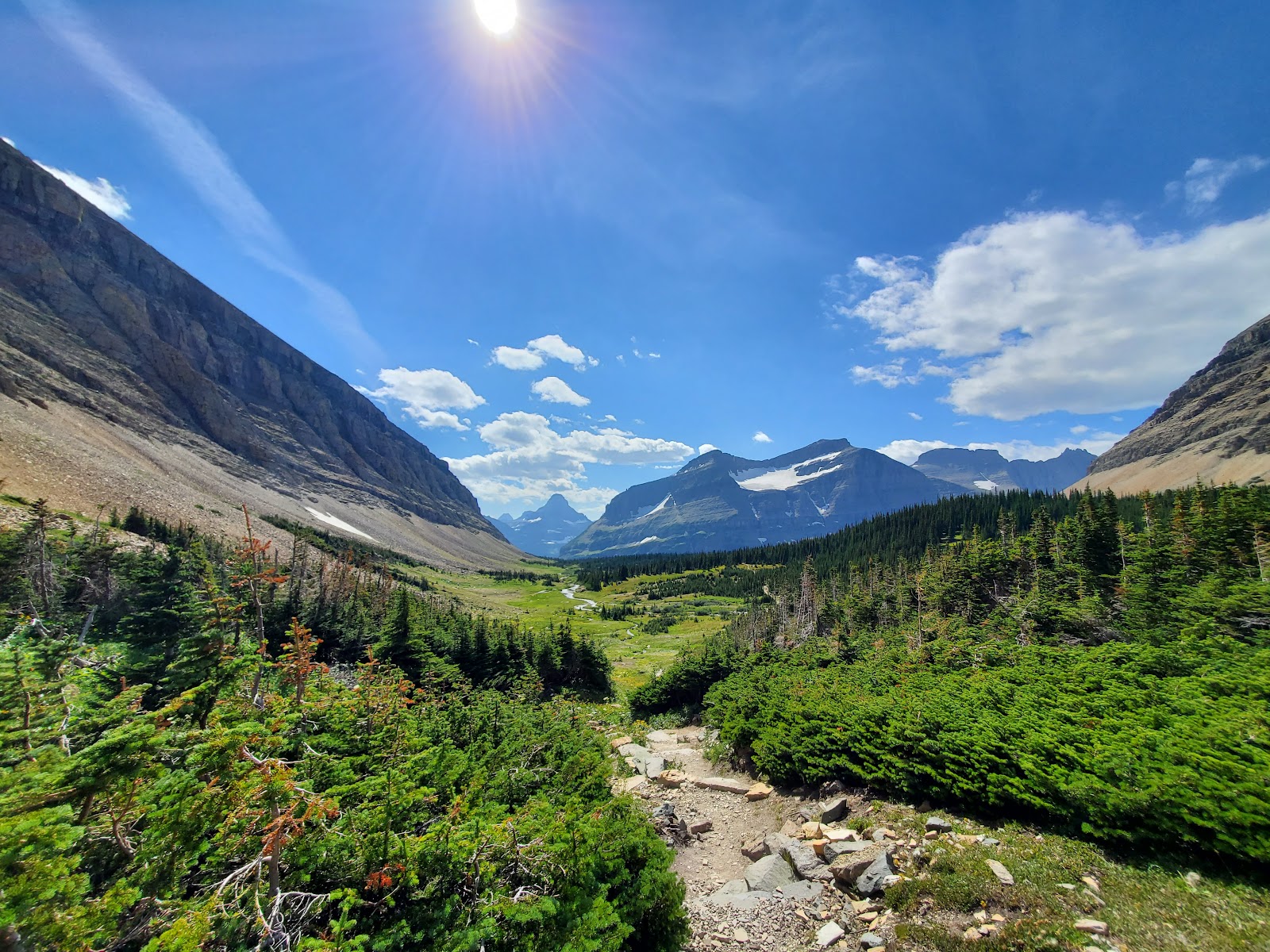
Experienced Glacier visitors know a handful of unofficial signal spots where you can squeeze in a final call or message before going completely off-grid. The most famous is “The Phone Booth.”
The Phone Booth (Many Glacier Road)
A well-known pullout on Many Glacier Road, located approximately 0.5 miles from the Babb turnoff — roughly 11 miles from Many Glacier Hotel and Swiftcurrent Motor Inn. As you drive in, you’ll often see cars pulled over with people on their phones. This is the last spot with any cell signal before entering the valley. Make your calls and send your messages here, not in the Many Glacier parking lot where there’s no signal at all.
Other Known Signal Spots
- St. Mary Visitor Center parking lot — Reliable Verizon signal; last data opportunity on the east entrance route
- Apgar Village — Verizon works for calls and basic data before heading up GTTS Road
- East Glacier Park town — Outside the park boundary; full coverage before heading to Two Medicine
- Loop trailhead pullouts (GTTS Road) — Some visitors report occasional Verizon signal, but it’s unreliable
Offline Apps & Pre-Trip Prep
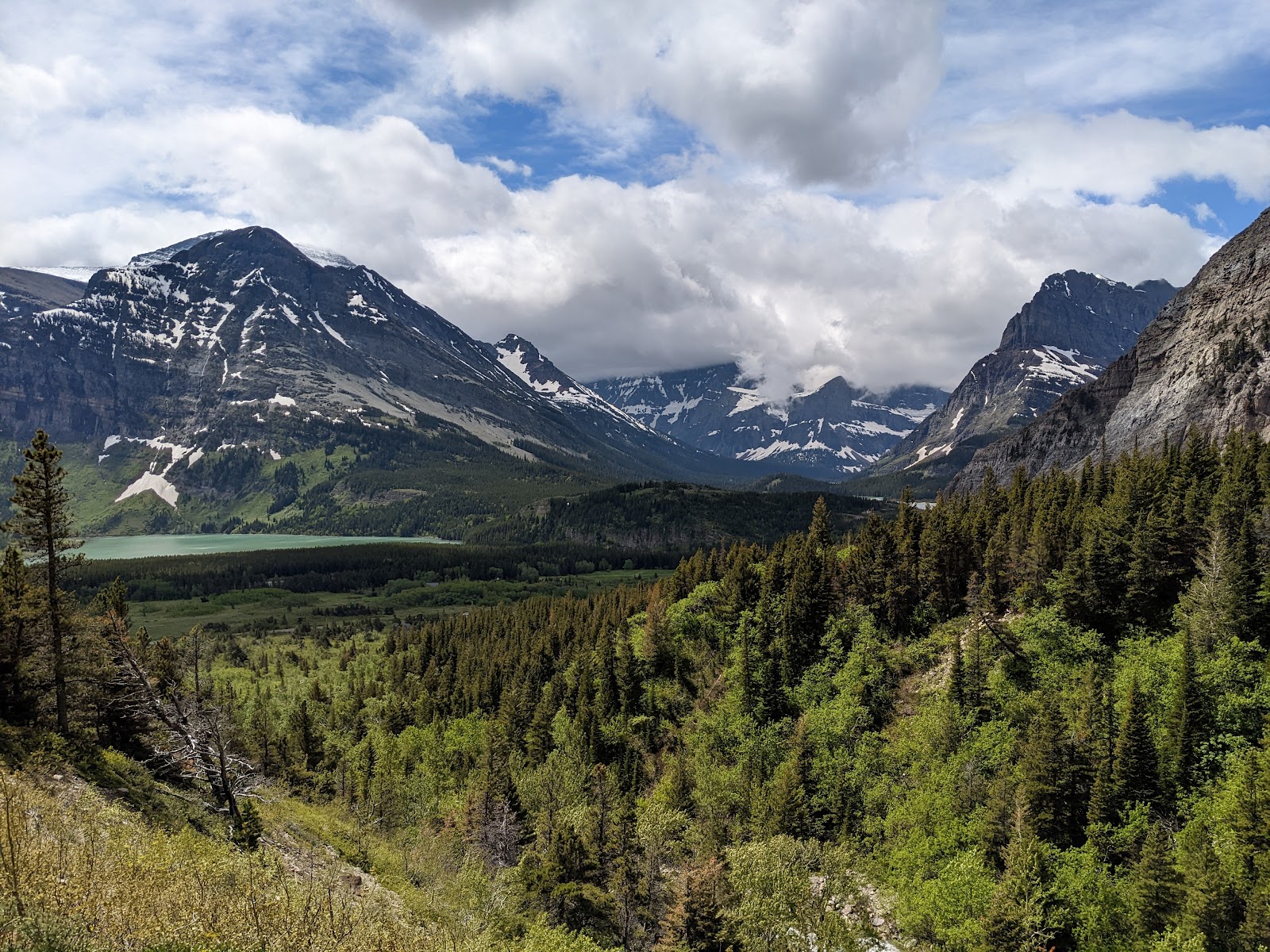
Downloading maps and apps before entering Glacier National Park is a safety requirement, not a convenience. Do this at your hotel the night before, not in the park entrance line.
Recommended Apps to Download Offline
| App | Cost | Best For | Offline Capability |
|---|---|---|---|
| NPS App | Free | Park maps, alerts, trail info, Day Trip Plan | Yes — download park maps in-app |
| Gaia GPS | $39.99/year | Backcountry navigation, topo maps | Yes — full topo at multiple zoom levels |
| AllTrails Plus | $35.99/year | Trail discovery, GPX navigation | Yes — offline maps + GPS positioning |
| onX Backcountry | $29.99/year | Off-trail navigation, land ownership | Yes |
| Weather.gov app | Free | Forecasts for specific park zones | No — check before leaving service |
Pre-Trip Checklist
- Download offline maps for your planned route plus alternate exits
- Log a Day Trip Plan in the NPS App at the trailhead — records your route and expected return time
- Tell a contact outside the park your full plans and when to call for help
- Download the park’s free paper trail map PDF and screenshot key sections
- Check active alerts on NPS.gov — bear activity, trail closures, and road conditions update daily
- Download music, podcasts, or entertainment for multi-day in-park stays
For more park-prep tips, see our guide to 15 common Glacier mistakes to avoid.
Satellite Options
Two satellite technologies can provide connectivity in Glacier’s dead zones. Neither is built into standard smartphones (with the exception of the iPhone SOS feature), but both are increasingly common among RV travelers and backcountry hikers.
Starlink (for RVs and Car Campers)
Portable Starlink dishes connect to SpaceX’s low-earth orbit satellite network, delivering 120–220 Mbps with the Starlink Mini kit. You need a clear view of the sky — heavy tree cover in some valley campgrounds can interfere. The portable Starlink plan runs $165/month and can be activated and paused by month. Ideal for extended stays at Apgar, St. Mary, or Many Glacier campgrounds where you can set up a dish at your site.
Satellite Messengers (for Hikers)
Dedicated satellite messenger devices are the standard safety tool for Glacier’s backcountry. These transmit GPS coordinates and text messages via satellite regardless of cell coverage:
- Garmin inReach Mini 2 (~$350 device + $14.95/month minimum plan) — two-way text messaging, SOS, live GPS tracking
- SPOT Gen4 (~$150 device + $11.95/month) — one-way messaging and SOS, simpler and cheaper
- Apple iPhone 14+ Emergency SOS via satellite — free emergency SOS for iPhone 14/15/16 owners; one-way, emergency use only
Safety & Emergency Communication
Limited connectivity makes communication planning essential before entering Glacier. Here’s what the park recommends, per NPS.gov:
| Action | When | Purpose |
|---|---|---|
| Log a Day Trip Plan (NPS App) | At trailhead, before hiking | Rangers can locate you if you’re overdue |
| Tell a contact your plans | Before entering the park | Someone outside knows to call for help |
| Check alerts at the visitor center | Morning of your hike | Fresh bear activity, trail closures, weather |
| Carry a satellite messenger | Any overnight backcountry trip | Two-way messaging + SOS capability |
| Note lodge pay phone locations | Upon check-in | Backup communication from in-park lodges |

In an emergency inside the park, your options are: find a ranger (staffed at major trailheads in summer), use a lodge pay phone, activate a satellite messenger SOS, or hike to a location with cell coverage. 911 calls from inside the park route to Flathead County Emergency Services. Review the NPS safety tips page for current emergency contacts before your trip. Also check our guide on east side vs. west side connectivity differences when choosing your base.
FAQ
Does Verizon work in Glacier National Park?
Is there WiFi at Glacier National Park?
Can I use my phone for navigation on Going-to-the-Sun Road?
What is “The Phone Booth” in Glacier National Park?
Does T-Mobile work in Glacier National Park?
When will Glacier National Park expand cell service?
How We Researched This Guide
- NPS.gov — Cell and WiFi Connectivity page for Glacier National Park (official coverage zones)
- Glacier National Park Lodges — Connectivity & Communication page and FAQs
- NPS Comprehensive Telecommunications Plan (approved January 2022, FONSI signed December 2021)
- DeadCellZones.com — carrier coverage reports and visitor reviews for Glacier
- Tripadvisor Glacier National Park forum — visitor carrier signal reports
- SatelliteInternet.com — national parks connectivity analysis
- T-Mobile — Starlink Direct-to-Cell satellite texting product page
- Glacier Institute — cell service video and tips
Cell coverage changes as carriers update infrastructure. Verizon, AT&T, and T-Mobile do not publish granular internal coverage maps for Glacier. Lodge WiFi speeds vary by season and occupancy. Verify current conditions at the visitor center on arrival.
Planning your Glacier trip? Download the NPS App, cache your trail maps offline, and read our full tips guide before you go.