2-Day Glacier National Park Itinerary
Two days in Glacier National Park is enough to drive the full 50-mile Going-to-the-Sun Road, hike to an alpine lake, and experience the wildlife-rich Many Glacier valley — if you plan both days strategically. This itinerary splits the park geographically: Day 1 covers the west side and Logan Pass, Day 2 focuses on the east side and Many Glacier.
Glacier spans 1,012,837 acres with 745 miles of trails, 762 lakes, and 26 active glaciers — all accessible from a single mountain road. Entrance is $35 per vehicle (7-day pass), and per NPS.gov, no vehicle reservation is required in 2026.
- Day 1: West side — Lake McDonald, Trail of the Cedars, Avalanche Lake, Logan Pass
- Day 2: East side — Many Glacier, Fishercap Lake (moose), Grinnell Lake boat shuttle, St. Mary
- No vehicle reservation required in 2026 — major change from prior years
- Logan Pass parking limited to 3 hours starting July 1, 2026 — arrive early or use the ticketed shuttle
- 2026 park shuttles do NOT serve Avalanche Creek — you must drive to that trailhead
- Entrance fee: $35/vehicle (7-day pass). Park does not accept cash.
- Glacier has lost 54 of its 80 glaciers since 1910 — visiting now means seeing what remains
Glacier National Park Quick Facts
| Fact | Detail |
|---|---|
| Established | May 11, 1910 |
| Size | 1,012,837 acres (1,583 sq miles) |
| Trails | 158 trails, 745.9 total miles |
| Lakes | 762 total (131 named) |
| Active glaciers | 26 (down from 80 in 1910) |
| Highest point | Mt. Cleveland, 10,448 ft |
| Logan Pass elevation | 6,646 ft (Going-to-the-Sun Road summit) |
| Largest lake | Lake McDonald — 9.4 miles long, 464 ft deep |
| Wildlife | 71 mammal species, 276 bird species |
| Entrance fee (2026) | $35/vehicle (7-day); $20/person on foot or bicycle |
Per NPS.gov, Glacier is designated an International Biosphere Reserve, a UNESCO World Heritage Site, and an International Dark Sky Park — one of the few national parks to hold all three designations.
Some links below are affiliate links.
Day 1: West Side — Lake McDonald & Going-to-the-Sun Road
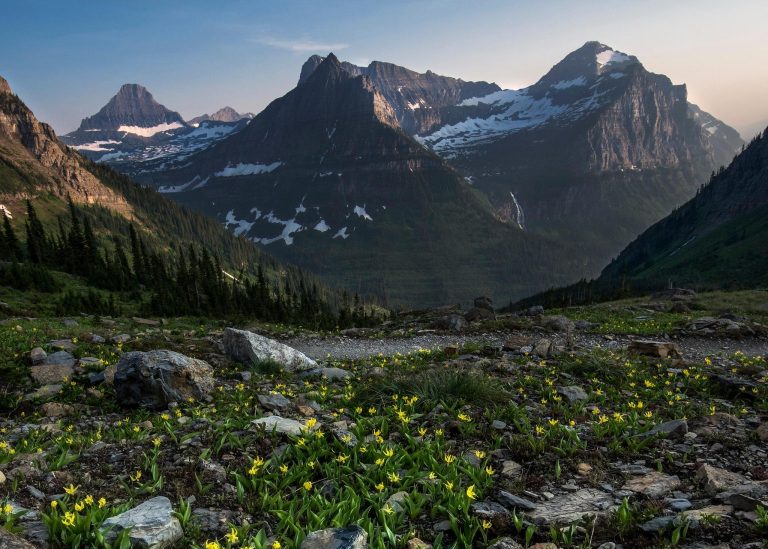
Start your first day at the west entrance (Apgar). Arrive by 7:00 AM at the latest — Logan Pass parking fills at sunrise during peak season, and the best hiking is done before afternoon thunderstorms develop. The west side holds Glacier‘s largest lake, its most accessible forest hike, and the dramatic alpine summit at Logan Pass.
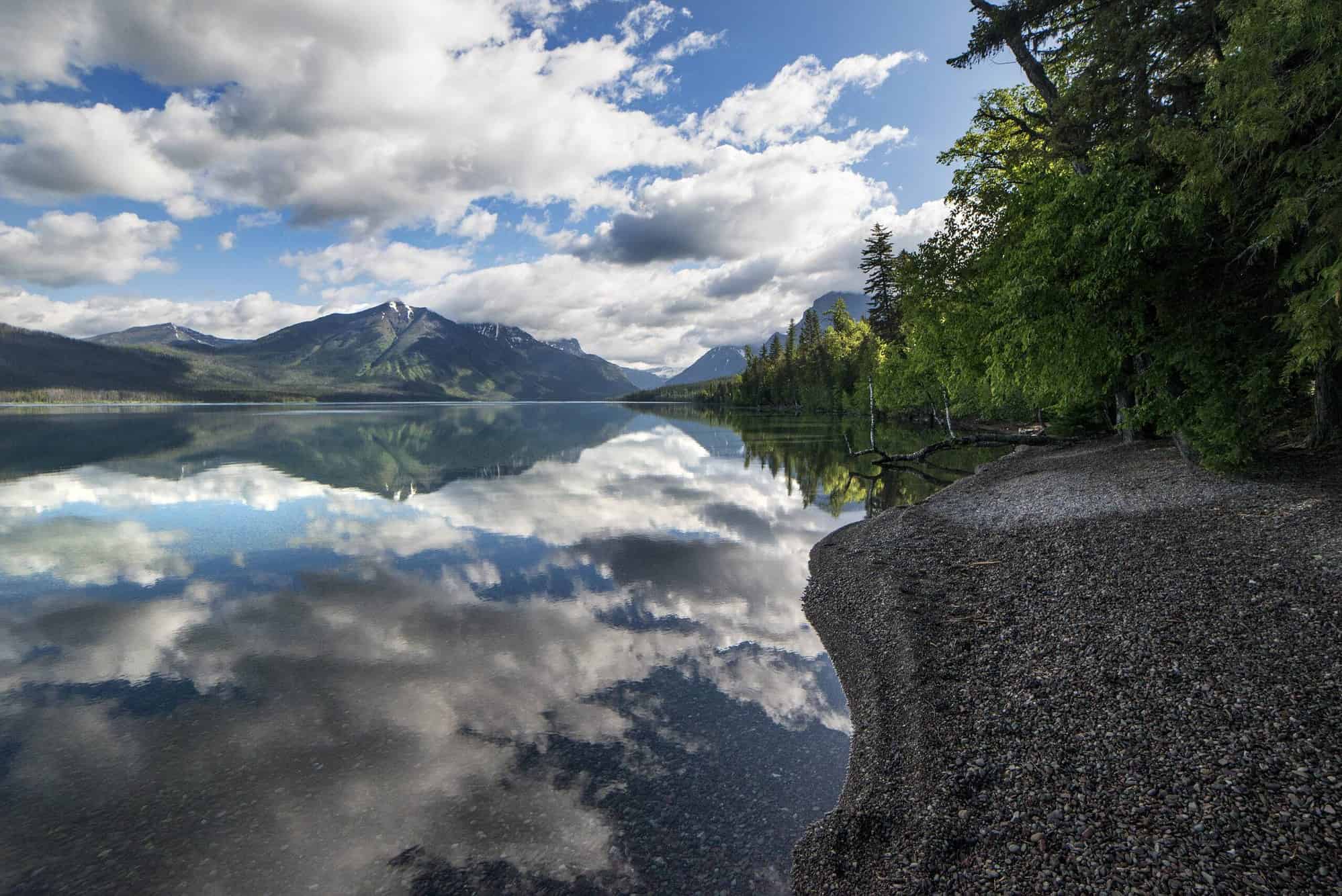

Morning: Apgar Village & Lake McDonald (7:00–9:00 AM)
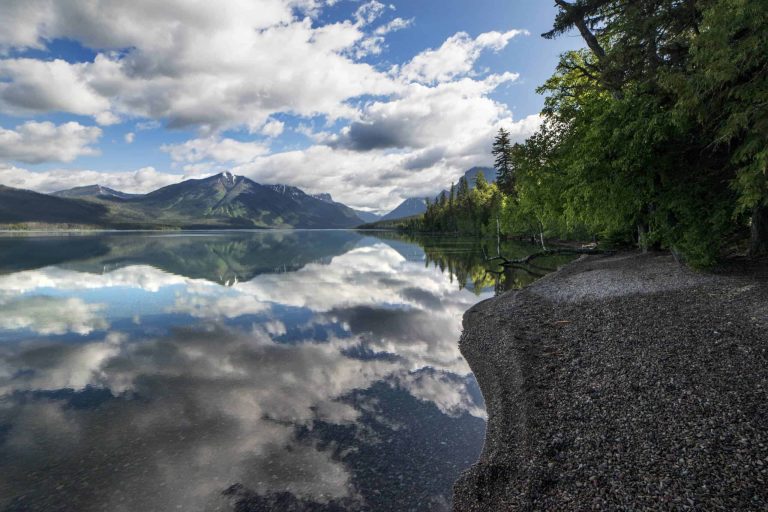
Stop at Apgar Village to grab coffee, pick up a free park map, and check visitor center bulletin boards for current road conditions and bear activity. Then drive to Lake McDonald — walk the pebble beach near the lodge. The red, green, and blue stones are exposed Belt Supergroup rock dating back 1.5 billion years, polished by glacial melt. This is one of the most photographed shorelines in the park.
Boat tours depart from the Lake McDonald Lodge dock. If adding a morning boat tour, plan 1–1.5 hours and pre-book — they sell out. Kayak rentals are available from Glacier Park Boats Co. (~$18/hr single, ~$24/hr double).
Mid-Morning: Trail of the Cedars & Avalanche Lake (9:00 AM–1:00 PM)
Drive 7 miles east on Going-to-the-Sun Road to Avalanche Creek (mile 16 from Apgar). The 1-mile Trail of the Cedars loop runs on a boardwalk through old-growth western red cedar and hemlock — one of the most ecologically distinctive ecosystems in the park, and fully accessible. It connects directly to the Avalanche Lake trailhead.
| Hike | Distance | Elevation Gain | Time | Difficulty |
|---|---|---|---|---|
| Trail of the Cedars | 1 mi loop | Minimal | 30–45 min | Easy |
| Avalanche Lake | 5.9 mi RT | 757 ft | 2.5–4 hrs | Moderate |
Avalanche Lake delivers a turquoise alpine lake ringed by cliffs with waterfalls streaming off the rock face year-round. It is the best moderate hike on the west side for the scenery-to-effort ratio. The trail gains elevation gradually through forest before opening to the lake basin.
Afternoon: Going-to-the-Sun Road & Logan Pass (1:00–5:00 PM)
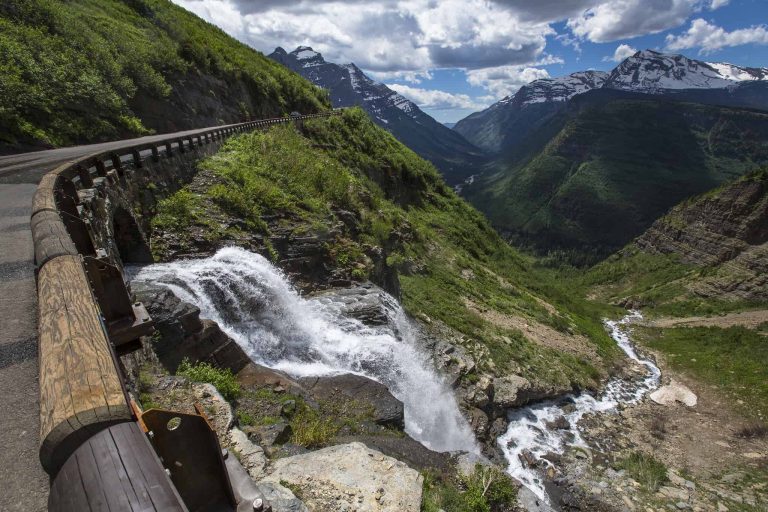
Drive the remaining 16 miles to Logan Pass (6,646 ft). Going-to-the-Sun Road is 50 miles total — the alpine section between Avalanche and the pass has the most dramatic scenery. Vehicle size restriction: maximum 21 feet long and 8 feet wide (including mirrors) between Avalanche Creek and Rising Sun. There are no gas stations along this 33-mile stretch.

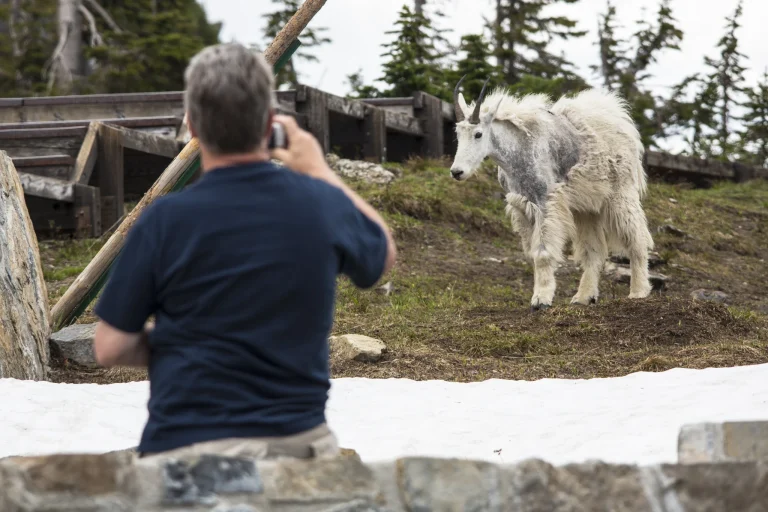
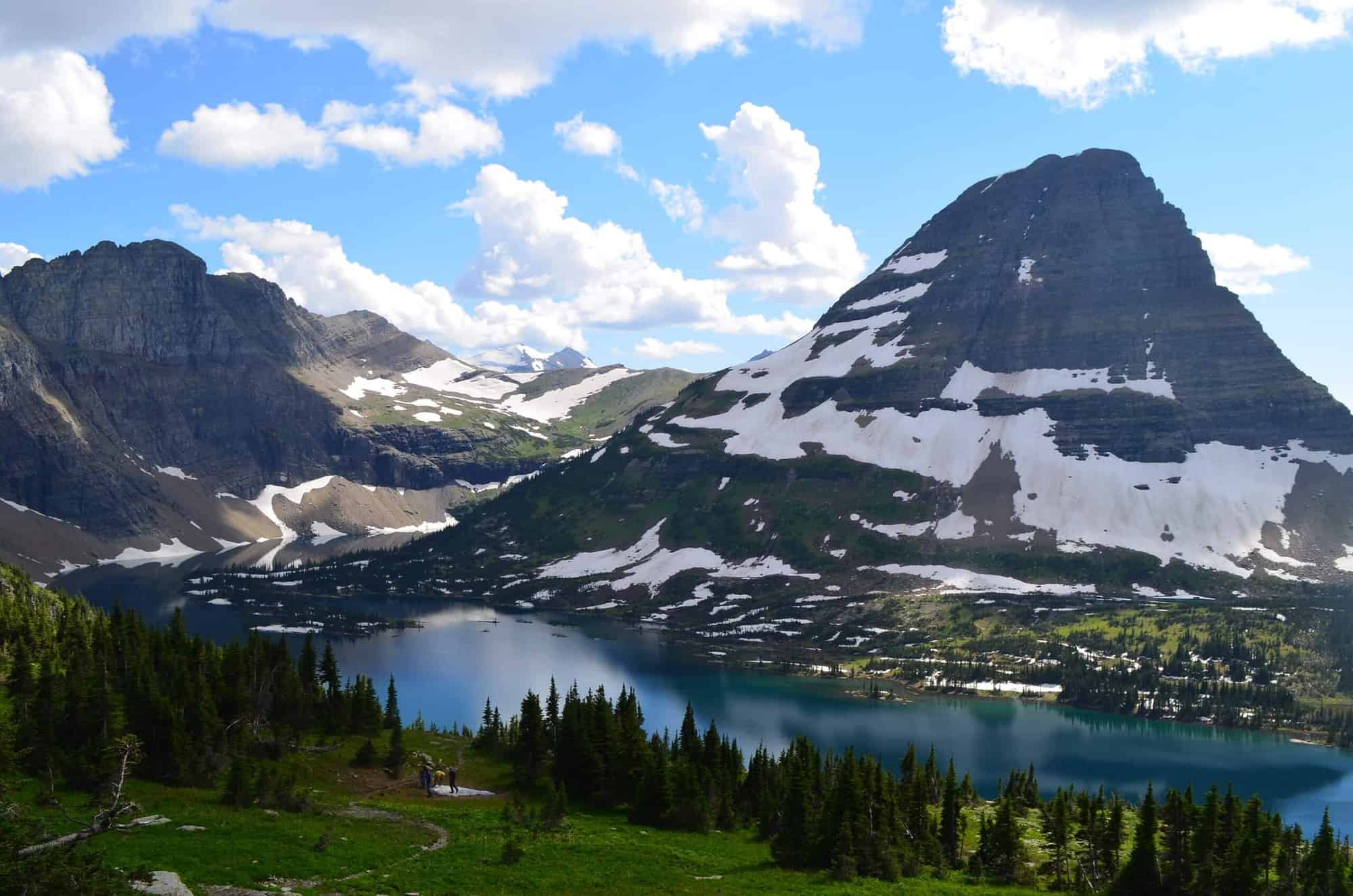
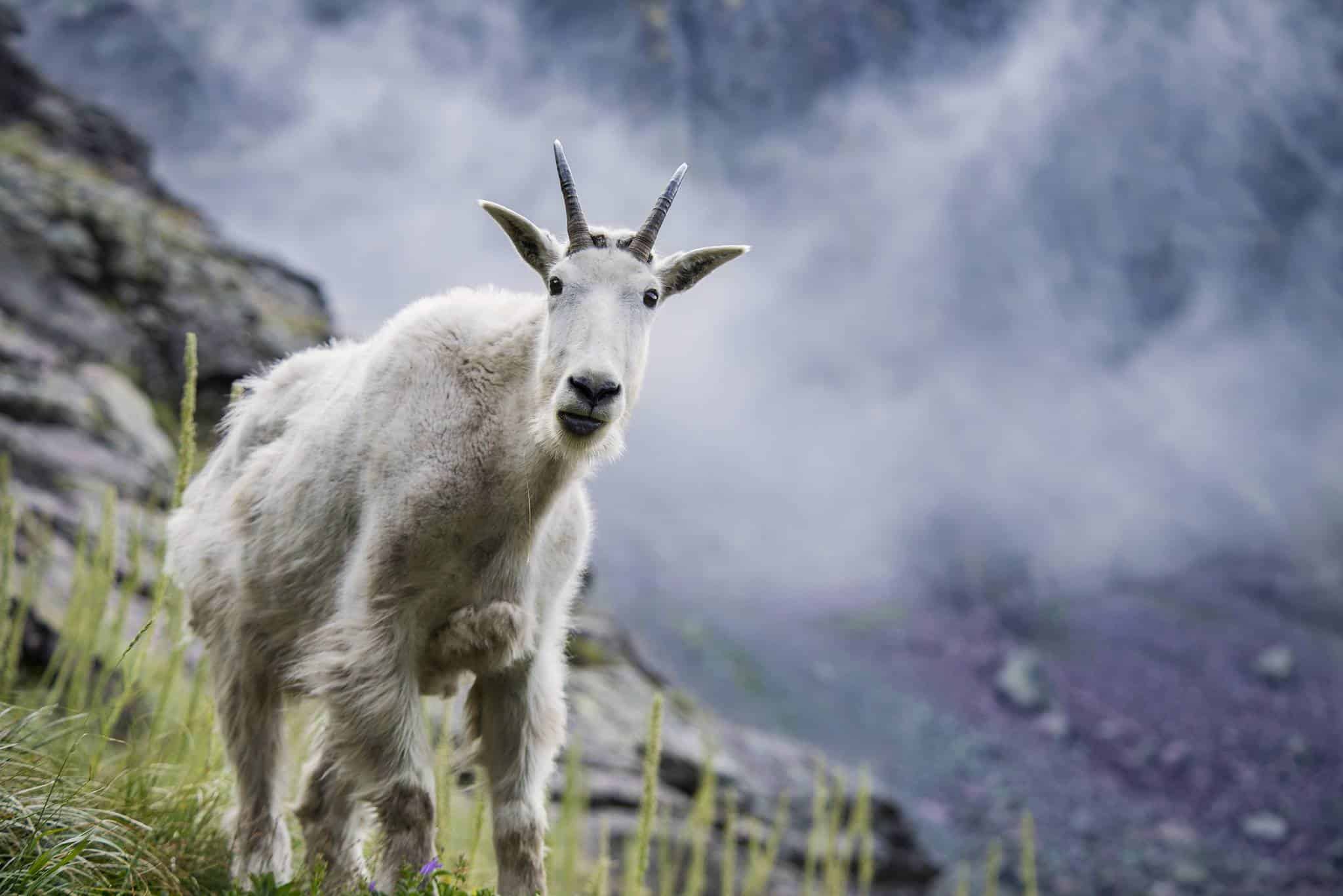
At Logan Pass, hike the Hidden Lake Overlook: 2.8 miles round trip, 460 feet of elevation gain, approximately 1.5 hours. The overlook delivers a panoramic view of Hidden Lake backed by Bearhat Mountain — one of the most photographed views in the park. Mountain goats near the trailhead are extremely common, often approaching within a few feet of hikers.

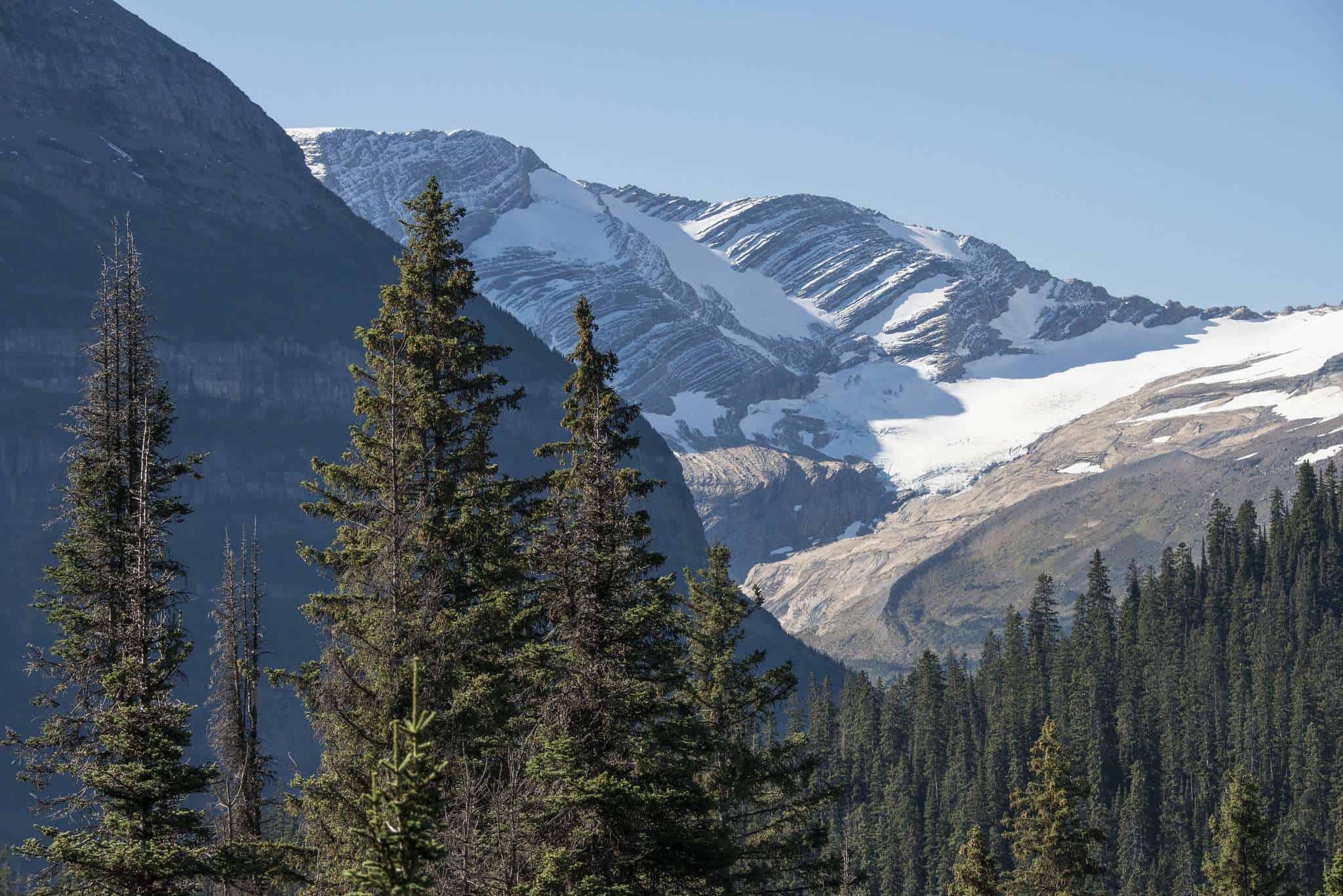
Evening: Jackson Glacier Overlook & St. Mary (5:00 PM+)
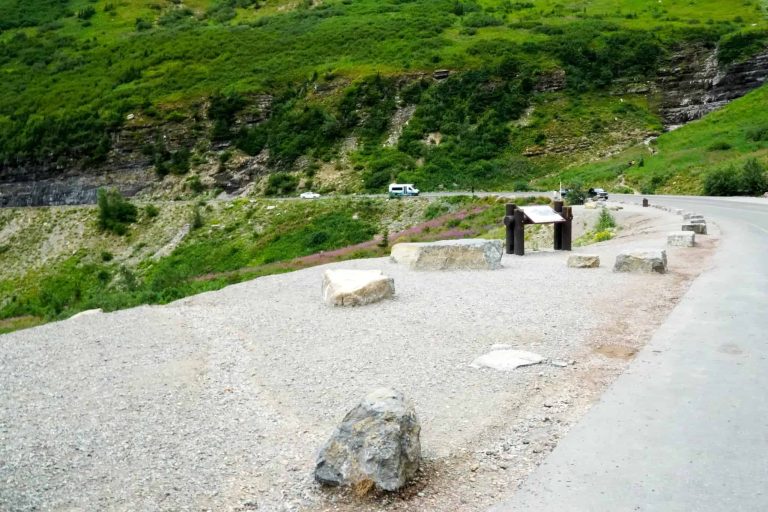
Continue east on GTSR toward St. Mary. Stop at Jackson Glacier Overlook (approximately mile 35 from the west entrance) — the only roadside pullout where you can see an active glacier directly from your car. Jackson Glacier has retreated significantly since the park was established in 1910; viewing it from the road requires no hiking and takes 10–15 minutes. From here, drive to St. Mary for dinner and overnight lodging.
Day 2: East Side — Many Glacier & St. Mary
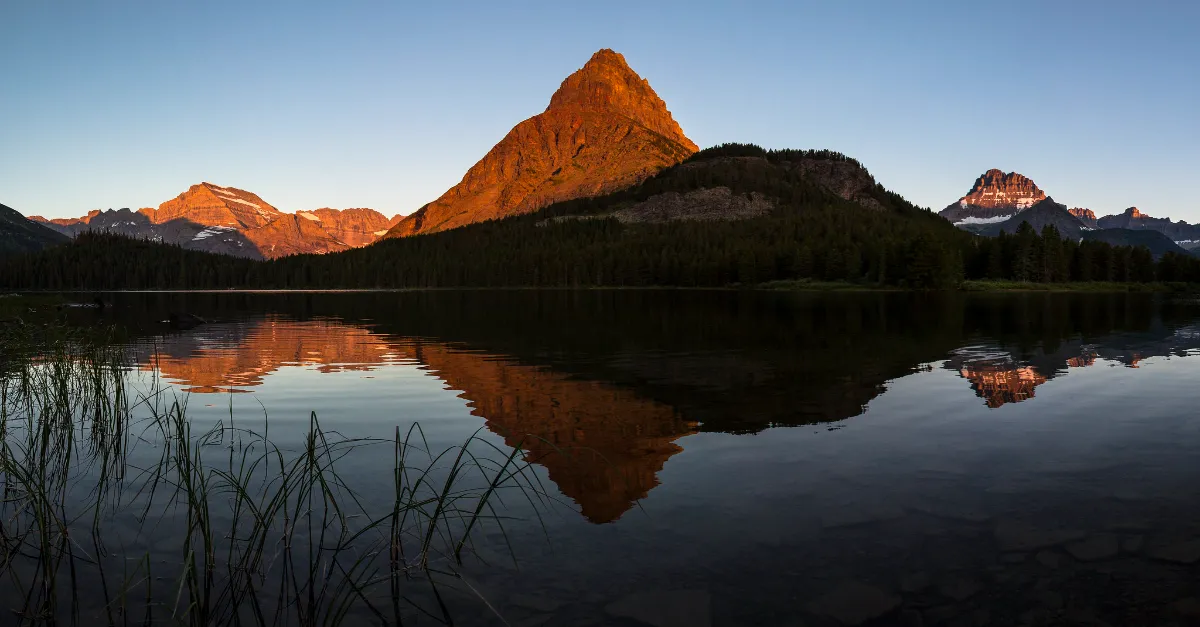
Day 2 focuses on the Many Glacier valley — the most wildlife-dense corner of the park. Leave St. Mary by 6:00 AM. Many Glacier‘s trailhead parking fills before 7:00 AM in July and August, and the best wildlife viewing (moose, grizzly, bighorn sheep) happens at dawn.
Early Morning: Fishercap Lake & Redrock Falls (6:30–8:30 AM)
Walk to Fishercap Lake before anything else — 0.9 miles one way from the Swiftcurrent Trailhead, completely flat. This short walk is one of the most reliable moose-viewing spots in the park. Moose are most active at dawn along the lake margins. Continue another mile to Redrock Falls for a 3.6-mile round trip total — easy difficulty, appropriate for families and all fitness levels.
| Hike | Distance | Elevation Gain | Time | Best For |
|---|---|---|---|---|
| Fishercap Lake | 1.8 mi RT | Minimal | 45 min | Moose viewing at dawn |
| Fishercap + Redrock Falls | 3.6 mi RT | ~300 ft | 2 hrs | Families, casual hikers |
| Grinnell Lake (via boat shuttle) | 1.8 mi RT from boat drop | Minimal | 1.5–2 hrs | Turquoise lake, moderate effort |
| Grinnell Glacier (via boat shuttle) | 7.6 mi RT from boat drop | 1,600 ft | 5–7 hrs | Strong hikers, active glacier |
Morning: Many Glacier Boat Shuttle (8:30 AM–1:00 PM)
Take the Many Glacier boat shuttle from Many Glacier Hotel dock. The shuttle crosses Swiftcurrent Lake (8 minutes) then Lake Josephine (12 minutes), eliminating 4 miles of flat lakeshore walking each way. This makes any east-side hike significantly more accessible. Book boat tours in advance via the park concessionaire — they sell out in peak season, per NPS.gov.
For moderate hikers: the boat drops at the far end of Lake Josephine, from which Grinnell Lake is 0.9 miles one way. The lake is a brilliant turquoise fed directly by glacial meltwater — some of the most vivid water color in the park. For strong hikers: continue past Grinnell Lake to the Grinnell Glacier itself (7.6 miles round trip from the boat drop, 1,600 ft gain, 5–7 hours total including boat time).
Afternoon: St. Mary Lake (1:00–5:00 PM)
Return from Many Glacier to St. Mary. The Rising Sun Boat Tour (approximately 1.5 hours, departs from Rising Sun Boat Dock 6 miles west of St. Mary on GTSR) covers Baring Falls, Sexton Glacier, and the north shore of St. Mary Lake — Glacier’s second-largest lake. This is a low-effort way to end the two-day visit with another perspective on the park’s eastern terrain.
If trail miles remain in your legs: the walk to St. Mary Falls (1.6 miles round trip, easy, 200 ft gain) is a short waterfall hike that fits in before the boat tour. As a final note, Glacier became an International Dark Sky Park in 2021 — if spending a second night, the Many Glacier and Logan Pass areas offer some of the darkest skies in the continental US.
Where to Stay for a 2-Day Visit
The most efficient strategy is a split base: Night 1 near the west entrance (West Glacier, Columbia Falls, or Whitefish), Night 2 at St. Mary or inside the park on the east side. This eliminates backtracking — you drive Going-to-the-Sun Road in one direction each day and arrive at each area at the optimal time.
| Base Location | Best For | Drive to West Entrance | Drive to Many Glacier |
|---|---|---|---|
| West Glacier / Apgar | Night 1, early west-side starts | 0–5 min | ~1.5 hrs |
| Columbia Falls | Night 1, affordable options, groceries | 15–20 min | ~1.5 hrs |
| Whitefish | Night 1, restaurants, Amtrak station | 30–35 min | ~1.75 hrs |
| St. Mary Village | Night 2, east entrance & Many Glacier | ~1.5 hrs | 30–45 min |
| Many Glacier Hotel (inside park) | Night 2, walk directly to trailheads | ~1.5 hrs | 0 min |
Inside-park lodges book out 6–12 months in advance. Lake McDonald Lodge, Many Glacier Hotel, and Rising Sun Motor Inn are the most in-demand. Many Glacier Hotel is the highest-value choice for a two-day itinerary — you wake up at the trailhead, which solves the entire parking problem on Day 2. See our east side vs. west side guide for a full breakdown of each area’s lodging and access.
Entrance Fees & Logistics
| Pass Type | Cost (Peak Season: May–Oct) | Valid For |
|---|---|---|
| Private Vehicle | $35 | 7 days |
| Motorcycle | $30 | 7 days |
| Per Person / Bicycle (age 16+) | $20 | 7 days |
| Annual Glacier Pass | $70 | 12 months |
| America the Beautiful (National Parks Pass) | $80 | 1 year, all federal sites |
Per NPS.gov, Glacier does not accept cash at entrance stations — payment by card only. The America the Beautiful annual pass is the best value if you plan to visit more than two national parks in a year.
Critical Parking & Transportation Notes
- Logan Pass: Fills at sunrise (5:30–6:30 AM) in July/August. Starting July 1, 2026, a 3-hour parking limit applies. Use the ticketed shuttle if you cannot arrive early.
- Many Glacier: Parking fills before 7:00 AM at peak. Arrive at 6:00–6:30 AM to guarantee a space.
- No gas on GTSR: No gas stations between Lake McDonald Lodge and Rising Sun Motor Inn (33 miles). Fill your tank before entering the park.
- Vehicle size limit: Maximum 21 ft long and 8 ft wide (including mirrors) on GTSR between Avalanche Creek and Rising Sun. Check your vehicle dimensions before driving the full road.
- EV charging: Available at Lake McDonald Lodge.
- Cash not accepted: Bring a card for entrance fees, boat tours, and gear rentals.
Key 2026 Changes at Glacier National Park
Glacier has made several significant regulatory changes for 2026 that affect trip planning. Content published before 2026 may contain outdated logistics, particularly around shuttles and reservations.
Frequently Asked Questions
Is 2 days enough for Glacier National Park?
Do you need reservations to visit Glacier National Park in 2026?
When does Going-to-the-Sun Road open?
What is the best hike for a first-time visitor with limited time?
Is Many Glacier worth visiting on a 2-day Glacier trip?
What should I pack for 2 days in Glacier?
How We Researched This Guide
- NPS.gov Glacier: Visiting Glacier 2026 official page (visiting-glacier-2026.htm)
- NPS.gov Glacier: Fees & Passes (fees.htm)
- NPS.gov Glacier: Going-to-the-Sun Road information (gtsrinfo.htm)
- NPS.gov Glacier: Official Fact Sheet (fact-sheet.htm)
- Trail distances and elevation data from NPS trail guides and AllTrails
- Glacier Park Boats Co. for boat shuttle logistics (official park concessionaire)
- Current visitor reports and parking pattern data from community sources
Going-to-the-Sun Road alpine opening dates vary by year and snowpack. Shuttle ticket availability changes each season. Boat tour pricing may change annually. Verify current conditions and reservation requirements at nps.gov/glac before visiting.
Planning a longer trip? Read our 15 Glacier National Park tips and mistakes to avoid before you go — and see the east vs.