Fall Colors Photography in Glacier National Park: Larch Trees & Reflections
The best time to photograph fall colors in Glacier National Park is October 8–22, when western larch trees ignite the mountainsides with brilliant yellow-gold needles. These are the only deciduous conifers in the Northern Rockies, and their contrast against dark evergreens creates a visual effect unmatched anywhere in the American West.
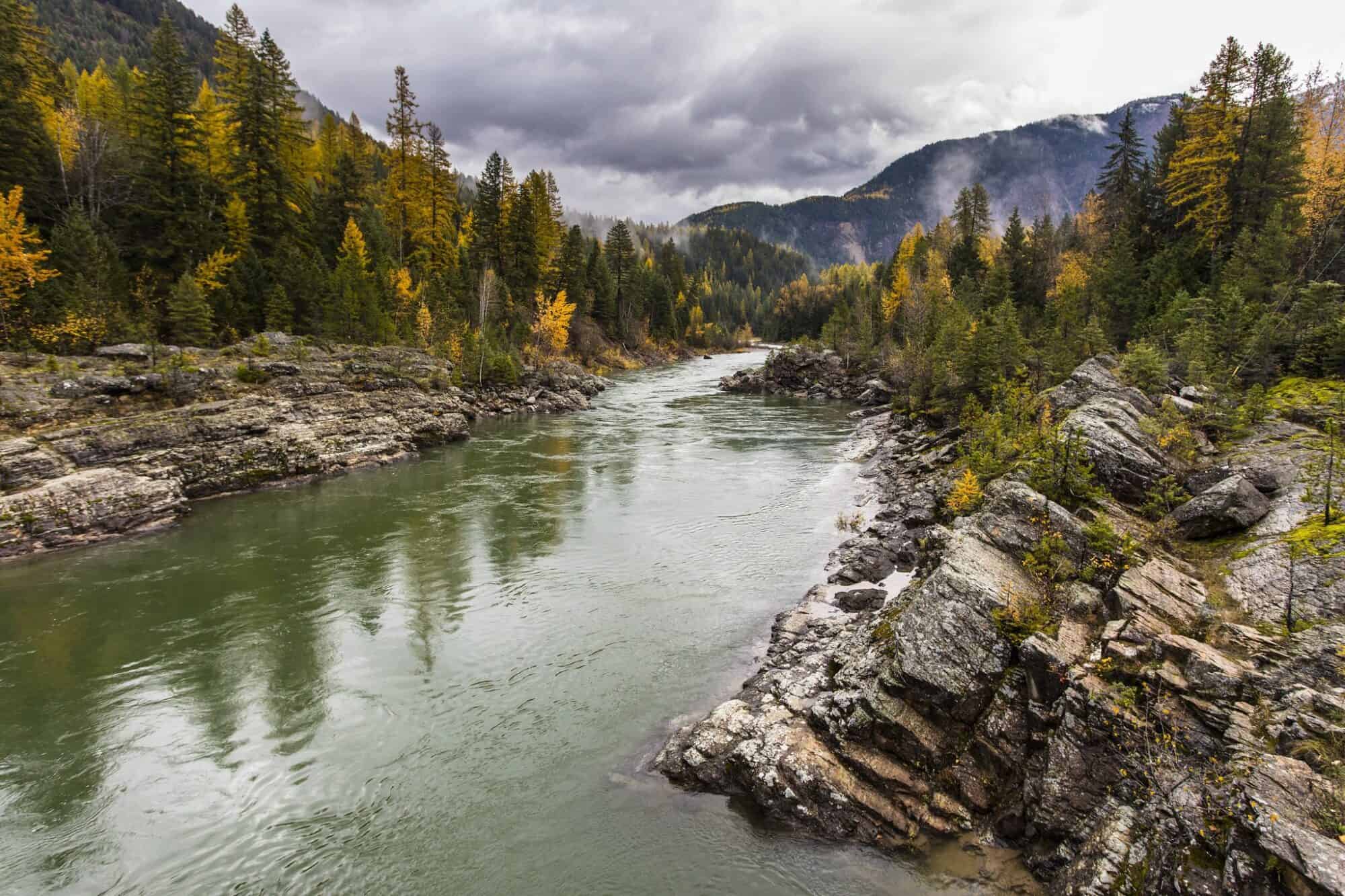
September brings aspens and cottonwoods on the valley floors. But larch peak is a full month later, requiring specific planning — the right trails, the right lakes, and the right dates before Going-to-the-Sun Road closes for winter.
- Peak larch: October 8–22 — plan before the ~October 19 Logan Pass closure
- Best larch locations: North Fork (Bowman Lake), GTSR west corridor, Sperry Trailhead area
- Best reflections: Swiftcurrent Lake (sunrise), Lake McDonald (sunset), St. Mary Lake (morning)
- 2026: Logan Pass shuttle tickets required — book via Recreation.gov 60 days out
- Inside North Fork Road closes October 4, 2026 — limits Kintla Lake access at peak larch
- Entrance fee: $35/vehicle per NPS.gov
The Two-Phase Fall Season
Most visitors conflate Glacier’s two separate fall color events. The first is the aspen and cottonwood phase — mid-September, valley floors, highway corridors. Warm orange and yellow, gone in two weeks. This is what most “fall color in Glacier” articles describe.
The second phase is the one photographers travel specifically for: western larch. Growing at 3,500–6,000 feet elevation, larch needles turn brilliant gold in early October and peak in the second to third week of October — up to four weeks after the aspens. Plan your trip around the larch, not the aspens.
| What | When | Where |
|---|---|---|
| Aspens, cottonwoods, maple | Mid-September | Valley floors, highway corridors |
| Western larch — lower elevations | Late Sept–early Oct | West side mid-slopes |
| Western larch — peak | October 8–22 | North Fork, Sperry area, GTSR corridor |
| North Fork larch (Bowman/Kintla) | October 22–25 | North Fork (see 2026 road closure note) |
| Logan Pass closes (~GTSR alpine) | ~October 19, 2026 | Plan access before October 10 to be safe |
Some links below are affiliate links.

Western Larch: Glacier’s Golden Conifer
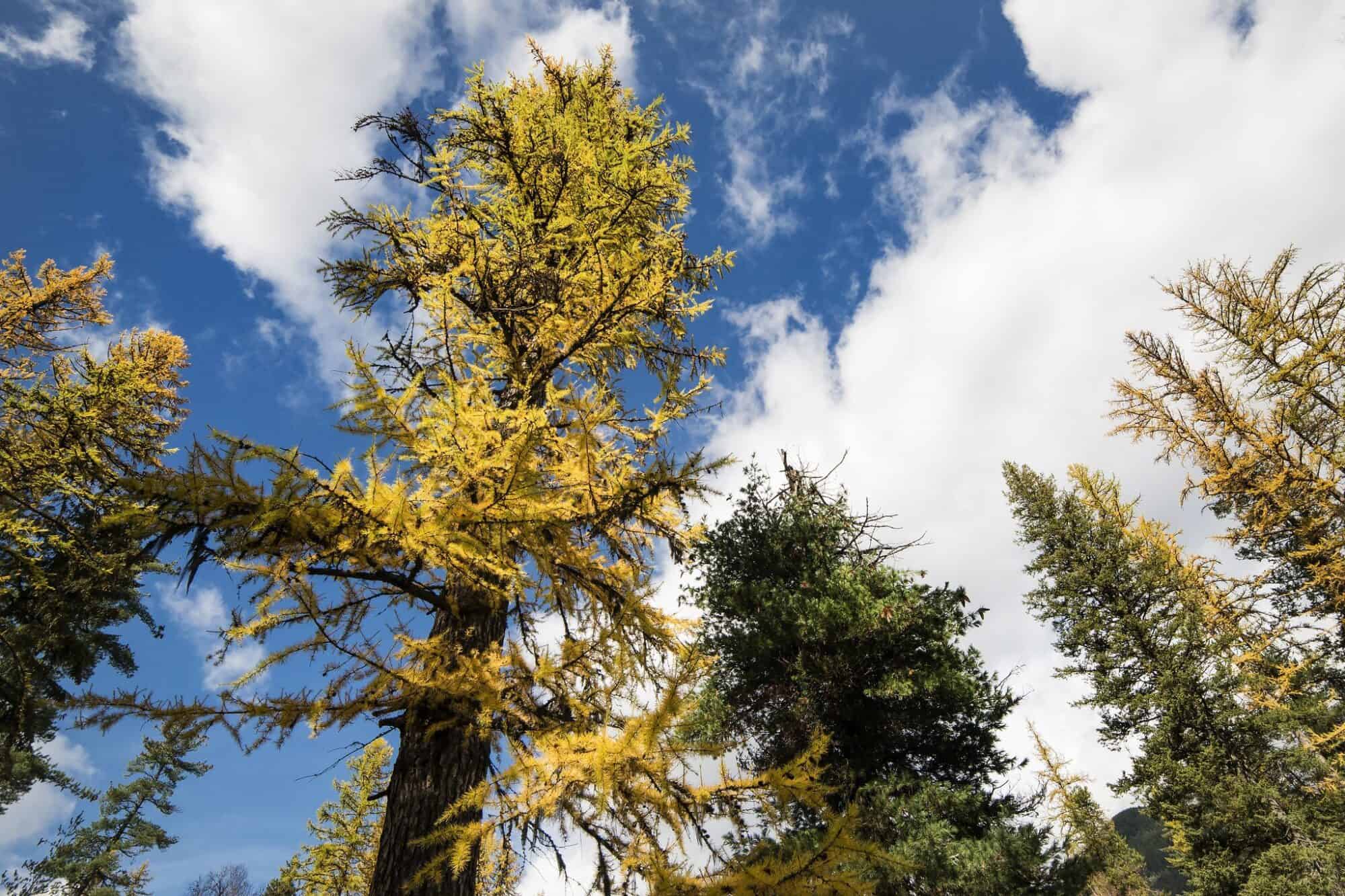
Western larch (Larix occidentalis) is one of the few needle-bearing trees in the world that drops all its needles every autumn. It has cones and needles like an evergreen but behaves like a maple — a rare deciduous conifer. Shedding needles conserves nutrients and reduces snow load on branches in winter.
The result in fall is a green-and-gold mosaic. Larch grows interspersed with dark Douglas-fir, Engelmann spruce, and lodgepole pine. From a ridge or viewpoint, entire slopes appear tiled in alternating gold and deep green — a pattern no other tree produces at this scale in the American West.
Mature larch reaches 100–150 feet tall and can live 700+ years. Its thick, reddish-orange bark makes it highly fire-resistant. Burned areas in Glacier often feature prominent surviving larch standing among dead or regrown forest — visible from the road and distinctively photogenic in fall.
Best Locations for Larch Photography
West side trails have the densest larch concentration in the park. East side (Many Glacier) has fall color but western larch is less dominant there. Start on the west side for larch — then head east for reflections and alpine color.
1. North Fork — Bowman Lake and Kintla Lake
The premier destination for dedicated larch photographers. Western larch lines both lake shores in dense stands with mountain backdrops. Peak color here runs October 22–25 — the latest in the park. Bowman Lake is 6 miles of gravel road from Polebridge; Kintla is 15.7 miles via Inside North Fork Road. See the 2026 road closure note in the logistics section below before planning this trip.
2. Going-to-the-Sun Road Corridor (West Side)
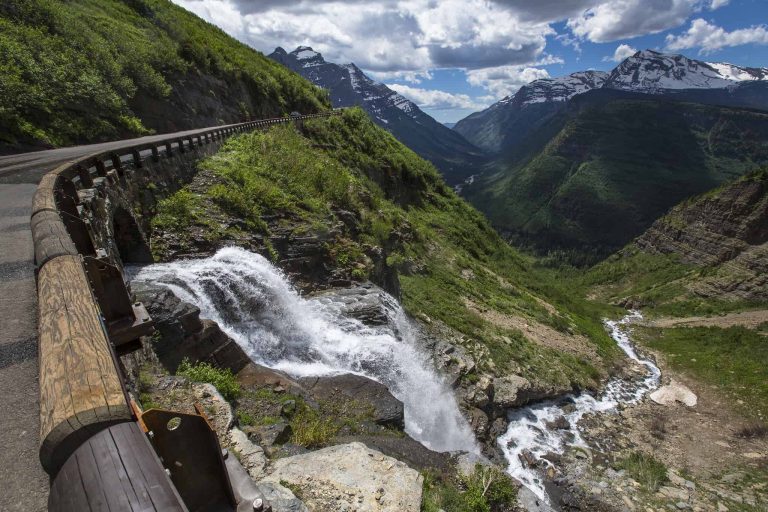
The stretch from The Loop (elevation 3,200 ft) up toward Logan Pass is lined with larch on both sides. Roadside pullouts allow photography without any hiking — the most accessible larch viewing in the park. Available as long as GTSR stays open, typically into mid-October.
The Highline Trail Loop (11.8 miles, Logan Pass to The Loop) descends through significant larch forest in its lower section. Combine with a shuttle for a one-way point-to-point hike ending in peak larch territory. See: Fire Lookout Hikes in Glacier for more trail options from Logan Pass.

3. Sperry Trailhead (Lake McDonald Lodge Area)
The Gunsight Pass and Sperry trails both originate near Lake McDonald Lodge and climb through larch-dominated forest above 5,000 feet. This is the west side’s best dedicated larch hiking — fewer crowds than the Highline, denser larch than roadside pullouts.

4. Many Glacier Area
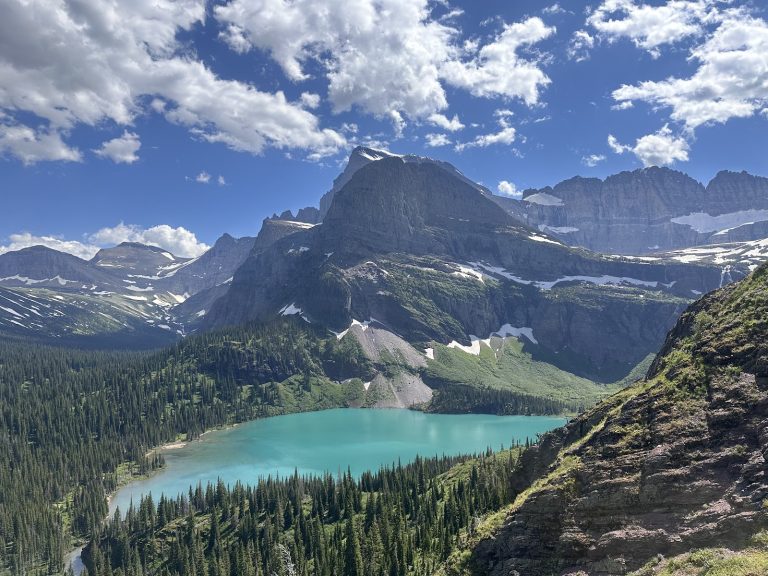
The Grinnell Glacier Trail (7.6 miles with boat shuttle, 1,840 ft gain) offers dramatic alpine color in late September. Larch is less dominant here than on the west side, but east-side aspen and mountain color peaks in late September — a worthwhile trip for a different palette. See: Many Glacier Road Scenic Drive for the drive-only autumn color tour.
5. Highway 2 Corridor (No Hiking Required)
If GTSR closes early, Highway 2 between West Glacier and Essex offers sweeping roadside views of larch-covered slopes. Scalplock Mountain Lookout and the South Boundary Trail access larch-rich terrain from this corridor — a reliable backup option when the alpine roads are shut.

Best Reflection Spots for Fall Photography
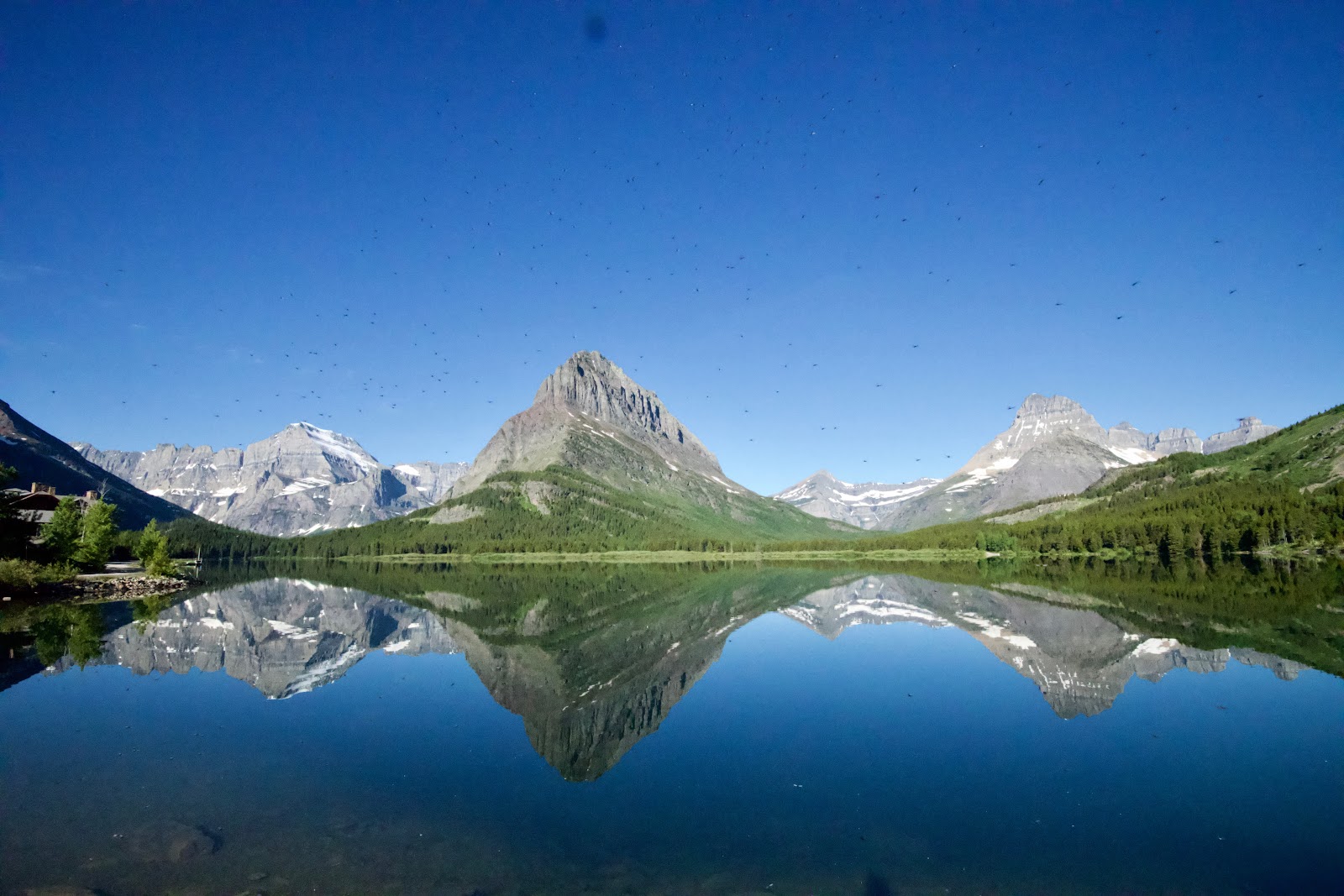
Glacier‘s lakes are mirror-smooth before sunrise and wind-rippled by mid-morning. Plan all reflection shoots for pre-dawn through 60–90 minutes after sunrise. East-facing lakes are morning shots; Lake McDonald is an evening location.
Swiftcurrent Lake — Many Glacier (Sunrise)
The most photographed reflection spot in the park. Shoot from the southwestern shore facing Mounts Gould and Grinnell. Many Glacier Hotel’s rustic architecture adds foreground interest. Best position: 30–60 minutes before sunrise. Fall color on surrounding slopes reflects in the water.
St. Mary Lake — Wild Goose Island Overlook (Morning)
Wild Goose Island is a natural compositional anchor within the lake. Pull over at the marked overlook on GTSR (approximately 48.686°N, 113.553°W). North shore hillsides show abundant cottonwood gold in fall. Wind channels through the valley by mid-afternoon — morning shooting is mandatory here.
Lake McDonald — Apgar Village (Sunset)
The largest lake in the park faces east — the setting sun illuminates eastern peaks from behind, making this a sunset location, not sunrise. Shoot from Apgar Village on the southwest shore. Fall cottonwoods and maple along the shore add warm tones. The colored pebbles near Lake McDonald Lodge provide foreground interest in calm water.
Avalanche Lake (Morning)
A 4.6-mile roundtrip trail (784 ft gain) passes through old-growth cedar and hemlock with scattered larch before opening onto the lake below dramatic waterfalls. Multiple shoreline vantage points, best in morning light before winds build. 2026 note: Park shuttles will not stop at Avalanche Lake — drive from the Lake McDonald Lodge area.
Camera Settings & Composition
Larch photography rewards patience and a polarizing filter. Overcast days are often better than sunny days — clouds act as a natural diffuser, eliminating harsh shadows and saturating colors evenly. Don’t cancel a shoot because of clouds.
| Setting | Recommendation | Why |
|---|---|---|
| Aperture | f/8–f/11 | Maximum depth of field — foreground larch to distant peaks sharp |
| ISO | 100–400 | Clean sky gradients; minimize noise in blue sky areas |
| White balance | Daylight (5500K) or Cloudy (6000K) | Preserve warm gold cast; Auto WB neutralizes it |
| Metering | Expose for highlights | Protect blown-out gold needles; recover shadows in post |
| CPL filter | Always for lake shots | Eliminates surface glare, deepens reflection and sky color |
| Focal length | 16–24mm wide + 100–400mm tele | Wide for reflections; tele compresses larch layers dramatically |
What to Pack for Fall Photography in Glacier
October in Glacier ranges from sunny 55°F afternoons to overnight snow at elevation. Pre-dawn positioning at lake shores means 25–30°F with wind chill. Pack for the cold end of that range every time.
| Category | Item | Notes |
|---|---|---|
| Clothing | Layering system (base, mid, shell) | Ridge temps drop 20–30°F below valley; wind chill significant |
| Safety | Bear spray | Grizzlies in hyperphagia — most active foraging in October |
| Safety | Microspikes | Logan Pass and high trails may have ice by early October |
| Gear | Tripod | Essential for pre-dawn reflections |
| Gear | CPL filter (correct diameter) | Non-negotiable for all lake reflection shots |
| Gear | Extra batteries × 2–3 | Cold drains batteries rapidly; carry spares in a warm pocket |
| Gear | Headlamp | Pre-dawn trail walks to shore locations |
| Footwear | Waterproof boots + gaiters | Trails may have wet snow, mud, or ice in early morning |

2026 Access & Logistics
Going-to-the-Sun Road (Logan Pass)
The alpine section of GTSR targets closure on the third Monday of October — October 19, 2026. But early snow can trigger closure weeks ahead; in 2025 the alpine section closed October 5. Plan Logan Pass access before October 10 for the highest odds of success. Both road ends (west to Avalanche Creek, east to Rising Sun) stay open after the alpine closure, typically through November.
2026 shuttle change: Logan Pass is only accessible by ticketed shuttle or private vehicle with a 3-hour parking limit. Book shuttle tickets via Recreation.gov starting May 2 (60 days out) or next-day at 7 PM MDT. Shuttles will not stop at Avalanche Lake or Trail of the Cedars in 2026. For permit details, see: Photo Permits & Drone Rules in Glacier (2026).
North Fork Road (Bowman & Kintla Lakes)
The Inside North Fork Road closes fully starting October 4, 2026 for water main construction at Polebridge. This is the primary access route to Kintla Lake. If you’re planning a Kintla larch trip (peak Oct 22–25), that road will be closed. Bowman Lake may still be accessible via Outside North Fork Road (MT-486 from Columbia Falls) — verify at NPS.gov before driving.
Many Glacier Area
Many Glacier road access is expected to be normal for fall 2026 — major hotel construction is not scheduled until 2027, per NPS.gov. Road typically open through late October barring early snowfall.
Entrance Fees (2026)
| Pass Type | Cost | Notes |
|---|---|---|
| Private vehicle | $35 | Valid 7 days, covers all passengers |
| Motorcycle | $30 | 7 days |
| Individual (foot/bike) | $20 | 7 days |
| America the Beautiful Annual Pass | $80 | Best value for multi-park visitors |
| Non-US resident surcharge (age 16+) | +$100/person | New for 2026; added on top of standard fee |
The park is cashless — no cash accepted at entrance booths. Credit/debit card or pre-purchased passes only, per NPS.gov.
Frequently Asked Questions
When do larch trees change color in Glacier National Park?
Is Going-to-the-Sun Road open during fall color season?
What makes western larch different from other pine trees?
Where is the best reflection photography spot in Glacier for fall?
Is Glacier National Park crowded in October?
Is a CPL filter necessary for lake reflection photography?
Do I need a photography permit for Glacier National Park?
How We Researched This Guide
- NPS.gov official Glacier pages: fees, 2026 construction updates, Logan Pass closure history, shuttle information
- Glacier National Park Conservancy fall season guide
- HikingInGlacier.com trail descriptions and fall hiking recommendations
- Distinctly Montana larch destination guide for northwestern Montana
- Terra Galleria professional photography guidance for Glacier fall foliage
- Wikipedia: Western larch (Larix occidentalis) biology and range
- Flathead Beacon 2025 GTSR closure reporting
Larch peak timing varies by 1–2 weeks year to year. Road closure dates are based on historical patterns — verify current status with NPS before visiting. 2026 construction schedules were current as of March 2026.
Planning a fall trip to Glacier National Park? Browse our full guide to photography locations, permits, and seasonal trip planning.