Elk and Deer in Glacier National Park: Where to See Them
Elk and deer are two of the most commonly spotted large mammals in Glacier National Park. Rocky Mountain elk graze Two Dog Flats near St. Mary in the early morning hours, mule deer browse subalpine meadows throughout the park, and white-tailed deer appear along valley edges from spring through fall. Knowing where to look — and when — dramatically improves your chances of a close-up encounter.
This guide covers every species found in the park, the top wildlife-viewing locations, seasonal timing, how to distinguish elk from deer, and the NPS.gov safety rules you must follow to keep both you and the animals safe.
- Glacier has three cervid species: Rocky Mountain elk, mule deer, and white-tailed deer — all year-round residents.
- Two Dog Flats (near St. Mary) is the single best spot for elk — herds graze there in early morning during spring and fall.
- Two Medicine Valley and Many Glacier are top alternatives for elk and deer sightings.
- Bull elk bugle from mid-September through October during the rut — the most dramatic wildlife event in the park.
- Park regulations require a minimum 25-yard (23 m) distance from elk, deer, and all other non-bear wildlife per NPS.gov.
- Dawn and dusk are peak activity windows — plan your drive to Two Dog Flats accordingly.
- Elk calves are born in late April-May; females with young are especially defensive — give them extra space.
Elk in Glacier National Park
Rocky Mountain elk (Cervus canadensis) are the largest deer-family animal in Glacier. A mature bull can weigh 700-1,000 pounds and stand nearly 5 feet at the shoulder, with antlers spanning up to 4 feet across. Per NPS.gov, Glacier supports more than 71 mammal species, and elk rank among the most sought-after wildlife encounters in the park.
Elk are highly adaptable grazers. They feed on grasses, forbs, shrubs, tree bark, and twigs. They also visit mineral licks — natural salt deposits — to take in nutrients that support antler growth and milk production. In summer, elk move to higher subalpine meadows and forest edges above 5,000 feet. As winter approaches, they descend to lower valleys where snow depth is manageable and forage remains accessible.
Some links below are affiliate links.

The fall rut runs from mid-September through October. During this period, bulls bugle — a haunting, multi-note call that echoes across open valleys — to attract cows and warn rival bulls. It is one of North America’s most dramatic wildlife events, and Two Medicine Valley is the top spot in Glacier to experience it. Arrive before sunrise for the best chance of hearing and seeing rutting bulls.
Elk calving takes place in late April through May. Cows separate from the herd to give birth and remain highly protective of their calves for several weeks. Keep extra distance from any cow-and-calf pair you encounter — a defensive cow elk can charge with little warning.
Deer in Glacier National Park
Glacier is home to two deer species: mule deer (Odocoileus hemionus) and white-tailed deer (Odocoileus virginianus). Both are year-round residents, but they occupy slightly different habitats within the park.
Mule deer are the more commonly spotted of the two. They prefer open meadows and rocky, semi-open terrain across the park. Mule deer get their name from their large, mule-like ears. Their antlers fork (bifurcate) symmetrically as they grow, giving them a distinctive branched appearance. A white rump patch and a narrow tail with a black tip make them easy to identify from behind.
White-tailed deer tend to inhabit denser forest edges, riparian corridors, and lower-elevation valley bottoms. They are more skittish than mule deer and often bolt with their distinctive white tail raised like a flag — a warning signal to other deer. White-tailed deer antlers grow upward with multiple tines branching from a main beam rather than forking symmetrically.
Both species are most visible in early morning and late evening. Deer browse actively at dawn, feeding on grasses, forbs, shrubs, and young tree shoots before retreating to forest shade during midday heat.
How to Tell Elk and Deer Apart at a Glance
New visitors often confuse deer and elk — especially female (cow) elk, which lack antlers. This quick field guide resolves any uncertainty:
| Feature | Elk | Mule Deer | White-tailed Deer |
|---|---|---|---|
| Size | 700-1,000 lbs; 5 ft at shoulder | 150-300 lbs; 3.5 ft at shoulder | 100-200 lbs; 3 ft at shoulder |
| Coat color | Tawny body, dark neck/head, cream rump | Gray-brown, white rump, black-tipped tail | Reddish-brown (summer), narrow brown tail with white underside |
| Ears | Moderate, rounded | Very large (mule-like) | Smaller, more pointed |
| Antlers (males) | Huge, multi-tined, up to 4 ft span | Forked (bifurcated), tall and broad | Single main beam with forward-curving tines |
| Rump/tail signal | Large cream/tan rump patch | White rump patch; black-tipped tail | White tail raised when fleeing (the “flag”) |
The simplest rule: if an animal looks horse-sized, it’s an elk. Deer are roughly the size of a large dog to a small pony. Elk also move in herds more consistently, while deer often travel in smaller family groups of two to six animals.

Where to See Elk and Deer in Glacier National Park
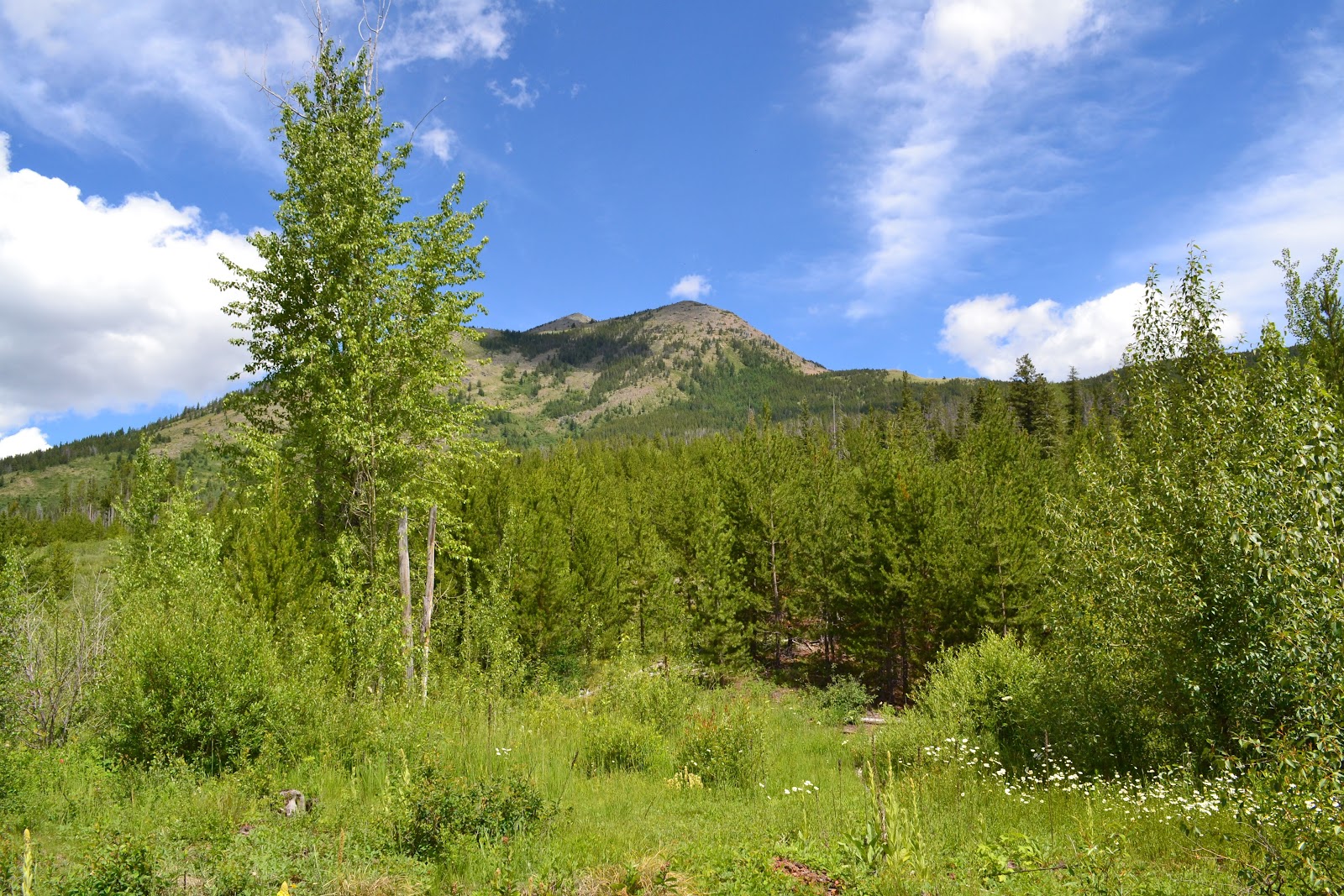
These five locations consistently produce elk and deer sightings. Listed from highest to lowest probability during peak season:
| Location | Species | Best Time | Notes |
|---|---|---|---|
| Two Dog Flats | Elk, coyote, grizzly bear | Dawn; spring and fall | Large sloping meadow near the St. Mary entrance gate; most reliable elk spot in the park per NPS.gov |
| Two Medicine Valley | Elk, mule deer, black bear | September-October rut | Best place in Glacier to hear bull elk bugling; lakeside meadows are prime feeding areas |
| Many Glacier Valley | Mule deer, elk, bighorn sheep | Year-round at dawn/dusk | Considered the wildlife capital of the park; Swiftcurrent area has consistent deer activity |
| St. Mary Valley | Elk, white-tailed deer | Spring and fall mornings | Riparian areas along St. Mary River attract white-tailed deer; elk visible in open flats |
| North Fork Area | White-tailed deer, elk | Summer and fall | Remote and less-visited; dense forest-edge habitat ideal for white-tailed deer |
Best Times of Year to See Elk and Deer
Elk and deer are present year-round in Glacier, but each season offers distinct viewing opportunities:
| Season | Months | What to Expect |
|---|---|---|
| Spring | April-May | Elk calves born late April-May. Cows with calves visible in lower valleys. Snow melt draws animals to exposed south-facing slopes. Females are most defensive during this period. |
| Summer | June-August | Elk move to higher alpine meadows (5,000+ ft). Mule deer common in meadows throughout the park. White-tailed deer active at forest edges at dawn and dusk. Going-to-the-Sun Road open — wildlife corridors fully accessible. |
| Fall (Peak Season) | September-October | Bull elk rut begins mid-September. Bugling audible across open valleys. Elk return to lower elevations. Two Dog Flats and Two Medicine see the most concentrated elk activity of the year. Deer also visible in open areas as vegetation thins. |
| Winter | November-March | Elk concentrate near lower valley entrances (St. Mary, Apgar area). Most park roads closed. Deer present but harder to spot in deep snow. Snowshoeing or cross-country skiing required for interior access. |
The single best window for a guaranteed sighting: late September through mid-October. The rut brings bulls into the open, fall crowds thin after Labor Day, and the larch trees turn gold — making it the most rewarding wildlife-viewing period in the park. For more on what to expect, see our Glacier in October guide.
Wildlife Safety Rules for Elk and Deer
Glacier National Park enforces strict wildlife-viewing distances under federal regulation. Per NPS.gov:
- Elk, deer, bighorn sheep, mountain goats, moose: Maintain at least 25 yards (23 meters) at all times
- Wolves, grizzly bears, black bears, mountain lions: Maintain at least 100 yards (91 meters)
The “thumb rule” is an easy field test: extend your arm with your thumb up. If your thumb does not completely cover the animal, you are too close. Move back until your thumb obscures the entire animal. This check keeps you in compliance without requiring you to estimate exact yardage.
Additional rules per NPS.gov: feeding or harassing wildlife is prohibited and carries federal fines. Approaching wildlife to take photos — even briefly — violates federal law. Use a telephoto lens or binoculars instead. Violations can result in fines of several hundred dollars per incident.
For a full seasonal safety checklist, see our September in Glacier guide.
Photography Tips for Elk and Deer in Glacier
Shooting wildlife at 25+ yards requires telephoto reach. Here’s the practical gear and technique breakdown:
- Focal length: Minimum 300mm effective focal length. 400-600mm preferred for frame-filling shots at safe distance. A 100-400mm zoom is the most versatile choice.
- Shooting time: Golden hour — 30 minutes before to 60 minutes after sunrise — gives warm, directional light that separates animals from backgrounds.
- Position: Shoot from your car window using a window mount — this keeps you legal, comfortable, and gives you a low shooting angle that flattens backgrounds favorably.
- Shutter speed: Use at least 1/500s for stationary elk, 1/1000s for moving animals. High ISO (1600-6400) is acceptable in low morning light with modern cameras.
- Background: Wait for the animal to move against a clean background — an open meadow or tree-line — rather than cluttered brush. Patience pays dividends in Glacier.
For more on wildlife and landscape photography in the park, see our Glacier National Park Wildflower Photography Guide and our guide to photo permits and drone rules.
Frequently Asked Questions
Where is the best place to see elk in Glacier National Park?
Two Dog Flats, a large open meadow near the St. Mary entrance gate on the park’s east side, is the most reliable elk-viewing location. Elk herds graze there in early morning during spring and fall. Two Medicine Valley is a close second, especially during the September-October rut when bulls are bugling.
What time of day are elk most active in Glacier?
Dawn and dusk. Elk are crepuscular — most active in low-light periods. Arrive at Two Dog Flats or Two Medicine at least 30 minutes before sunrise for the best chance of seeing animals actively feeding in the open before they retreat to forest cover during midday heat.
Are there both mule deer and white-tailed deer in Glacier?
Yes. Per NPS.gov, both species are present year-round. Mule deer are more commonly seen in open meadows and rocky terrain across the park. White-tailed deer prefer forest edges and riparian areas, especially in lower valleys. Mule deer are generally more tolerant of human presence; white-tailed deer tend to flee quickly.
How close can I get to elk or deer in Glacier National Park?
Federal park regulations require a minimum distance of 25 yards (23 meters) from elk, deer, and all non-bear wildlife per NPS.gov. Approaching closer is illegal and can result in federal fines. Use the thumb rule: if your outstretched thumb does not cover the animal, you are too close.
What is the Glacier National Park entrance fee in 2026?
Per NPS.gov, the 2026 entrance fees are: $35 per private vehicle, $30 per motorcycle, and $20 per person (pedestrians and cyclists). Passes are valid for 7 consecutive days. The America the Beautiful annual pass ($80) covers Glacier and over 2,000 other federal recreation sites.
How We Researched This Guide
- NPS.gov Glacier National Park Mammals page (nps.gov/glac/learn/nature/mammals.htm)
- NPS.gov Glacier Wildlife Safety page (nps.gov/glac/planyourvisit/wildlifesafety.htm)
- NPS.gov Two Dog Flats place description (nps.gov/places/two-dog-flats.htm)
- Glacier National Park Conservancy wildlife overview (glacier.org/wildlife-in-glacier-national-park/)
- Visit Western Montana / Glacier Country elk and deer species guides (glaciermt.com/elk, glaciermt.com/deer)
- NPS.gov wildlife watching safety guidelines (nps.gov/thingstodo/all-about-wildlife-watching-safety.htm)
- Moon Travel Guides Glacier wildlife hot spots
Glacier National Park does not publish annual elk or deer population counts. The park is currently studying ungulate populations through pellet analysis per a 2025 NPS ecosystem restoration grant. Seasonal road closures (including the Going-to-the-Sun Road) affect access to wildlife areas — check NPS.gov for current road status before visiting.
Planning your Glacier National Park trip? Read our complete month-by-month guides to find the best time to visit for wildlife, wildflowers, and…