Badlands National Park: A Perfect Weekend Itinerary
Three days traversing the Badlands Loop, from sunrise overlooks to prairie wildlife on foot.
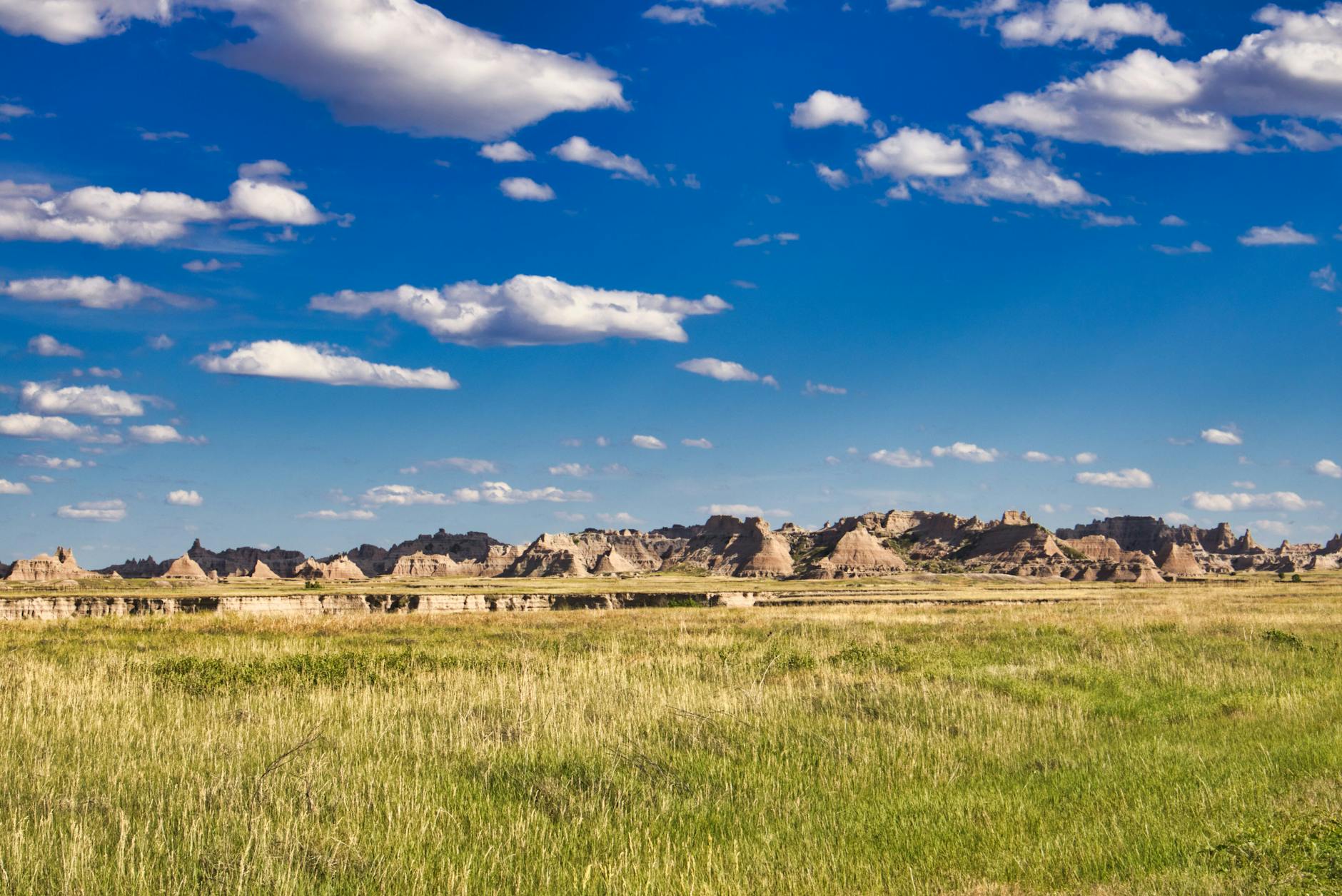
Badlands National Park sprawls across 244,000 acres of southwestern South Dakota, a high-desert maze of sharply eroded buttes, canyons, and spires that glow in early light. The landscape reveals 75 million years of geology and paleontology within a day's drive east of Rapid City.
- 244,000 Acres
- 39 mi Loop Road
- 8 Developed trails
- Year-round Open to visitors
Day 1: North Unit Orientation & Fossil Displays
Stay: Cedar Pass Lodge cabins (April 19–October 20) or Cedar Pass Campground (late March–mid-October); both walking distance to restaurant and visitor center.
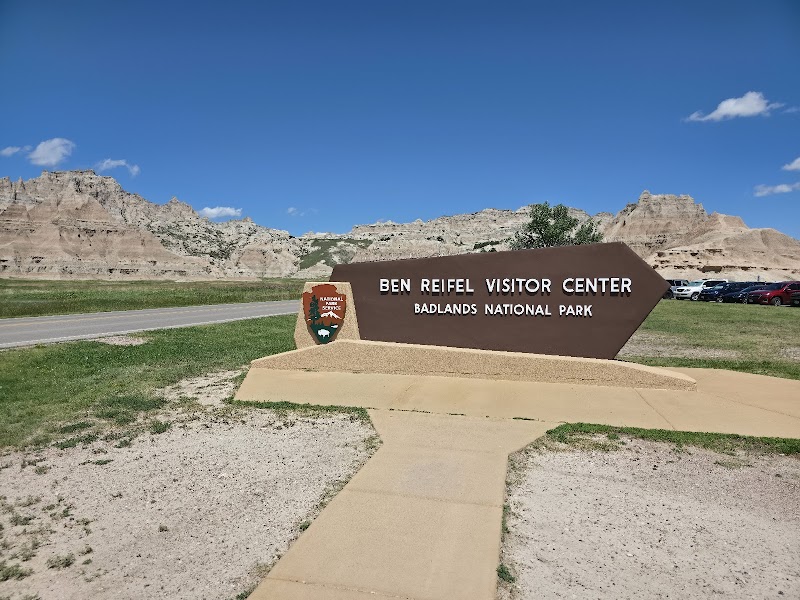
Acclimate to the park's scale and paleontology before tackling the Loop Road; Ben Reifel anchors logistics and navigation.
- Arrive at Ben Reifel Visitor Center (open summer 7am–7pm; fall/spring 8am–5pm), grab maps, and watch the park film.
- Tour the Fossil Preparation Lab, which displays Eocene-era creatures.
- Then walk the Fossil Exhibit Trail—a flat, fully accessible boardwalk—and drive the first leg of the Badlands Loop Road eastward, stopping at Big Badlands Overlook, the park's largest panorama, for sunset light.
Day 2: Badlands Wall Hikes & Overlooks
Stay: Return to Cedar Pass Lodge or campground; restaurant open until around 9pm. No other lodging within park.
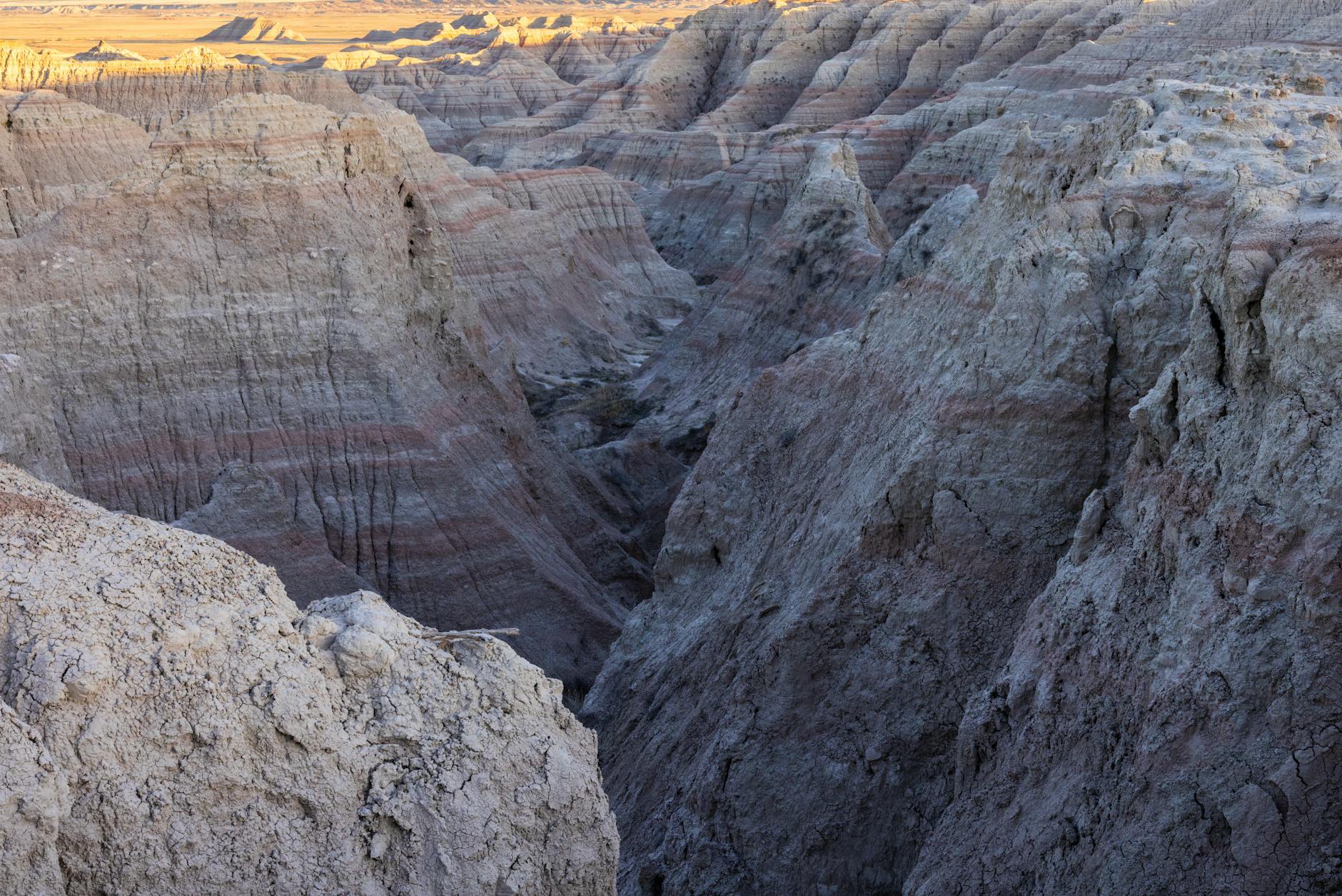
Day 2 tackles the park's shortest but most dramatic climbs—Saddle Pass, Notch Trail, and the Castle/Medicine Root complex—along with Pinnacles Overlook, the best sunset vantage.
- Start early at Saddle Pass Trail, the steepest climb in the park.
- Then hike the Notch Trail, which includes a log ladder and dramatic ledge walk to views of the White River Valley.
- Loop back via the Castle Trail and Medicine Root Loop (4 miles combined, rolling prairie terrain).
- Lunch at Cedar Pass Restaurant (famous for Sioux Indian Tacos).
- Afternoon drive to Pinnacles Overlook—the highest point in the North Unit—and watch for bighorn sheep.
- End at sunset.
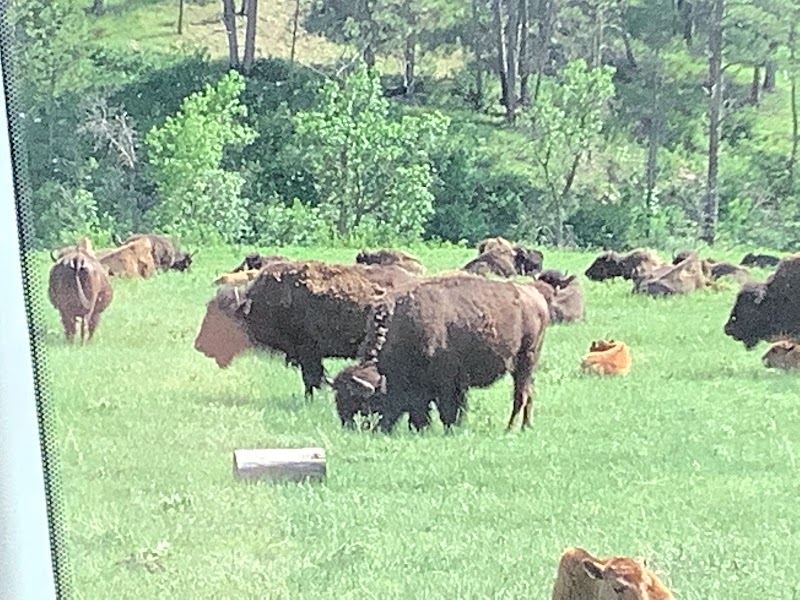
Day 3: Sage Creek Wilderness & Bison
Stay: Depart after breakfast. If staying an extra night, Cedar Pass has same lodge and campground availability.
Day 3 pushes west into the Sage Creek Wilderness—the park's remotest section—where bison roam freely and prairie dogs dot the landscape. A morning finish allows Sunday afternoon departure.
- Drive west on the Badlands Loop Road to Sage Creek Rim Road, an unpaved spur that winds through the Badlands Wilderness Area.
- Stop at Burns Basin Overlook and Roberts Prairie Dog Town (watch for the dark mounds and constant chirping).
- Scan the grasslands with binoculars for bison herds, which graze freely in the Conata Basin.
- Morning and dusk are peak viewing.
- Return via the Loop Road, final stops at Badlands Wall or Window Trail boardwalk, and exit by early afternoon.
Common Questions
Do I need a permit or reservation to camp at Badlands?
Cedar Pass Campground (96 sites) requires reservations via Recreation.gov and fills quickly on weekends; book 2–3 months ahead. Cedar Pass Lodge cabins (23 units) also book early. Sage Creek Campground (22 sites) is first-come, first-served and free. Backcountry camping requires no permit but should be coordinated with the visitor center. The park is cashless—bring a credit or debit card.
What's the best time for a weekend visit?
May and September offer ideal conditions: temperatures in the 50s–60s°F, wildflower blooms (May), and cooler hiking (September). June–August are crowded and hot (peaks at 92°F). Winter and early spring risk sudden snowfall and road closures. July is the wettest month with violent afternoon thunderstorms.
Can I see Badlands in one day, or do I really need three?
You can drive the 39-mile Loop Road and hit major overlooks in 4–5 hours. A weekend allows time for 3–4 hikes (including the challenging Notch and Saddle Pass trails), wildlife scanning at dawn/dusk, a visit to Ben Reifel Visitor Center, and the Sage Creek Wilderness drive. Three days lets you hike without rushing and optimize wildlife and photography timing.
Is water available on trails or in the park?
No potable water is available on any trail or in the backcountry. Carry 1 liter per hour of hiking. Ben Reifel Visitor Center, Cedar Pass Lodge, and Cedar Pass Campground have water and restrooms. Plan hydration carefully, especially in summer.
What should I pack for unpredictable weather?
Layers are essential: mornings are cool, afternoons hot, and evening temperatures drop sharply. June–August can see sudden violent thunderstorms and hail. Bring a lightweight rain shell, sun hat, and sturdy hiking boots (loose gravel is common). Winter (December–February) requires heavy insulation and watch for icy roads.
Sources & Further Reading
- Plan Your Visit - Badlands National Park — National Park Service
- Badlands National Park: Things to Do — National Park Service
- Hiking the Badlands — National Park Service
- Badlands National Park: Scenic Driving — National Park Service
- Badlands National Park: Fees & Passes — National Park Service
- Badlands National Park: Operating Hours & Seasons — National Park Service
- Badlands National Park: Weather — National Park Service
- Ben Reifel Visitor Center — National Park Service
- Pinnacles Overlook — National Park Service
- Saddle Pass Trailhead — National Park Service
- Badlands National Park: Wildlife Viewing — National Park Service
- Badlands National Park: Overlooks — National Park Service
- Cedar Pass Campground - Recreation.gov — Recreation.gov
- Stay Badlands - Cedar Pass Lodge — Badlands Concessioner
- Badlands National Park Trip Planner - KOA Camping Blog — KOA Camping Blog