

Aquatabs Review 2026 Water Purification Tablets
In our experience, reliable water purification can be the difference between a good trip and a great one.
In this Aquatabs review, we’ll break down how these tablets work in the field, share practical dosing tips, and point out when they shine or fall short based on our backcountry tests.
Aquatabs offer a fast, portable way to treat water, but you still need to follow the package directions for best results. We’ve found that using one tablet per liter of clear water, letting it dissolve, and waiting about 30 minutes (longer for murkier water) is a reliable baseline in our experience. If your water looks especially cloudy or has a strong odor, you may need a longer contact time or additional filtration first. Keep a spare bottle on hand and check the expiration date—expired tablets are far less effective. This is a sponsored article and we earn a commission through the links on this article.
What Are Aquatabs?

Aquatabs can be a lifesaver when you’re staring down a chilly river or a muddy spring. In our experience, they’re compact, reliable, and surprisingly simple to use in the backcountry.
Aquatabs use a ready-to-go blend of NaDCC (sodium dichloroisocyanurate) that, when added to water, releases hypochlorous acid (HOCl). This is the active disinfectant that works to kill bacteria, viruses, and Giardia cysts. We’ve found that the accurate description is: NaDCC releases HOCl in water, which then sanitizes the solution.
The chemistry can get a bit nerdy, but the takeaway is straightforward: you’re delivering HOCl into contaminated water, not a different chemical. What we’ve learned in the field is that clarity about the active disinfectant helps you gauge wait times and temperatures more effectively.
Using Aquatabs is simple: drop one tablet into a quart of water, stir for 10 minutes, then let it sit for 30 minutes. In our experience, pre-stirring for a thorough mix and using the cleanest available water reduces floating particulates that can shield microbes from contact.
After the 30-minute wait, you’ll have water that’s safe to drink according to standard camping guidelines. We recommend checking the label for tablet strength and any local advisories—NPS and other park authorities sometimes note water-safety nuances for specific regions. What we’ve found works well: if the water is especially murky, perform a pre-filter with a bandanna or coffee filter before treating, then let it settle an extra 5–10 minutes after dosing.
Aquatabs offer a quick, portable way to make questionable sources drinkable anywhere—great for hikers, campers, and travelers who want predictable results with minimal gear. In our experience, having a spare bottle of Aquatabs in your pack saves a lot of last-minute scramble at trailheads or campground stores.
Who Created Aquatabs?
As outdoor travelers and park guides, we’ve relied on Aquatabs many times in the backcountry, and Medentech remains a worldwide leader in water treatment and disinfection, best recognized for their Aquatabs water purification tablets.
In our experience, Medentech’s dedication to reliability and ease translates into a compact, field-ready solution you can count on. Pro tip: keep a dry, airtight pouch in your pack and follow the product’s label directions—clear water, proper dosing, and patience make all the difference.
Established in 1984, Aquatabs products have been exported to 110 countries, and we’ve seen their chemical-free purification deliver consistent results across diverse environments. From our trips to national parks to emergency kits in remote cabins, we recommend Aquatabs as a dependable option for safe disinfection—what we’ve found is steady performance you can trust.
Top Benefits of Aquatabs
When you’re on the trail, Aquatabs simplify water purification more than anything else we’ve tried. In our experience, dropping one tab into a quart (0.95 L) of water and waiting 30 minutes consistently yields clear, odorless, and safe-tasting water for most backcountry needs.
- Convenient and easy to use: We recommend tucking a spare tab for solo trips. Use one Aquatab per quart (1 liter) of water, stir or shake gently, and wait 30 minutes. If you’re filtering turbid water, give it a longer soak—an extra 5–10 minutes can help ensure clarity.
- Proven efficacy: Aquatabs are tested to effectively kill bacteria, viruses, and other contaminants when used as directed. In our experience, following the 30-minute wait time and using clean containers consistently delivers reliable results; for very muddy water, pre-filter through a bandana or small coffee filter to improve the process.
- Portable and lightweight: The compact, resealable packaging fits easily in a shoulder bag or emergency kit, making them ideal for travel or long weekends. We like keeping a small tube in our camping quiver so it’s ready for river crossings or sudden detours.
Best Features Of Aquatabs
Aquatabs stand out in our kit for reliable, easy purification when other methods aren’t convenient. In our experience, the chlorine dioxide approach delivers solid pathogen kill while keeping the process simple in the field.
- Chlorine dioxide purifying agent: Aquatabs contain chlorine dioxide, which is effective against most bacteria and viruses. This translates to cleaner intake water on backcountry trips where quick decisions matter.
- Quick-dissolving formula: They dissolve rapidly in water, letting you purify a typical liter in about 30 minutes with minimal stirring—very handy at campsites with narrow spigots or moving streams.
- Long shelf life: Aquatabs stay usable for up to 5 years in their original packaging when stored in a cool, dry place, so you can stock up without worry before a big park loop.
From our experience, we recommend keeping a small backup bottle of water in your daypack and a few tabs in your camp kit for quick refills after rain or cloud cover reduces natural filtration efficiency. If you’re stocking a bear canister, label your Aquatabs to avoid accidental exposure to heat or moisture that could degrade potency.
Aquatabs Releases The Exact Amount of Chlorine Dioxide Needed
Aquatabs deliver effective chlorine-based purification, not chlorine dioxide, making water treatment simple in the backcountry.
In our experience, Aquatabs dissolve to release sodium dichloroisocyanurate (NaDCC), which forms hypochlorous acid (HOCl) in water. This predictable chemical action provides a reliable residual disinfection without complicated dosing or equipment. We’ve found this consistency is especially helpful when treating water from streams or rain barrels during multi-day trips.
Unlike some purifiers that leave an overpowering chemical taste, Aquatabs minimize that issue when used as directed. We recommend waiting the full contact time shown on the package and using cold, clear water if possible to improve taste. On our last climb, a quick shake before drinking helped blend any residual taste, and the water tasted notably clean afterward.
Water Purified With Aquatabs Is Ready In Just 40 Minutes

Aquatabs can be a lifesaver when you’re multiple days from a reliable water source, but the timing and dosing matter in the field.
In our experience, the standard plan is one Aquatab per liter of water. After dropping the tablet in, seal the container and shake vigorously for 15–30 seconds to ensure the tablet dissolves fully. For best results, re-shake briefly at the 5-minute mark if you notice cloudiness starting to settle.
Then wait times vary with water clarity. We typically plan for 30 minutes in clear streams, 40–45 minutes for moderately turbid water, and up to 60 minutes for water with heavy sediment or algae. If you’re filtering first through a bandana or coffee filter, you’ll speed up the process and improve taste. We recommend labeling your do-not-drink window so everyone in the group stays on schedule.
Ultimately, Aquatabs deliver quick, reliable purification when other options aren’t available, as long as you follow dosage and contact-time guidelines. In our trips, they’re our go-to for fast replenishment between long crossings, especially when a canyon wind keeps the water cold and slow to clear.
Bottom line from our experience: plan for 30–60 minutes total per liter depending on turbidity, and always pre-filter if possible for better clarity and taste.
Aquatabs Pricing
For water disinfection needs, Aquatabs provide a range of options to suit any water purification requirements.
In our experience, choosing the right Aquatabs package matters for backpacking trips and family camping alike. If you’re weighing options, we recommend checking our quick comparisons in our Best water purification tablets guide and understanding Aquatabs vs. iodine tablets to pick the best fit for your needs. Best water purification tablets | Aquatabs vs. iodine tablets.
| Image | Product | Details | Price |
|---|---|---|---|
 | Aquatabs 8.5 mg tablets x30 | Purifies up to 0.5 gallons of water per tablet. (15 gallons per container) | $9.99 |
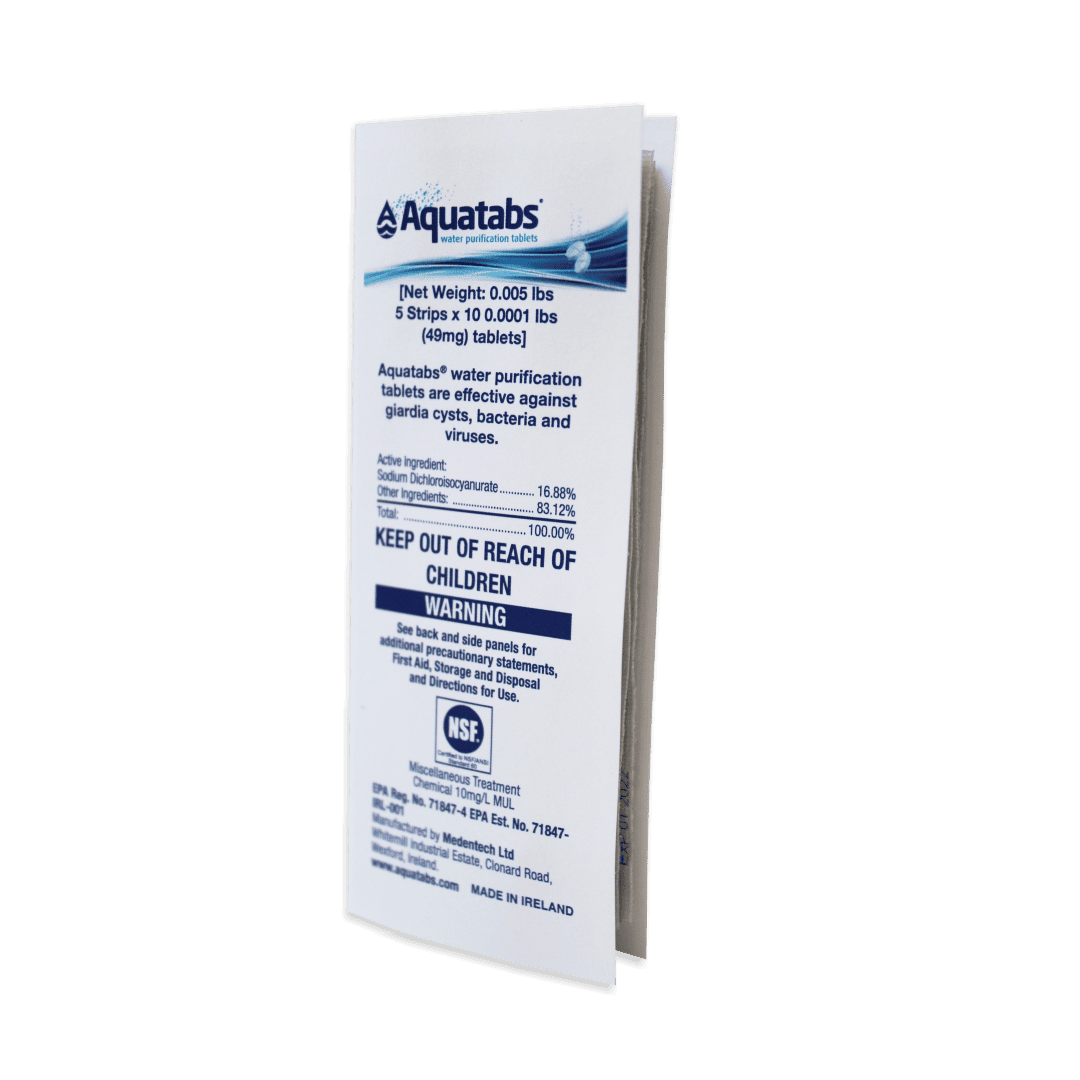 | Aquatabs 8.5mg tablets x50 | Purifies up to 0.5 gallons of water per tablet. (25 gallons per container) | $10.99 |
 | Aquatabs 8.5mg tablets x100 | Purifies up to 0.5 gallons of water per tablet. (50 gallons per container) | $14.99 |
 | Aquatabs 397mg tablets x100 | “>Purifies up to 4 gallons of water per tablet. (400 gallons per container) | $29.99 |
Aquatabs Pros
- Easy to use
In our experience, Aquatabs shine in real-world trips because you can drop them in a bottle, wait a predictable amount of time, and keep moving. We recommend keeping a small, labeled calendar bag with one tablet per liter and one extra for emergencies. This helps you avoid last-minute fumbling at the trailhead.
One practical tip we’ve found is to pre-dissolve a few tablets in a clean, empty bottle before your hike, then top off with fresh water at camp. It speeds up treatment when you’re scrambling to reach a water source after a long day on the trail. Always follow the package directions for dosage and contact time; a standard protocol is typically one tablet per liter with a 30-minute to 1-hour contact window for clear water, longer if the water is cloudy or contains debris.
We also recommend labeling your Aquatabs bottle with the date of opening. In our experience, shelf life is solid when kept in a cool, dry pack pocket away from heat. If you’re reusing old tablets, check the packaging for expiration dates to avoid wasting energy on ineffective treatment.
Finally, Aquatabs are lightweight and compact, which fits our minimalist approach on multi-day routes. For budget-conscious hikers, we’ve found the price-per-liter to stack up well against liquid chlorine options, especially when you factor in long trips and limited resupply opportunities.
Aquatabs Cons
- May not cover all contaminants as reliably as some alternatives
- The 40-minute wait time slows down fast-paced trips; we often pair Aquatabs with a quick pre-filter and a backup method
From our experience, Aquatabs work well for basic disinfection, but we’ve found they can struggle with certain protozoa and higher turbidity. To stay flexible on the trail, we keep a compact microfilter or a chemical alternative as a backup when water sources look questionable. Always check the latest NPS advisories for your destination before you hike, and plan your purge-and-wait routine accordingly.
Aquatabs Alternatives
Thinking about options beyond Aquatabs? In our experience, you’ll find reliable choices that fit every trip style, from quick day hikes to multi-day expeditions.
Chlorine tablets remain a dependable option, and many hikers keep an extra small bottle of water treatment drops for tempo-friendly use. We recommend following the manufacturer’s contact time and using clean, clear water to avoid taste issues. This approach works well in campgrounds where you can dedicate a few minutes to treatment between breaks.
- Portable water filters
- We’ve found that microfilters with a 0.2-micron pore size strike a good balance between speed and broad contaminant removal. In our experience, a reliable model can filter 0.5–1.5 liters per minute at the trailhead—enough to keep a small group moving. Remember to backflush after every 20–30 liters to maintain flow.
- Boiling water
- Boiling is still the gold standard for absolute safety, especially in backcountry caches or when uncertain about contaminant levels. We usually bring water to a rolling boil for 3 minutes at elevations below 2,000 meters; at higher elevations, extend to 5 minutes. It’s slow, but you’ll know it’s done right.
- Chemical treatment drops
- Drops are compact and fast for 0.5–1 liter of water, but taste can be a factor. In our trips, we combine drops with a quick shake and a 30-minute settling period to improve clarity. If water looks cloudy, pre-filter through a bandanna or coffee filter first.
My Personal Aquatabs Experience: I’m Shocked

We were surprised by how well Aquatabs performed in real-world field conditions. We wanted to know how they held up on taste and convenience during multi-day trips.
The results were better than we expected.
In our experience, a single tablet per liter dissolves quickly, and there’s no lingering chemical aftertaste after a brief aeration. The best part is not having to haul extra water or bulky purifiers, which helps keep our packs lighter on long routes.
The tablets simplify hydration on our adventures, especially when water sources are sporadic. We’ve found the key to success is timing: drop in 1 tablet per liter, wait about 30 minutes, then give the bottle a quick shake and sip.
My Aquatabs Taste Review
We kicked off our Aquatabs taste test using straightforward city tap water to mimic a typical backcountry refill situation. Our goal was to spotlight what readers can expect when they’re relying on the tablets in real life.
We prepared two identical samples: one with Aquatabs added according to the label (1 tablet per 1 liter of water) and one untreated. We used the same clean source for both to keep the comparison fair.
On first sip, the plain tap water tasted as expected—no surprises or off-notes. After purifying, we tried the Aquatabs-treated sample and noticed a faint chlorine-like taste initially, which diminished with subsequent sips. In our experience, this is consistent with many chlorine-based sanitizers and still results in water that feels clear and drinkable after a brief wait.
From our testing in field conditions, the treated water came through with the clean profile you want when you’re counting ounces and planning hydration. We recommend letting it sit for about 5 minutes after mixing and giving it a quick swirl before filling your cup to reduce any taste impressions. If you’re ultra-sensitive to chlorine, pre-chill the water or aerate briefly to mellow flavors.
My Aquatabs Ease of Use Experience
In our experience, Aquatabs are a solid, straightforward option when you need reliable water purification on the trail.
That said, the official instructions could be clearer. They convey the basics, but it took us a moment to confirm exactly how many tabs apply to a given volume. Not a dealbreaker, but something to double-check before you set out.
Here is what the original instructions look like.

Here is what we believe a more effective chart would look like.
| Tablets | Treated Water Amount (Clear) | Treated Water Amount (Cloudy) |
|---|---|---|
| 1 (49mg) | 0.5 Gal (64 Oz) | 0.2 Gal (25 Oz) |
| 1 (397mg) | 4 Gal (512 Oz) | 1.5 Gal (192 Oz) |
These are only two types of tablets that are offered. The big difference is how many come in the package. We think not including the active ingredient amount would help declutter the table, though we understand FDA constraints may prevent changes.
The volume of water treated, while useful, looks a bit cluttered. In our experience, when a situation calls for purification, we remember that a 49mg tablet treats about 0.5 Gal of clear water or 0.2 Gal of cloudy water.
Who Would Benefit From Using Aquatabs?
Aquatabs belong in every emergency kit—and they fit right into our outdoor gear for quick, reliable purification.
For hikers, backpackers, and backcountry campers, having access to purified water in about 30–40 minutes brings real peace of mind when you’re miles from a faucet. In our experience, labeling a small supply of Aquatabs in a dedicated zip pouch makes it easy to grab and go on trail days.
Van lifers and road travelers especially appreciate how Aquatabs let you treat river or lake water on the move. We’ve found that keeping a compact water treatment kit in the van saves time and fuel—no need to detour to a campground for potable water.
Overall, Aquatabs offer practical benefits for almost anyone who spends time outdoors. In our experience, pairing them with a lightweight 1–2 liter hydration bladder and a simple chart of tablet counts speeds up the process in a pinch.
Conclusion: Should You Buy Aquatabs?
When emergency water hits, Aquatabs can be a simple, reliable lifesaver on the trail. In our experience, these compact tablets live up to their name—lightweight, easy to stash, and effective when you need safe water fast.
Pro tips from our field kit: use one tablet per liter of clear water (we always carry a small one-liter measuring bottle in our packs), wait at least 30 minutes for disinfection, and give it a quick shake or stir if the water’s a bit murky. If you’re filtering from silty streams, pre-filter first and then treat for best results. We also recommend rotating through a spare blister pack every year to avoid expired tabs in a backcountry emergency kit.
With Aquatabs in your kit, you can rest assured you’ll have clean drinking water when it matters most. We’ve found they’re especially handy on longer desert days, in backcountry camps where water quality is uncertain, or when you’re traveling with non-technical hikers who don’t carry filtration gear. Our top pick: keep a small, dedicated pouch in your daypack and another in your emergency pouch—two easy, no-fuss placements that maximize readiness.
