Grand Teton National Park: Complete Visitor Guide
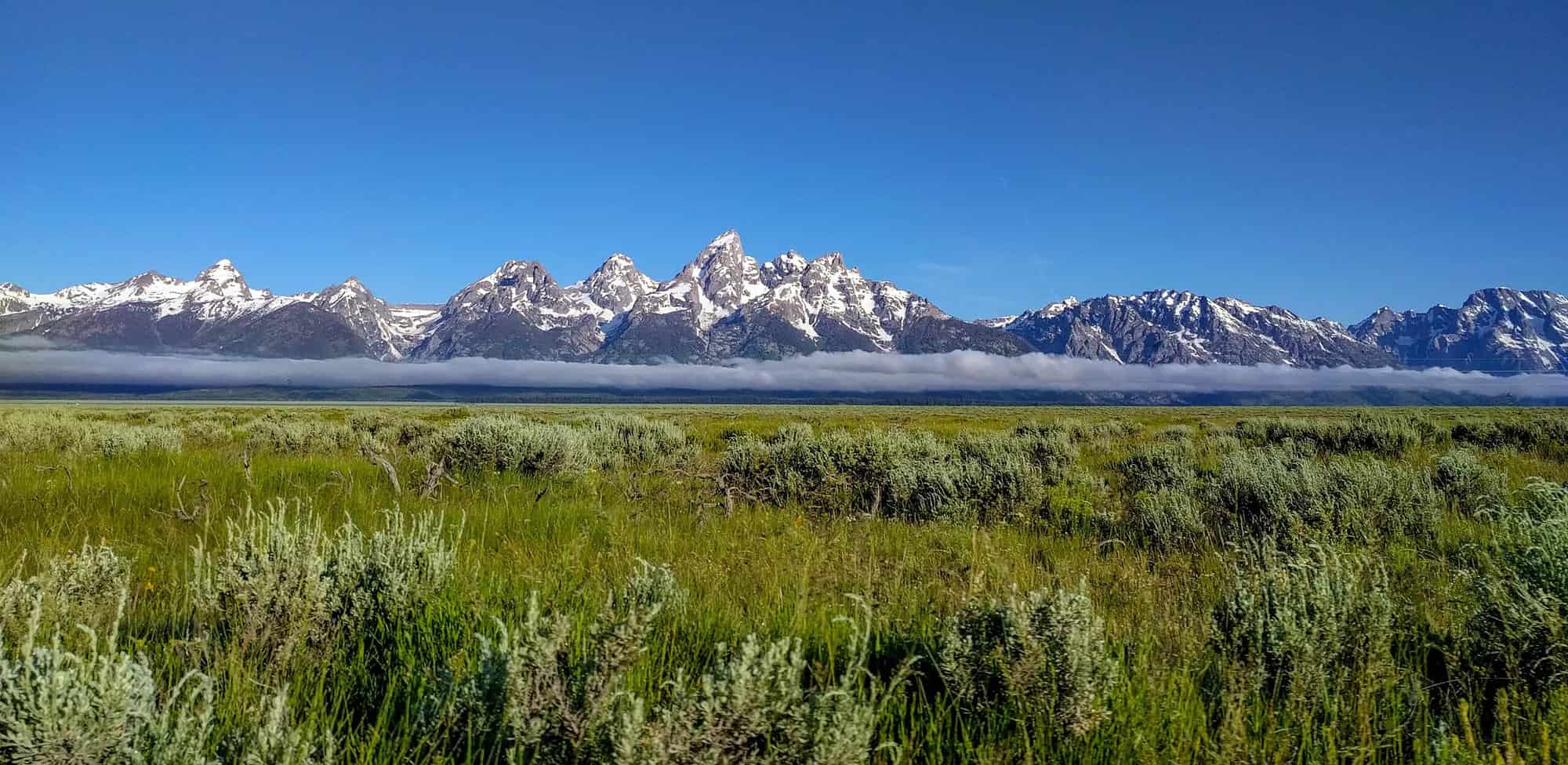
Grand Teton National Park covers 310,000 acres of northwest Wyoming, anchored by the Teton Range — a 40-mile wall of peaks rising over 7,000 feet above the Jackson Hole valley floor. The park sits 13 miles north of the town of Jackson and shares its northern boundary with Yellowstone. Visitors come for the hiking (over 200 miles of trails), four scenic drives, six campgrounds, and some of the best wildlife viewing in the lower 48 states. The park is open year-round, though most roads and facilities operate May through October.
Grand Teton National Park — At a Glance
Teton County, Wyoming
310,000 acres (485 sq mi)
$35 per vehicle (7-day pass)
Grand Teton — 13,775 ft
3.6 million visitors
24 hours, 365 days/year
(307) 739-3399
nps.gov/grte
Grand Teton National Park
Northwest Wyoming, 13 miles north of Jackson. Yellowstone’s south entrance is 57 miles north.
·
110.6849° W
When to Visit Grand Teton
Peak season runs June through September, when all roads, campgrounds, and visitor centers are open. July and August see the highest crowds and the warmest weather. September offers fall color with thinner crowds. Winter visitors can cross-country ski and snowshoe, but most park roads close November through April.
Grand Teton Month-by-Month
Best time: July – September · Avoid: November – April (most roads closed)
Best Hikes in Grand Teton
Grand Teton has trails at every difficulty level, from flat lakeside loops to strenuous alpine climbs with 3,000+ feet of elevation gain. Most trailheads are along Teton Park Road. Arrive before 9 AM during peak season — parking at popular trailheads like Lupine Meadows and Jenny Lake fills by mid-morning. Check the NPS hiking page for current trail conditions.
Easy Trails
Taggart Lake Trail
3.0 miles RT
360 ft
Easy
1–2 hours
Taggart Lake TH, Teton Park Rd
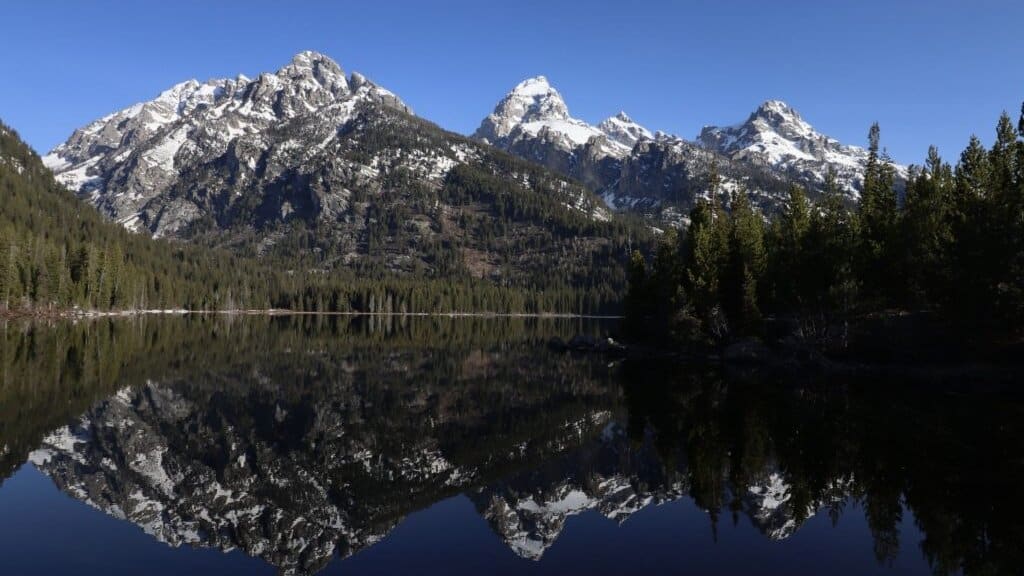
Taggart Lake is the go-to easy hike. The trail crosses an aspen-covered moraine to an alpine lake with a direct view of the Teton Range. The lake is accessible year-round (snowshoes or skis needed in winter).
String Lake Loop
3.7 miles loop
540 ft
Easy
2–3 hours
String Lake TH, N. Jenny Lake
String Lake connects Jenny Lake to Leigh Lake via a shallow, swimmable channel. The loop circles through forest with views of Mount St. John and Rockchuck Peak. The east shore is flat; the west gains a ridge for broader views.
Lunch Tree Hill
0.5 miles loop
110 ft
Easy
Under 30 min
Jackson Lake Lodge parking
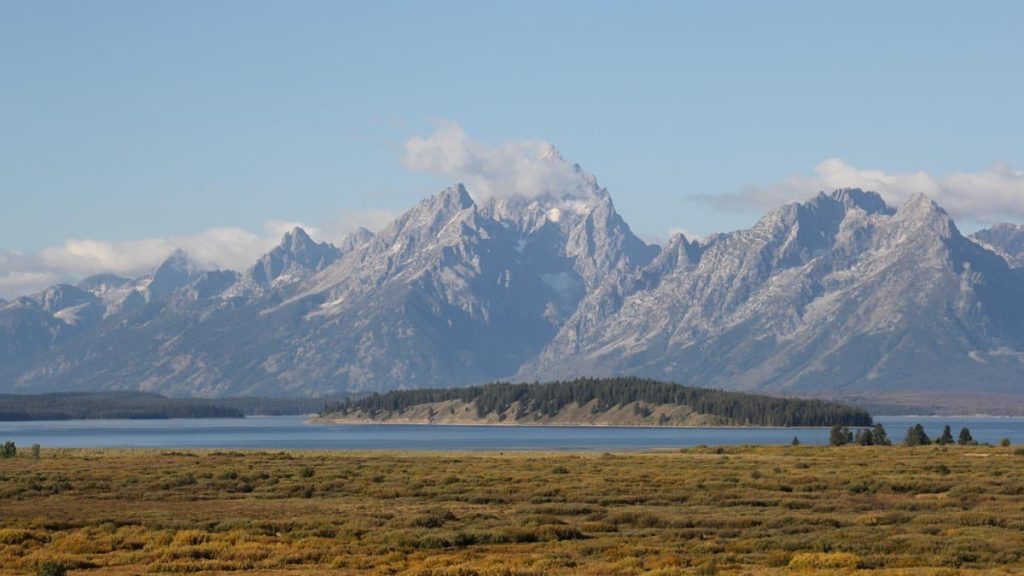
A short walk from Jackson Lake Lodge to an overlook of willow flats (excellent moose habitat) and an unobstructed Teton Range panorama. This is where John D. Rockefeller Jr. reportedly envisioned the expanded national park.
Moderate Trails
Jenny Lake Loop
7.1 miles loop
1,040 ft
Moderate
3–5 hours
South Jenny Lake
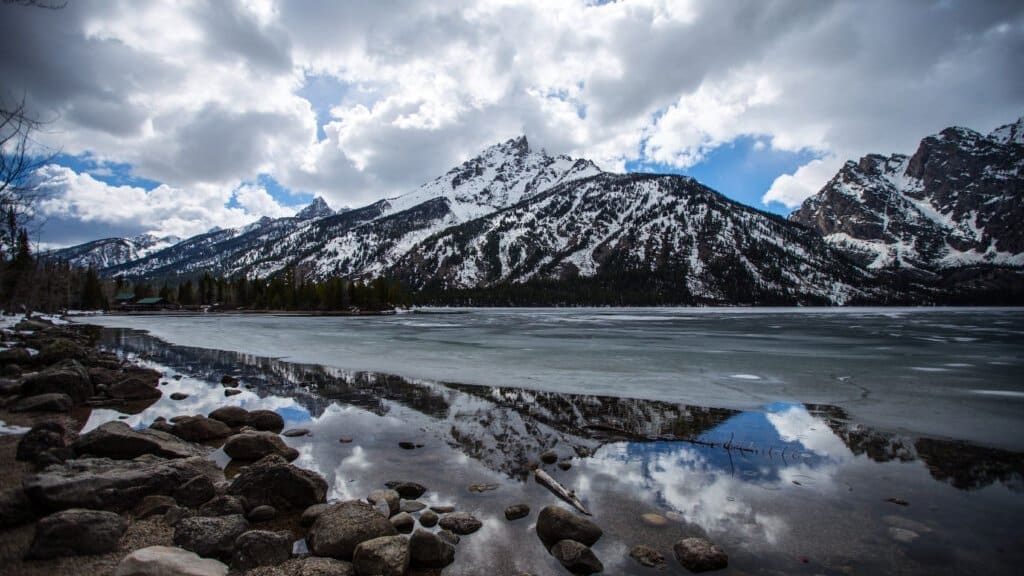
The full loop circles Jenny Lake with views of the Cathedral Group, Cascade Canyon, and Moose Ponds Overlook. Side trails branch to Hidden Falls and Inspiration Point. A shuttle boat across the lake shortens the hike if needed.
Phelps Lake Loop
6.4 miles loop
1,060 ft
Moderate
3–5 hours
Laurance S. Rockefeller Preserve
Phelps Lake sits at the entrance to Death Canyon at 6,633 ft elevation. Access is via the Laurance S. Rockefeller Preserve on Moose-Wilson Road. Parking is limited to 50 cars — arrive early. No pets allowed on this trail.
Strenuous Trails
Cascade Canyon to Hidden Falls & Inspiration Point
9.4 mi RT (via boat shuttle)
1,480 ft
Strenuous
5–9 hours
South Jenny Lake (boat shuttle)
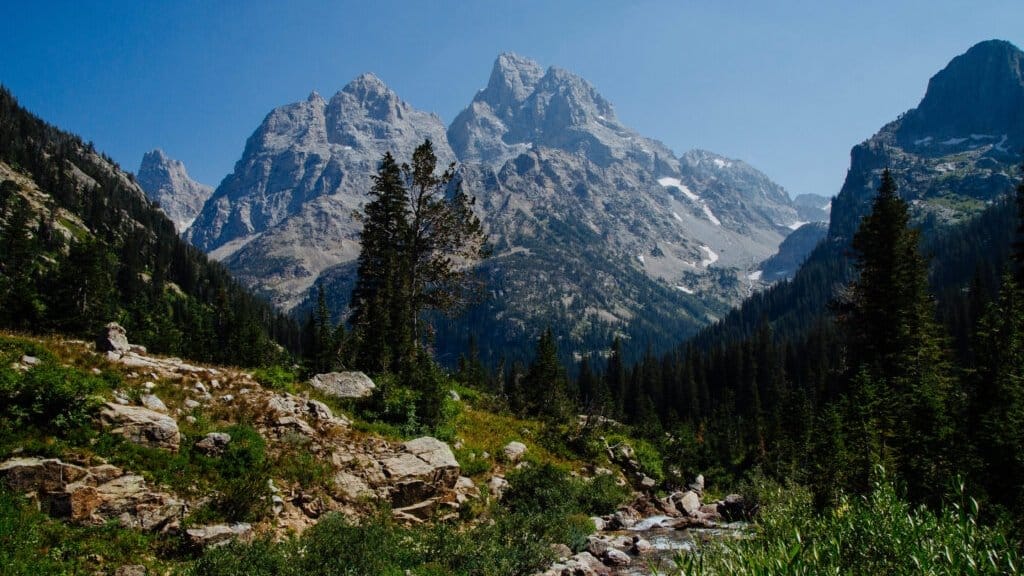
The marquee day hike. Take the Jenny Lake shuttle boat across, then climb past Hidden Falls and Inspiration Point into the canyon between Grand Teton, Mount Owen, and Teewinot. Without the shuttle, the on-foot route adds 4 miles (13.3 mi RT, 1,720 ft gain). Arrive at Jenny Lake before 9 AM for parking.
Surprise & Amphitheater Lakes
9.8 miles RT
3,070 ft
Strenuous
5–7 hours
Lupine Meadows TH
Steep switchbacks lead to two alpine lakes tucked below Disappointment Peak. Surprise Lake at mile 5, Amphitheater Lake a quarter mile further. At 3,070 ft of gain, this is one of the steepest maintained trails in the park. Panoramic views of the entire Jackson Hole valley. Bring trekking poles — the sustained grade is tough on the knees, especially on the descent.
Lake Solitude
14.4 mi RT (via boat shuttle)
2,670 ft
Strenuous
9–13 hours
South Jenny Lake (boat shuttle)
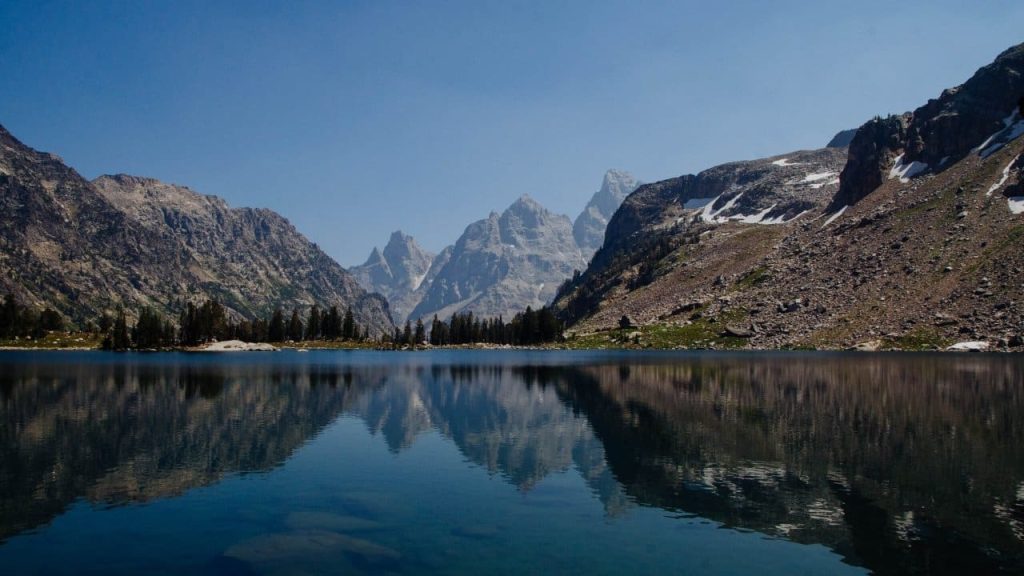
A full-day extension of Cascade Canyon. The trail continues past the canyon forks to an alpine lake surrounded by the three main Teton peaks. Without the shuttle boat, the on-foot route extends to 18.3 miles with 2,910 ft of gain. Start early — this is an all-day commitment.
Scenic Drives
Four drives cover the park’s main landscapes — from the close-range Teton views on Teton Park Road to the 360-degree panorama atop Signal Mountain.
42-Mile Scenic Loop
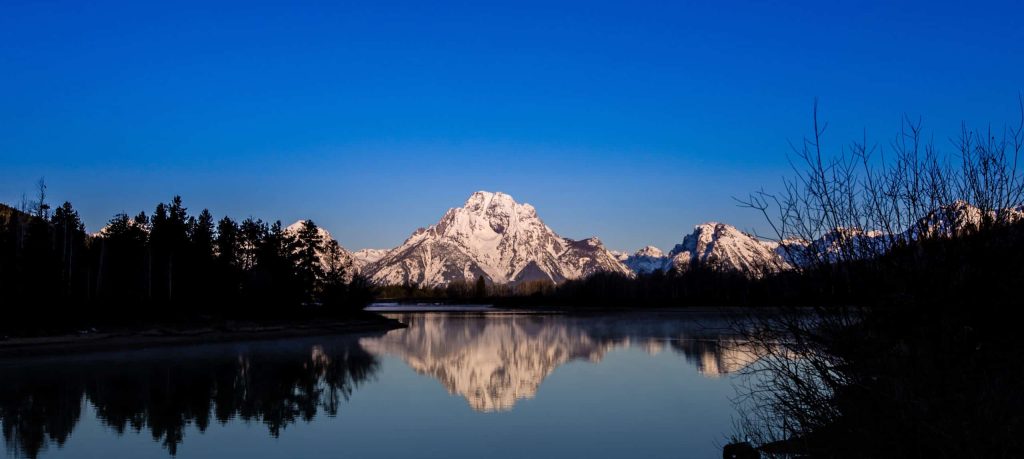 Moran reflected in still water at sunrise">
The park’s signature drive combines Teton Park Road (inner) with US-26/89/191 (outer) into a 42-mile loop. Key stops include Oxbow Bend (Snake River wildlife viewing with Mount Moran reflected on calm mornings), Schwabacher Landing (Snake River braids, beaver ponds, moose), Mormon Row (historic 1890s homesteads with the most-photographed barn in America), and Snake River Overlook. Budget 2–3 hours with stops. Open May 1 – October 31.
Teton Park Road
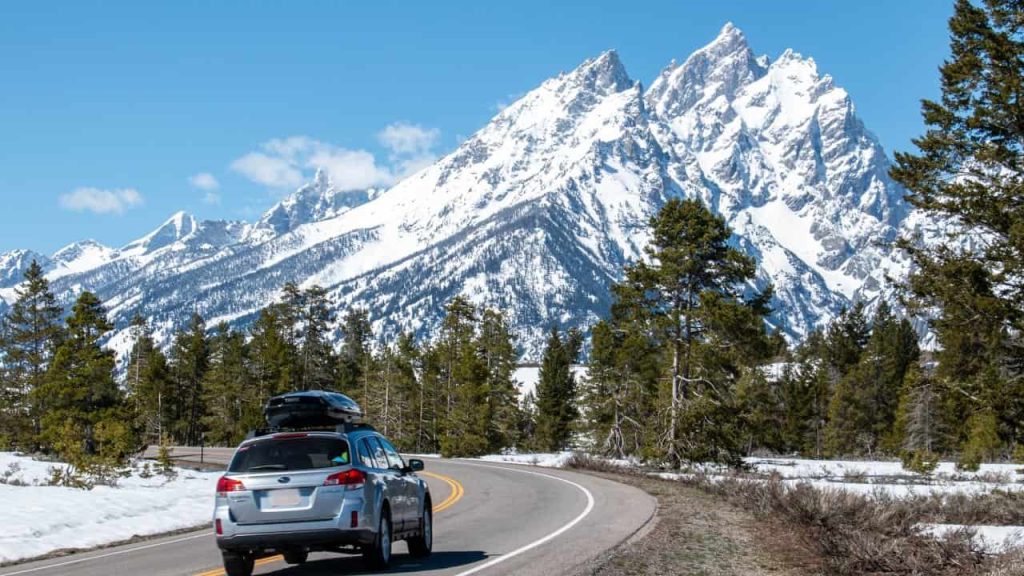
The 20-mile inner road from Moose to Jackson Lake Junction, running at the base of the range. Passes Jenny Lake, String Lake, Taggart Lake Trailhead, and Signal Mountain. Multiple turnouts (Teton Glacier, Cascade Canyon, Potholes) offer close views of the peaks. Allow 30–60 minutes without stops. Open May 1 – October 31.
Signal Mountain Summit Road
A 5-mile spur road climbing 800 ft to 7,727 ft elevation with panoramic views of Jackson Lake, the Teton Range, Jackson Hole valley, and the Gros Ventre Range. Two overlooks near the summit. No trailers or RVs (narrow, winding). Allow 20–30 minutes.
Moose-Wilson Road
A 7-mile road through the park’s southwest corner with a 1.5-mile unpaved section. Passes the Laurance S. Rockefeller Preserve, Death Canyon Trailhead, and some of the park’s best bear and moose habitat. No vehicles over 23 feet. The road occasionally closes during heavy bear activity.
Wildlife Viewing

Grand Teton supports grizzly bears, black bears, moose, elk, bison, pronghorn, mule deer, coyotes, river otters, beavers, and over 300 bird species including bald eagles and American white pelicans. The park is one of the best places in the lower 48 to see moose — they frequent willow-lined waterways throughout the valley.
Best wildlife viewing spots:
- Oxbow Bend — Moose, beaver, otter, pelicans, herons. Best at sunrise/sunset. Paved pullout 1 mile east of Jackson Lake Junction.
- Schwabacher Landing — Moose, grizzly bears, elk. Snake River access 16 miles north of Jackson.
- Mormon Row / Antelope Flats — Bison herds, pronghorn, coyotes, raptors. Open sagebrush terrain east of the highway.
- Willow Flats — Elk (especially during May–June calving season), bears. Between Jackson Lake Dam and Jackson Lake Lodge.
- Moose-Wilson Road — Moose, black bears. Forested corridor with ponds.
Camping in Grand Teton
Grand Teton has six campgrounds with a combined 900+ sites. All require advance reservations via Recreation.gov — there are no first-come, first-served sites. Reservations open on a 6-month rolling basis and fill fast for July and August.
Campground Overview
| Campground | Sites | Season (2025) | Price/Night | RVs? | Key Feature |
|---|---|---|---|---|---|
| Jenny Lake | 61 | Jul 1 – Sep 27 | $57 | Tents only | Most coveted — right at Jenny Lake |
| Signal Mountain | 81 | May 8 – Oct 10 | $57–$101 | Yes (30 ft max) | Jackson Lake shoreline |
| Colter Bay | 350+ | May 22 – Sep 27 | $59–$83 | Yes (45 ft max) | Largest — laundry, showers, marina |
| Gros Ventre | 322 | Apr 27 – Oct 9 | $59–$78 | Yes (45 ft max) | Longest season, more remote feel |
| Lizard Creek | 60 | Jun 13 – Sep 8 | $57 | Small rigs (25 ft) | Northern Jackson Lake, forested |
| Headwaters (Flagg Ranch) | 171 | Jun – Sep 29 | $37–$73 | Full hookups | Between Grand Teton & Yellowstone |
Frequently Asked Questions
What is the best time of year to visit Grand Teton National Park?
How many days do you need to see Grand Teton National Park?
Are dogs allowed in Grand Teton National Park?
Do I need a reservation to enter Grand Teton?
Can I see Grand Teton and Yellowstone in the same trip?
This article may contain affiliate links. If you make a purchase through these links, we may earn a small commission at no extra cost to you. This helps support YourNPGuide.com.