
Evac Lightweight Dry Bag Review: Ultralight Compression
Open to everything · Saved in this browser
A FEW CHOICES. A TRIP THAT FEELS LIKE YOU.
What could your Glacier trip look like?
Choose what excites you. We’ll use it to filter your Glacier ideas—not rewrite the guide you came to read.
What draws you here?
Choose as many as you like—or leave it open to see everything.
When might you go—and for how long?
We’ll point you to the matching trip length. Season choices add access reminders; they do not confirm anything is open.
Have you chosen a side to stay on?
We’ll flag ideas that need a transfer from your chosen side. This is a preference, not a hotel booking.
Choices save automatically in this browser only. No account. Your answers are not sent to our servers.
Ideas for your Glacier trip
Showing all Glacier experiences. Your saved places and essential access information are never filtered.

An idea to explore—not a must-do.
The full road crossing depends on seasonal access—even in summer.
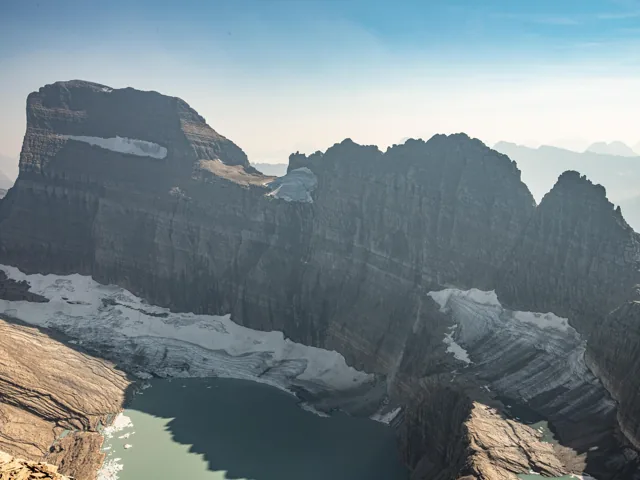
An idea to explore—not a must-do.

An idea to explore—not a must-do.
Gear
We may earn a commission if you buy through our links at no extra cost to you. This review is based on independent research; hands-on testing is stated only when we have documented it.
Buy if you prioritize ultralight compression and pack space; skip if you need bomb-proof waterproofing on extended river trips.
Overview
The Evac Lightweight Dry Bag is a compression-focused dry sack that combines a waterproof recycled nylon body with a unique air-permeable base, allowing you to squeeze sleeping bags and insulated layers into impossibly tight spaces. Unlike rigid dry bags, it compresses flat after air is expelled—critical when you're rationing every liter in a 40-liter pack. The roll-top closure and D-ring attachment keep contents dry and secured during water crossings or dusty desert sections.
Who It's For
Backpackers tackling multi-day alpine routes where pack space is contested (think Glacier's Gunsight Lake or Rocky Mountain's Longs Peak traverse). Works well for anyone organizing scattered soft gear—sleeping bags, fleece jackets, puffy jackets—into a single retrievable block. Skip it if you're running river shuttles or canyoneering with frequent full-submersion risk; the roll-top isn't airtight once breached. Also not ideal for base campers with stationary gear—a rigid dry box offers better durability for repeated opening.
Key Features
- Valve-Free Air-Expelling Base: Recycled 70D eVac waterproof fabric lets air squeeze out in one direction while blocking water entry. No valve to jam or fail; you control compression entirely.
- Double-Stitched & Tape-Sealed Seams: All seams are double-stitched and fully tape-sealed, handling rough pack edges and embedded twigs without leaking.
- Oval Base Design: Curved footprint slides into pack side pockets and contours, using otherwise wasted space at the edges of your pack frame.
- Light-Reflecting White Interior: Bright interior makes it easy to spot sleeping bags or layers at night without unpacking everything, reducing fumbling in camp.
- Patented Field Repair Buckle: 15mm buckle is the same across all sizes, so replacements are universal if lost on trail. Secures roll-top closure to trigger compression.
- D-Ring Attachment: Stainless steel D-ring at buckle lets you rig the bag to a canoe thwart, bike rack, or boat carabiner for water sport security.
On the Trail
You're hiking the gunsight pass route at Glacier National Park, bridging two days in high alpine terrain with limited water sources. Your 50L pack is crammed: tent, pad, stove, food for two days, layers. Your sleeping bag and puffy jacket consume 8 liters of dead space as loose rolls. Pack them into a 13L Evac, roll the closure three times, sit on it hard until it compresses to roughly 5L, then wedge it into the pack's side pocket where it locks in tight. At camp, when you need the puffy in the evening cold, the white interior lets you spot it instantly. In the morning, you squeeze the sleeping bag again, and the bag's oval base slots into the narrow gap where your frame pack curves—recovered space that would have forced you to carry a bigger pack for the same load.
Pros & Cons
- Compresses harder than any rigid dry bag with near-zero volume penalty when deflated.
- Ultralight: a 5L weighs just 1.8 oz, leaving weight budget for other essentials.
- Oval base fits snugly into pack side pockets and curvature, reclaiming unused space.
- White interior reflective coating cuts down rummaging time in dim camp light.
- Field-repairable universal buckle means you can swap parts on trail.
- Roll-top closure is not airtight—if you open and reclose it during a trip, it will re-absorb moisture and re-inflate without vigorous squeezing.
- Not suitable for full-immersion scenarios (river running, canyoneering); water can seep through the roll closure if submerged.
- Requires deliberate compression (sitting on it) to work; lazy roll-and-stuff won't achieve the advertised space savings.
- Thin fabric scuffs and abrades on sharp pack frame corners if not padded; inspect regularly on extended trips.
Frequently Asked Questions
Can I use this for water sports or river crossings at a park?
The Evac is water-resistant but not waterproof for full submersion. The roll-top closure can let water seep in if you're paddling or hip-wading. It works fine for stream crossings where the bag stays above water or for brief splashes, but don't rely on it for sustained paddle sport. For river shuttles or canyoneering, use a rigid dry box or a dedicated river dry bag with a waterproof valve.
How much will my sleeping bag actually compress?
A typical 600-fill down sleeping bag (roughly 8L loose) will compress to 4–5L after vigorous squeezing, saving 3–4 liters per bag. The eVac base allows air to escape under pressure; you can't achieve the tiny volumes of a hard-sided roll compressor, but you'll reclaim real pack space. Sitting on the packed bag is the most effective method.
What's the difference between this and a regular stuff sack?
A regular stuff sack traps air inside and won't compress beyond its fabric limits. The Evac's permeable base lets you squeeze air out and keep it out, shrinking the bag's volume by 30–50% once compressed. It's especially useful for soft compressible gear like sleeping bags, insulation, and clothing—not for rigid items like cook pots or bear canisters.
Bottom Line
Buy if you prioritize ultralight compression and pack space; skip if you need bomb-proof waterproofing on extended river trips.
Related Reading
Quick facts
- Brand
- Sea To Summit
Product details
- Brand
- Sea To Summit
More at Glacier National Park
Some booking links below are affiliate links, which may support YourNPGuide at no extra cost to you. Affiliate disclosure.


Sources
- YourNPGuide Editorial
Editorial review: YourNPGuide Editorial Team. Information is compiled from official sources, verified traveler reviews, and editorial research; no firsthand visit is implied unless explicitly documented. Learn how YourNPGuide works.
Last updated July 2026. Report an issue.