
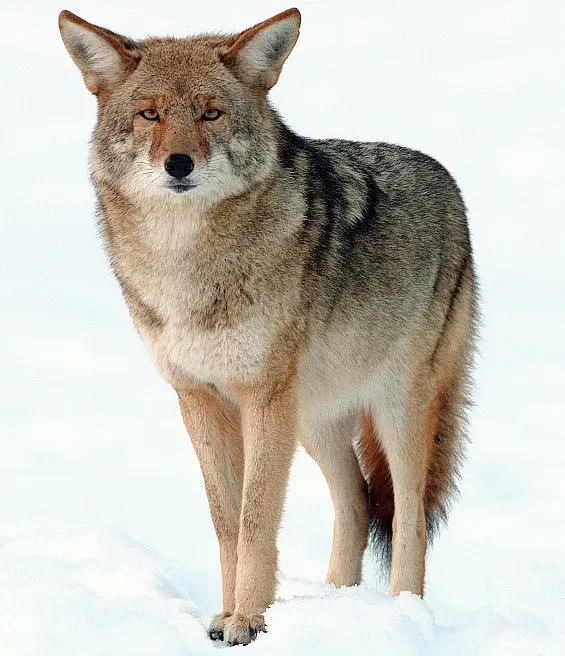
Photo: Yathin S Krishnappa / CC BY-SA 3.0 (Wikimedia Commons)
Mammal Common Sightings: Occasional. Present year-round but primarily nocturnal; direct sightings require patience and timing. Not dangerous — still wild
These nimble canines are survivors and problem-solvers, thriving in forests from sea level to alpine slopes. Coyotes are incredibly adaptable, shifting their diet and behavior with the seasons—that's why they're found across the continent and right here at Crater Lake. They're naturally wary of humans, so direct encounters are rare, but listening for their unmistakable howls at dawn and dusk is one of the park's special treats.
📏 Keep your distance: 25 yards minimum (per NPS wildlife safety guidelines).
Stay safe
Maintain 25-yard distance. Make noise while hiking to avoid surprising them. Never approach or attempt to feed. Secure food, trash, and cookware at campsites. Dogs should be kept on leash near forest edges and dawn/dusk.
If you encounter one
Coyotes naturally flee from humans. If you encounter one, back away calmly, maintain distance, do not run or corner the animal. They pose no threat to adults; protect small pets by keeping them close. Speak in calm tones and let the animal move away.
Never feed or approach wildlife — it's dangerous for you and often fatal for them.
🦊 Species ID card
- Size & weight
- Males: 8–20 kg (18–44 lbs). Females: 7–18 kg (15–40 lbs).
- Identifying features
- Smaller than gray wolves, pointed ears, slender build. Fur predominantly light gray and reddish interspersed with black and white; varies by geography. Bushy tail. Often travel alone or in small family groups.
- Habitat
- Forests of Douglas-fir, Shasta red fir, and ponderosa pine; brushy understory and rocky terrain. Thrive at Crater Lake's 6,000+ ft elevation. Active near streams and meadow edges where prey concentrate.
- Diet
- Deer, rabbits, hares, rodents, birds, reptiles, amphibians, fish, and invertebrates. Seasonally supplement with berries and fruits. Highly opportunistic hunters.
- Active
- Nocturnal and crepuscular (most active at dawn and dusk).
- Lifespan (wild)
- 10–14 years
👀 Where & when to see them in Crater Lake National Park
Where to look
Forested areas and brushy terrain throughout the park, especially near water sources. Rim Drive offers scenic vantage points where forest edges are visible. Campground peripheries, especially dusk to dawn.
Best time
Early morning (6–8 AM) and late evening (6–8 PM). Most reliable in May through September.
Spotting tips
- Listen for howls at dusk—they often vocalize during family pack interactions.
- Scan meadow edges and forest boundaries where prey is abundant.
- Early risers (pre-6 AM) have best odds.
- Spring and early summer (May–July) are most active breeding and hunting period.
- Look for tracks and scat as signs of presence when direct sighting unlikely.
Accessibility
Primarily nocturnal, so direct car-based viewing is unlikely during daylight. Best observed by hiking early morning or staying near campgrounds at dusk. Rim Drive offers forest views where distant observations may occur.
With kids
Safe for families. Children should learn that coyotes naturally avoid humans and are shy—this reduces fear while emphasizing the need to keep distance and never feed. Hearing their howls is an unforgettable experience; use it as a teaching moment about wilderness and ecology.
📷 Photographing them
Best vantage points
Rim Drive pullouts at dawn/dusk; forest edges visible from Scenic Rim Drive. Early morning light at Castle Crest Wildflower Trail area. Campground peripheries. Use telephoto to respect safe distance.
Bring
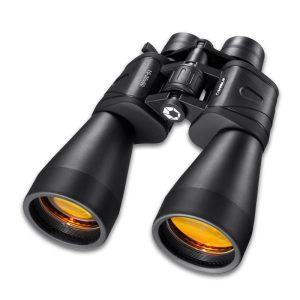
Binoculars essential for distant viewing. Telephoto lens (200mm+) for photography. Headlamp for pre-dawn hikes. Field guide to canine tracks and scat.
Shoot ethically
Never bait with food or calls to manipulate behavior. Maintain 25-yard minimum distance. Don't block roads or trails. Don't disturb denning or family groups. Respect their natural wariness; your goal is to observe, not interact.
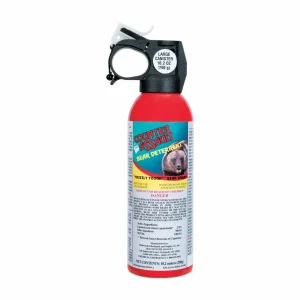
🔭 Gear that helps you spot them
🌲 Natural history
- Breeding season
- January–March (winter/early spring rut). Pups born March–May; family groups most active during denning season.
- Migration
- Non-migratory. Maintain territories year-round within the park and surrounding landscape.
- Winter
- Do not hibernate. Active throughout winter, though sightings decline due to snow cover limiting access to lower-elevation hunting areas.
🌍 Conservation
Threats
Habitat fragmentation in surrounding lands (though park boundaries offer refuge). Historically trapped and poisoned outside the park. Climate change may shift prey availability and timing of breeding cycles.
Protection efforts
Protected within Crater Lake National Park boundaries. NPS monitors population health and tracks movement patterns. Coyotes help control rodent populations, benefiting forest health.
How visitors help
Secure all food and trash at campsites—never leave scraps. Stay on trails to minimize disturbance. Maintain safe distance during sightings. Report wildlife observations to rangers. Educate others about coexistence and debunk myths that paint coyotes as threats.
Report sightings
Report sightings to the nearest ranger station or Crater Lake National Park Visitor Center. Photos and location details aid park wildlife monitoring.
❓ Questions people ask
Will a coyote attack me?
Coyotes naturally fear humans and attacks are extraordinarily rare. They actively avoid people. No documented fatal attacks on adults in national parks. Keep your distance and they'll keep theirs.
What's that howling at night near the campground?
That's likely a coyote pack communicating—howls serve to rally family members and defend territory. It's a wild privilege to hear them! Stay in your tent and enjoy the soundtrack.
Can I feed them to get a better photo?
Absolutely not. Feeding any wildlife is illegal in national parks and teaches coyotes to associate humans with food, leading to conflict and habitat destruction. Your respect keeps them wild and safe.
How do I know if I'm seeing a coyote vs. a wolf?
Coyotes are much smaller (15–40 lbs) than gray wolves (50–100+ lbs). Coyotes have pointed ears and slender builds; wolves have broader heads and thicker bodies. Wolves are extremely rare at Crater Lake; what you see is almost certainly a coyote.
What should I do if a coyote approaches my campsite?
Make noise (clap, shout), remove food immediately, and give it space to retreat. Coyotes typically flee when humans act assertive. Lock all food in bear boxes; never leave scraps. If it persists, contact a ranger immediately.
When is the best time to hear them howl?
Dawn (5–7 AM) and dusk (6–8 PM), especially during breeding season (January–March) and when pups are being raised (April–June). Still nights with no wind carry sound the farthest.


