 Trail
TrailAvalanche Peak Trailhead 5N2
4.5-mile out-and-back; 2,100 ft gain. Relentless climb with a true summit payoff.
2,100 ft elev. gain
View details →

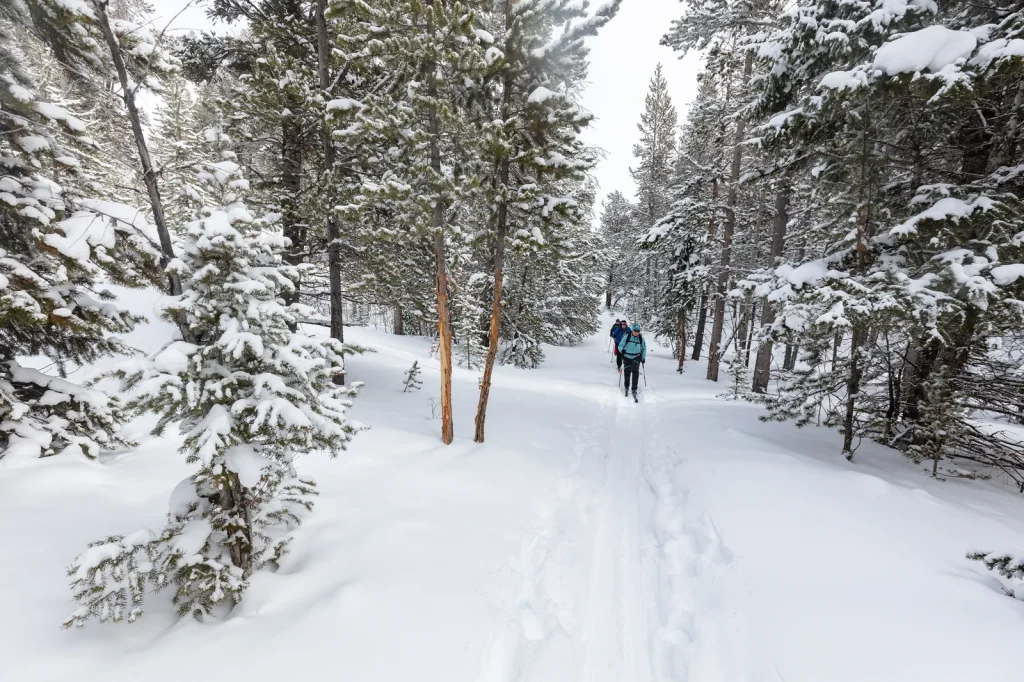
Snow Pass Ski Trail is a 4.2-mile winter ski expedition with 700 feet of vertical gain that cuts through dense forest and icy terrain before opening into panoramic views of Swan Lake Flats. The difficulty varies wildly—smooth rolling terrain for 2.2 miles (if you start from Glen Creek), but vicious icy switchbacks with cliff edges elsewhere. Expect encounters with bison and elk. This is a one-way proposition requiring shuttle logistics and serious winter backcountry judgment.
Mixed (Easiest to Most Difficult)
700-foot ascent through dense forest to Snow Pass saddle, then descent to panoramic vistas of Swan Lake Flats. Option to link to Bunsen Peak Road Ski Trail for extended expedition.
• Glen Creek Trailhead offers the mellow entry; don't let 'easiest' fool you—you'll still need solid winter edge control. • The Upper Terrace connector descent is the real lung-buster; save your energy. • Link to Bunsen Peak Road Ski Trail (south across the road) for a full expedition day. • Bison favor the open meadow sections; they're predictable but maintain your 25-yard distance. • Check avalanche forecast with ranger station before heading into steeper slopes.
Winter
Only appropriate for experienced winter skiers. Icy drop-offs on some sections mean hand-holding young children not practical in ski gear. Ski ability and cold tolerance are non-negotiable prerequisites.
Winter skiers report the Glen Creek approach is more moderate than feared, but the forested ascent and icy technical sections separate the grit from the tourists. The payoff—open views across Swan Lake Flats and the exhilarating descent—is genuine but demands respect for winter hazards and wildlife encounters.
Service animals require backcountry access permit. Contact Mammoth District Ranger Station or visit https://www.nps.gov/yell/index.htm for application details.
One-way or round-trip skier shuttles may be offered through park concessionaire. Confirm availability and schedule with Mammoth District Ranger Station before arrival. Winter roads (Mammoth-Norris) are snowpacked; 4WD or chains likely needed for self-drive access.
NPS warns: 'Some curves have steep drop-offs and can be hazardous when icy.' Bison and elk frequent the trail; federal law requires 25 yards minimum distance. Bears and wolves require 100 yards. Winter conditions create whiteout risk; visibility and safety change hourly.
Trail difficulty varies by route choice. Glen Creek Trailhead approach: 2.2 miles of relatively flat/rolling terrain. Upper Terrace/Mammoth-Norris routes: steep icy sections with challenging technical difficulty. Not wheelchair accessible; backcountry winter ski experience required.
Only appropriate for experienced winter skiers. Icy drop-offs on some sections mean hand-holding young children not practical in ski gear. Ski ability and cold tolerance are non-negotiable prerequisites.
Winter skiers report the Glen Creek approach is more moderate than feared, but the forested ascent and icy technical sections separate the grit from the tourists. The payoff—open views across Swan Lake Flats and the exhilarating descent—is genuine but demands respect for winter hazards and wildlife encounters.
" Winter skiers report the Glen Creek approach is more moderate than feared, but the forested ascent and icy technical sections separate the grit from the tourists. The payoff—open views across Swan Lake Flats and the exhilarating descent—is genuine but demands respect for winter hazards and wildlife encounters."
Depends on your route. Glen Creek approach (2.2 miles) is manageable for intermediate skiers with solid winter experience. The Upper Terrace/Mammoth-Norris sections demand expert edge control and icy terrain comfort. Know which trailhead you're using and scout conditions first.
Yes. Most skiers do this. Glen Creek is the natural out-and-back starting point with the mellow approach. Add 2-3 hours return time if skiing back uphill, depending on fitness and snow conditions.
Zero. This is backcountry. Melt snow (bring a lighter) or carry all water from the start. Glen Creek is nearby but filtering in winter is slow. Bring high-calorie snacks—the cold burns fuel fast.
Likely. They use this corridor year-round. Keep 25 yards away and never approach. Make constant noise to alert them to your presence. Federal law enforces these distances.
Turn around. Icy drop-offs kill experienced skiers. NPS flags this hazard for a reason. Check recent conditions with Mammoth rangers; they have real reports. Come back when snow conditions improve.
Not mandated, but smart. This terrain is steep enough for slab avalanches in heavy snow. Check the avalanche forecast (NOAA/park ranger) before going. Beacon, probe, and shovel are survival tools if you trigger one.
6 listings
4 listings
Information is compiled from official sources, verified traveler reviews, and editorial research. Learn how YourNPGuide works →
Notifications