 Trail
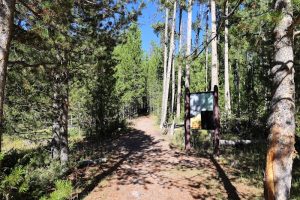
TrailAvalanche Peak Trailhead 5N2
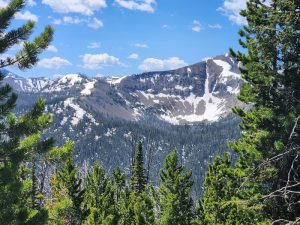
4.5-mile out-and-back; 2,100 ft gain. Relentless climb with a true summit payoff.
2,100 ft elev. gain
View details →

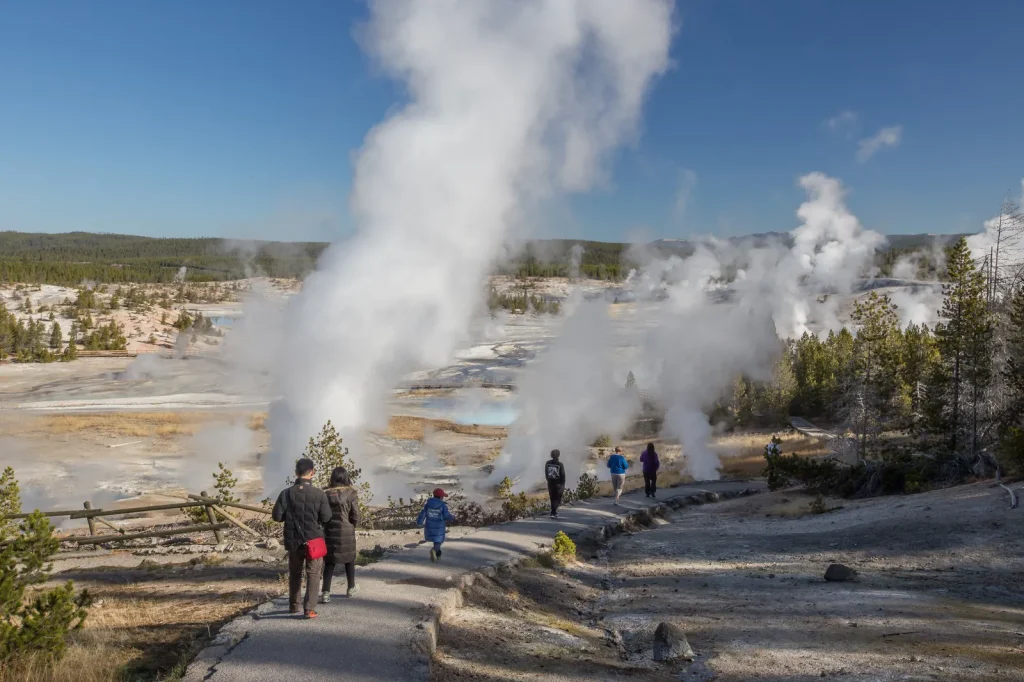
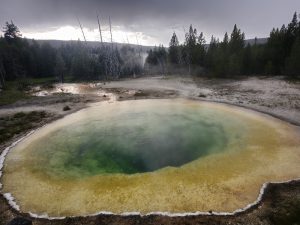
Norris Geyser Basin is one of the hottest and most acidic hydrothermal areas in Yellowstone, sitting atop an active volcano part of one of the world's largest. Two main loops—Porcelain Basin and Back Basin—thread through boardwalks, paved, and unpaved terrain where temperatures exceed boiling point (200°F / 93°C). The 30–90 minute tour is physically easy on boardwalks, but the descent from the Museum & Information Station is steep and uneven. Stay on designated trails at all times—thermal activity is real, and the ground will burn you.
Easy to Moderate. Boardwalks are accessible for most visitors; the steep, uneven descent from the museum requires careful footing and reasonable balance.
Active geysers erupting, colorful hot springs from mineral deposits, and extreme thermal features in one of Yellowstone's hottest geothermal areas. Temperatures exceed boiling point (200°F / 93°C). The landscape is dynamic—seismic activity and water level fluctuations constantly change visible features. Part of one of the world's largest active volcanoes.
• Porcelain Basin loop is shorter and features vibrant yellows, blues, and greens from mineral-rich thermal water. • Back Basin has more active geyser behavior and eruptions. • Early morning (before 10 AM) has the best light and fewest crowds. • Thermal features change constantly due to seismic activity—expect different sights each visit. • Boardwalks can be slippery when wet; wear shoes with good grip, not sandals. • A polarizing filter on your camera cuts glare off thermal pools. • The mineral-rich air is dry; stay hydrated beyond what you'd normally drink.
Spring through Fall (mid-April through early November). Summer is peak season and peak crowds. Fall offers fewer visitors and stable weather.
Boardwalks make this accessible for kids. Keep children close to you at all times. The thermal features are extremely dangerous—temperatures exceed boiling point and caustic water causes severe burns instantly. Never let children leave designated paths. The steep descent from the museum requires careful footing and may be challenging for very young children without adult assistance. Water shoes may help on wet boardwalks.
Norris Geyser Basin is one of Yellowstone's most active geothermal areas, located near the intersection of three major faults and the Yellowstone Caldera eruption zone (640,000 years old). The boardwalk-based tour makes it accessible to most visitors, though the initial descent from the museum is steep and exposed. Most visitors complete their intended loop(s) in 1–2 hours and report it as one of the park's most dynamic thermal landscapes.
No permits or reservations required for day hiking the geyser basin loops.
Thermal activity throughout this entire area. Temperatures exceed boiling point (200°F / 93°C). Boardwalks and marked trails protect you from the worst exposures, but staying on them is mandatory—leaving them risks severe burns. The descent from the Museum & Information Station is steep and uneven; watch your footing carefully. Boardwalks are slippery when wet from thermal steam. Sudden changes in thermal features occur due to seismic activity and water level fluctuations near the Yellowstone Caldera intersection of three major faults.
The boardwalks and paved paths are accessible for most visitors, including wheelchairs and strollers on the flatter sections. However, the route descending from the Museum & Information Station is steep and uneven, unsuitable for wheelchairs or those with significant mobility limitations. Terrain is a mix of smooth boardwalks, paved paths, and uneven unpaved trail.
Boardwalks make this accessible for kids. Keep children close to you at all times. The thermal features are extremely dangerous—temperatures exceed boiling point and caustic water causes severe burns instantly. Never let children leave designated paths. The steep descent from the museum requires careful footing and may be challenging for very young children without adult assistance. Water shoes may help on wet boardwalks.
Norris Geyser Basin Museum & Information Station (at trailhead). Norris Campground nearby. No other immediate visitor services adjacent to the trailheads.
Norris Geyser Basin is one of Yellowstone's most active geothermal areas, located near the intersection of three major faults and the Yellowstone Caldera eruption zone (640,000 years old). The boardwalk-based tour makes it accessible to most visitors, though the initial descent from the museum is steep and exposed. Most visitors complete their intended loop(s) in 1–2 hours and report it as one of the park's most dynamic thermal landscapes.
" Norris Geyser Basin is one of Yellowstone's most active geothermal areas, located near the intersection of three major faults and the Yellowstone Caldera eruption zone (640,000 years old). The boardwalk-based tour makes it accessible to most visitors, though the initial descent from the museum is steep and exposed. Most visitors complete their intended loop(s) in 1–2 hours and report it as one of the park's most dynamic thermal landscapes."
Yes, Yellowstone has bears, bison, and other wildlife throughout the park. Make noise, keep your distance, and never approach animals. Stay on designated trails at all times.
No. Temperatures exceed boiling point (200°F / 93°C) and water is caustic. Boardwalks protect you—stay on them. People have died from thermal burns in Yellowstone.
No special fitness for the boardwalks themselves. Most people manage them easily. The steep descent from the museum requires reasonable balance and leg strength. Trekking poles help if you have knee concerns.
Bring at least 2L minimum. The geothermal air is dry and sun exposure is intense. More water is better. There are no refill sources on trail.
Porcelain Basin is the shorter loop (30 minutes) and features colorful mineral deposits. Back Basin is longer (60 minutes) but has more active geysers. Both loops combined take 90 minutes.
Yes, technically safe—boardwalks are well-marked and crowded during the day. But hike alone only if confident in your physical ability. Always let someone know your plans and expected return time.
Sturdy hiking boots with good ankle support (for the steep descent). Wide-brimmed hat, sunscreen, light layers. Boardwalks are slippery—wear shoes with good grip, not sandals.
6 listings
4 listings
Information is compiled from official sources, verified traveler reviews, and editorial research. Learn how YourNPGuide works →
Notifications