 Trail
TrailAvalanche Peak Trailhead 5N2
4.5-mile out-and-back; 2,100 ft gain. Relentless climb with a true summit payoff.
2,100 ft elev. gain
View details →

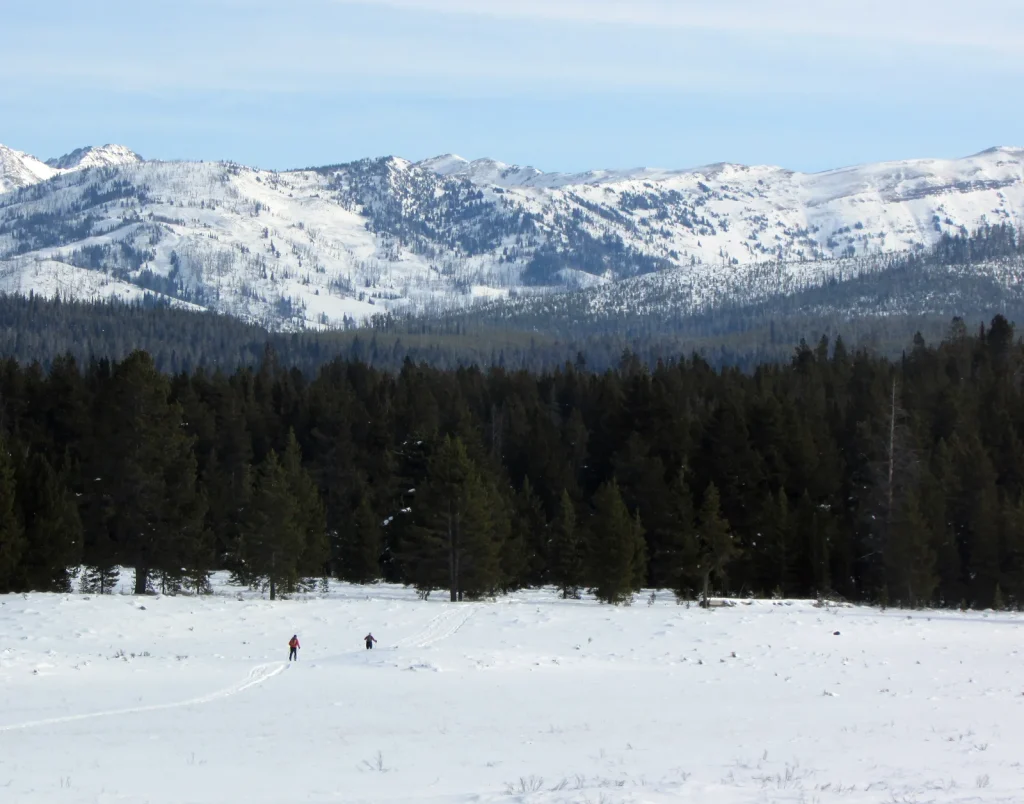
The Fawn Pass Ski Trail is an 11-mile one-way backcountry ski route across high-altitude alpine terrain with moderate avalanche danger in the final 6 miles. This is advanced terrain: you're crossing the Gallatin River multiple times, climbing 700 feet through open terrain with zero shelter, and descending into avalanche country. Panoramic views of the Gallatin Range are your only reward. Not for beginners or fair-weather skiers—this demands avalanche training, route-finding discipline, and genuine grit.
Strenuous. More difficult ski terrain with avalanche exposure. Not for intermediate skiers.
Wide-open views of the Gallatin Range from high-altitude alpine terrain. The payoff is not a waterfall or lake—it's the perspective: vast, exposed, unforgiving landscape that rewards you for the suffering below.
• The trail crosses several "fingers" of the Gallatin River—stream crossings are sneakier in snow. Probe with your pole before committing weight. • False summits are real here. You'll crest a ridge, think you've reached the top, and find 2 more climbs ahead. Mental toughness required. • The descent is faster than you'll anticipate. Control your speed on the final 6 miles—this is where avalanche trigger risk peaks and visibility often worsens. • If you're uncertain about snow stability, turn around. There is no second-place medal for reaching Fawn Pass if it costs you a slide into the ravine.
Winter
Not suitable for children or family groups. Advanced skiers only. Avalanche exposure, remote location, wildlife risk, and multi-hour commitment demand mature judgment and experience. If your kids are not able to ski a fall-line descent in varied snow without hesitation, this is not the trail.
Experienced backcountry skiers praise this route for its solitude and panoramic exposure to the Gallatin Range. Most report 7–8 hour round trips in stable snow conditions. Common feedback: underestimate cold intensity at your peril, and avalanche awareness separates the living from the learning-disabled.
No permits required. Inform the ranger station of your departure and expected return time—this is not a registered trip, but it's smart practice.
Not applicable. Drive to trailhead; park and walk to skis.
Moderate avalanche danger in the last 6 miles approaching Fawn Pass. Federal regulations require you to stay at least 100 yards from bears and wolves, 25 yards from bison and other wildlife. Winter temperatures drop to -20°F with wind gusts; exposed skin freezes in minutes. Steep terrain transitions occur without warning in poor visibility.
Steep terrain, some switchbacking sections, and sustained climbing. Skier-tracked trail with variable snow conditions. Not accessible for those without intermediate-to-advanced backcountry ski skills. Service animals permitted but must be under strict control (wildlife presence and avalanche exposure make this dangerous for animals).
Not suitable for children or family groups. Advanced skiers only. Avalanche exposure, remote location, wildlife risk, and multi-hour commitment demand mature judgment and experience. If your kids are not able to ski a fall-line descent in varied snow without hesitation, this is not the trail.
Experienced backcountry skiers praise this route for its solitude and panoramic exposure to the Gallatin Range. Most report 7–8 hour round trips in stable snow conditions. Common feedback: underestimate cold intensity at your peril, and avalanche awareness separates the living from the learning-disabled.
" Experienced backcountry skiers praise this route for its solitude and panoramic exposure to the Gallatin Range. Most report 7–8 hour round trips in stable snow conditions. Common feedback: underestimate cold intensity at your peril, and avalanche awareness separates the living from the learning-disabled."
Both. Moderate avalanche exposure in the final 6 miles is a genuine, documented hazard. Fatal slides have happened in Yellowstone's backcountry. The danger is manageable with proper training (beacon, probe, shovel, route discipline, weather reading) but not ignorable. If you can't articulate how to beacon search, skip this trail.
No permits required. Hiring a guide is optional but smart if you've never done this before. The ranger station can recommend outfitters in West Yellowstone who specialize in winter backcountry tours.
6–8 hours round trip in typical conditions. Assume 8 hours if you include avalanche safety stops and river-crossing care. If you're slower than that, turn around—you don't want to descend in darkness.
You stop, you dig a snow shelter, and you wait. This is why map/compass/GPS and the ability to navigate terrain are non-negotiable. Getting lost and panicking is how people die on this trail.
Technically, yes—the trail is marked for skis and snowshoes. Practically, no. Snowshoeing 22 miles in backcountry snow is exponentially harder than skiing. You'll be postholing in wind-slab, exhausted by Mile 8, and unable to descend safely. Skis only.
If you respect the slope angles (avoid anything steeper than 35 degrees in the final 6 miles) and check snow stability on arrival, the risk is low. If you rip uncontrolled lines or ski through a loading zone after recent snow, the risk spikes to near-certain. Your discipline determines the outcome.
Bears are hibernating December through March. Wolves and bison are active year-round. Stay 100 yards from any wolf pack, 25 yards from bison. Do not approach for photos.
6 listings
4 listings
Information is compiled from official sources, verified traveler reviews, and editorial research. Learn how YourNPGuide works →
Notifications