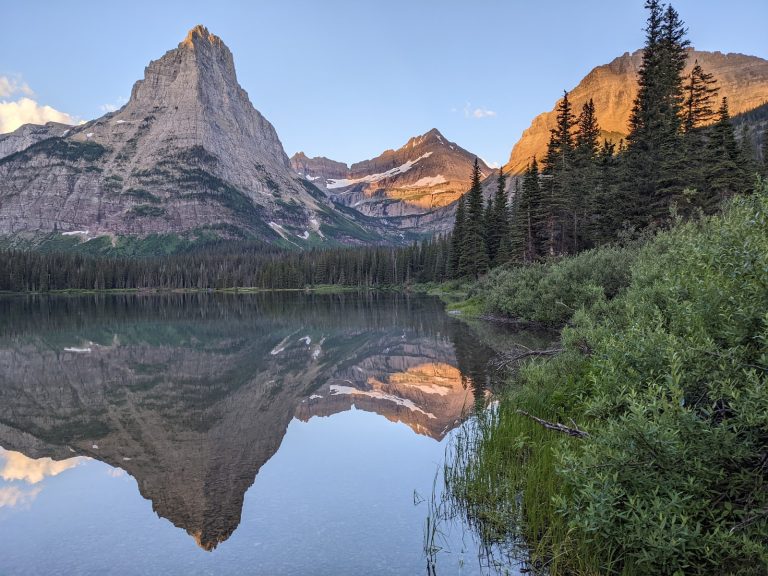
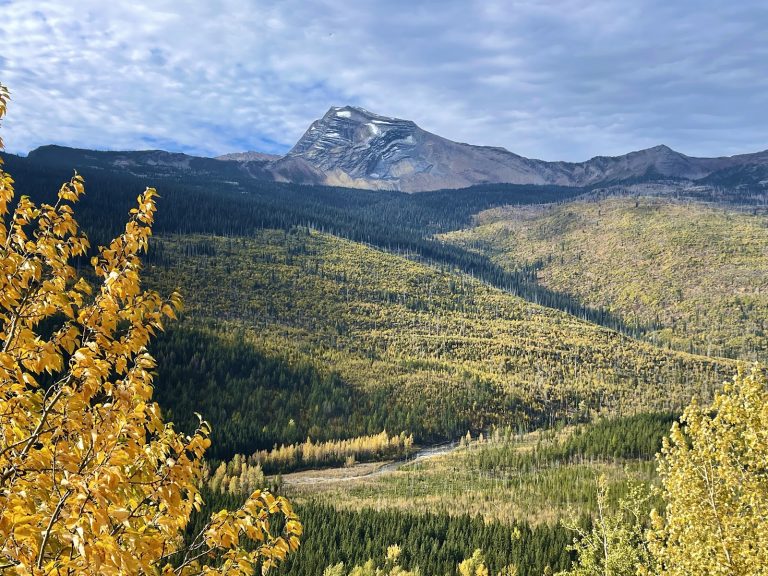
Glacier National Park in April: What to Expect
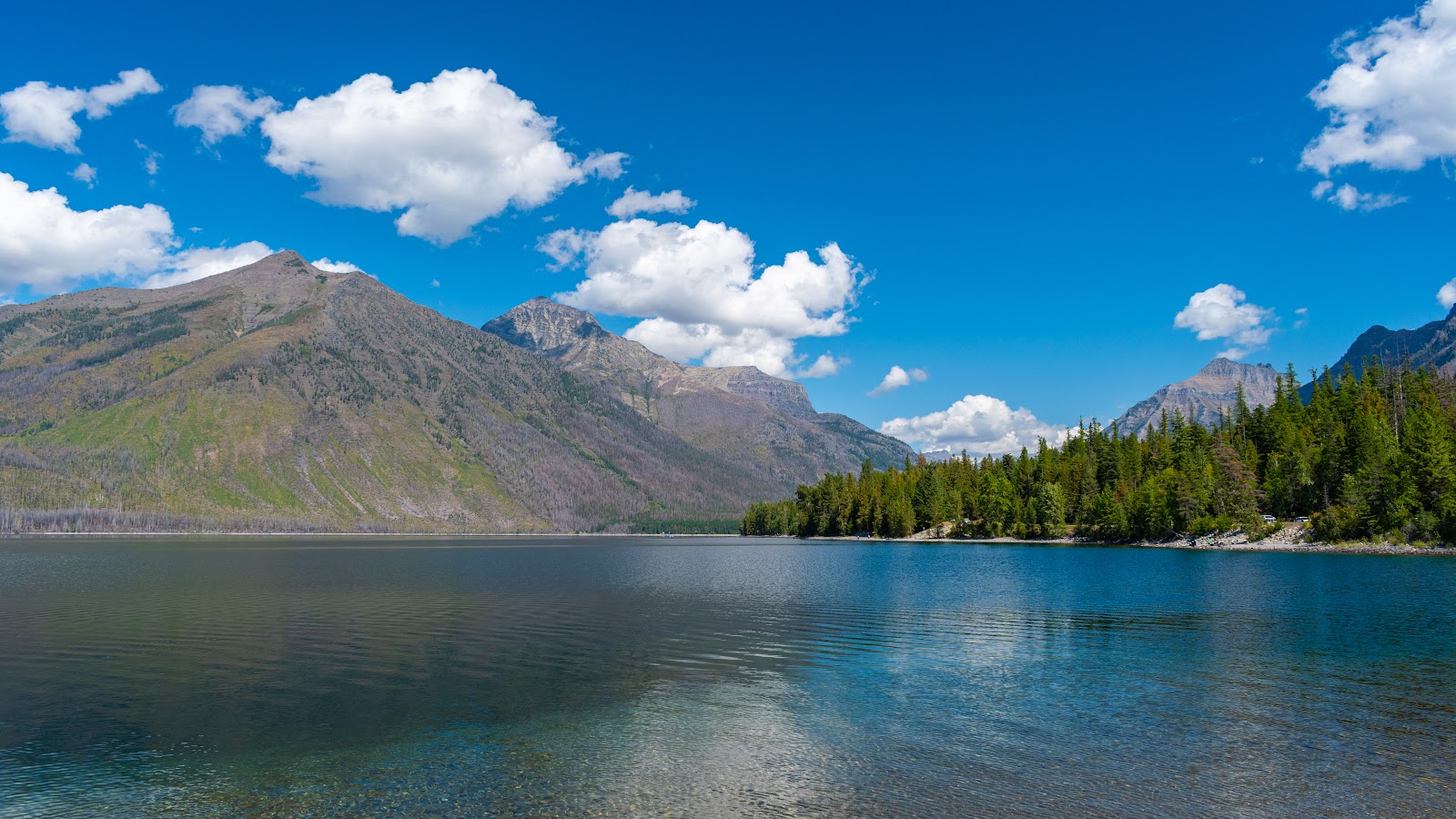
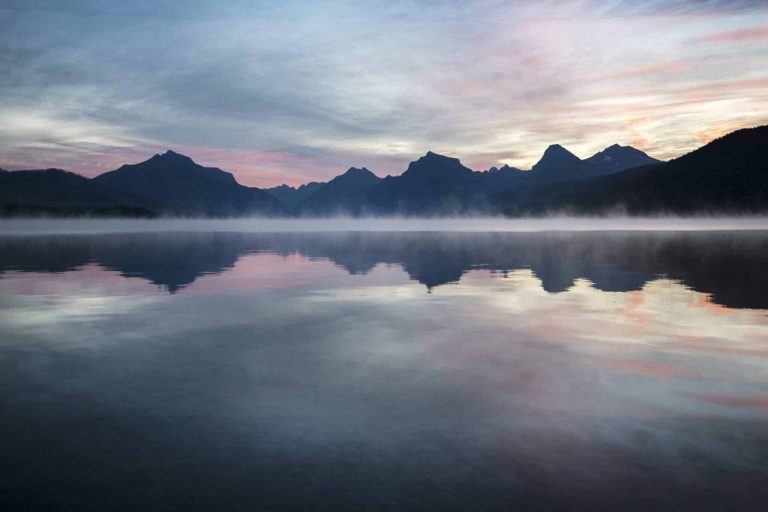
April at Glacier National Park is raw, uncrowded, and genuinely wild. Going-to-the-Sun Road is closed to vehicles, most lodges and facilities don’t open until late May, and the high country sits under several feet of snow — but that’s exactly why serious visitors love it. You’ll have the park nearly to yourself, grizzly bears are emerging from their dens, and the lower sections of GTSR are open to cyclists with zero cars in sight.
This guide covers everything you need to know to visit Glacier in April: what’s open, what the weather actually does, the best activities for the season, and the practical details that make the difference between a great trip and a frustrating one.
- Going-to-the-Sun Road is closed to vehicles all month — but open to cyclists and hikers as far as plowing allows
- Temperatures range from mid-30s to mid-50s°F; snow is possible any day — layer aggressively
- Grizzly and black bears emerge from winter dens in April — carry bear spray, no exceptions
- No timed-entry vehicle reservations required in 2026 — and none needed in April anyway
- Winter entrance fees apply: $25/vehicle (Nov 1–Apr 30)
- No gas, food, or services inside the park — stock up before entering
- Only Apgar and St. Mary campgrounds are open, primitive services only
What’s Open (and Closed) in April
April sits firmly in Glacier’s off-season. The West Entrance (West Glacier) and the St. Mary Entrance on the east side are open year-round, allowing vehicle entry and access to the lowest-elevation areas. Everything above the valley floor — Logan Pass, Many Glacier, Two Medicine, North Fork/Polebridge — is either snowed in or gated closed, per NPS.gov.
Some links below are affiliate links.
| Location / Facility | April Status |
|---|---|
| West Entrance (West Glacier) | Open year-round |
| St. Mary Entrance (East Side) | Open year-round |
| Going-to-the-Sun Road (vehicles) | Closed — plowing in progress |
| Going-to-the-Sun Road (hikers/cyclists) | Open as far as plowing allows |
| Many Glacier Road | Closed (opens ~May–Oct) |
| Two Medicine Road | Closed (opens ~May–Oct) |
| Camas Creek Entrance | Closed (opens ~May–Oct) |
| North Fork / Polebridge Road | Closed / unplowed |
| Apgar Visitor Center | Weekends only (mid-April) |
| Logan Pass Visitor Center | Closed (no road access) |
| All other visitor centers | Closed |
| Apgar Campground | Open, primitive (no water/flush toilets) |
| St. Mary Campground | Open, primitive |
| All other campgrounds | Closed |
| In-park restaurants and stores | Closed (open late May–June) |
| Gas inside the park | Not available |
| Park shuttles | Not running (start July 1) |

April Weather at Glacier National Park

April is a genuine transition month — winter conditions still dominate. The west side lowlands around West Glacier (elevation ~3,200 ft) see daytime highs of 45–53°F (7–12°C) with overnight lows dropping into the 20s–30s°F. A 30°F temperature swing in a single day is common. Snow can fall at lower elevations any day of the month, per NPS.gov.
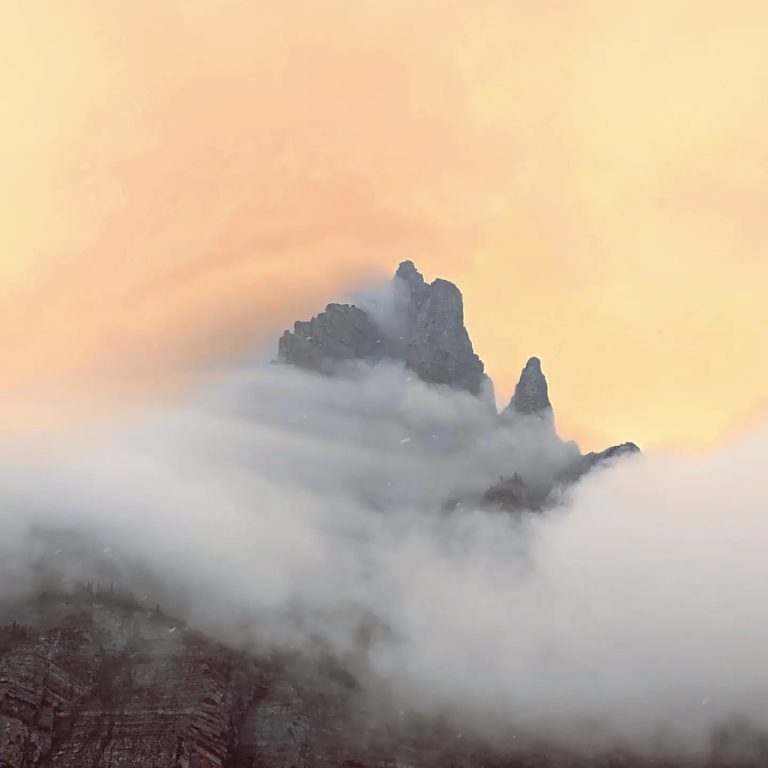
The east side (St. Mary at ~4,500 ft) runs 5–10°F colder and experiences fierce winds that can exceed 50 mph. High elevations — Logan Pass at 6,646 ft — remain 10–15°F colder still, with snowpack measured in feet. Cloud cover averages around 35%; there are clear blue-sky days, but rain and snow are equally likely throughout the month.
| Location | Avg High | Avg Low | Precipitation |
|---|---|---|---|
| West Glacier (~3,200 ft) | 45–53°F (7–12°C) | 24–30°F (-4 to -1°C) | ~39% chance/day |
| St. Mary / East Side (~4,500 ft) | ~41°F (5°C) | ~25°F (-4°C) | Drier, windier |
| Logan Pass (~6,646 ft) | Below 30°F | Below 20°F | Full winter snowpack |
Daylight is generous — roughly 13.7 hours by month’s end, with sunrise around 6:46 AM and sunset near 8:25 PM. The extended golden-hour windows make April a compelling pick for landscape and wildlife photographers who can work the dawn and dusk light.

Best Things to Do at Glacier National Park in April
April’s constraints are real, but so are its advantages. The activities below are uniquely good — or better — in April than at peak season.
Cycle Going-to-the-Sun Road
This is the marquee April experience at Glacier. GTSR is closed to all vehicles during spring plowing, but it’s fully open to cyclists and hikers. Ride from the West Entrance up toward Avalanche Creek and beyond — exact distance depends on plow progress. No cars, no tour buses, no shuttle noise. Just 50-mile views in near-total silence. E-bike rentals are available through Glacier Guides in West Glacier for those who want motor-assist on the grade.
Snowshoe the Lower Park
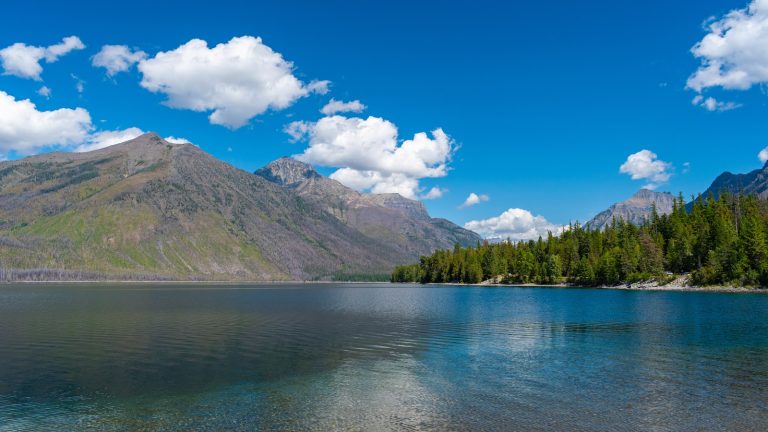
Snow persists on lower trails through much of April, making snowshoes the right tool for several accessible routes. The Lake McDonald shoreline and lower GTSR toward McDonald Falls are flat and forgiving. The Apgar Lookout Trail offers sweeping lake views for those willing to climb. Ranger-led snowshoe walks occasionally run in late winter and early spring — check NPS.gov for any scheduled programs.
Early-Season Hiking (West Side Low Elevation)
By late April, the lowest-elevation west-side trails begin losing their snow cover. The Trail of the Cedars near Avalanche Creek — an ADA-accessible loop through old-growth cedar and hemlock — is typically one of the first to clear. The West Shore Lake McDonald Trail and Fish Creek Trail offer mellow alternatives. Avoid any trail that climbs above treeline; routes like Grinnell Glacier, Iceberg Lake, and Highline remain buried and avalanche-prone throughout April, per NPS.gov.

Whitewater Rafting on the Middle Fork
Spring snowmelt turns the Middle Fork of the Flathead River — Glacier’s southern boundary — into some of the best whitewater in Montana. Bigger rapids, faster currents, and cold enough water to require a wetsuit. Glacier Guides and other outfitters in West Glacier run guided trips with proper gear starting in April. This is a genuine off-season highlight most summer visitors never experience.

Northern Lights Photography
Glacier is a designated International Dark Sky Park. April nights are still long enough — and the park empty enough — to make aurora viewing excellent. The Apgar area on Lake McDonald’s western shore is a prime location. Check aurora forecast apps and plan to stay up late; sightings are weather-dependent but spring conditions are often favorable.
Wildlife Photography at Dawn and Dusk
Animals are most active in the two hours around sunrise and sunset. April’s long golden hours — combined with near-zero foot traffic — create ideal conditions for spotting Glacier’s wildlife. A telephoto lens (200mm or longer) is essential; animal approach distances are strictly regulated and the park’s open meadows require reach. See the wildlife section below for what’s active and where to look.
Wildlife in April at Glacier
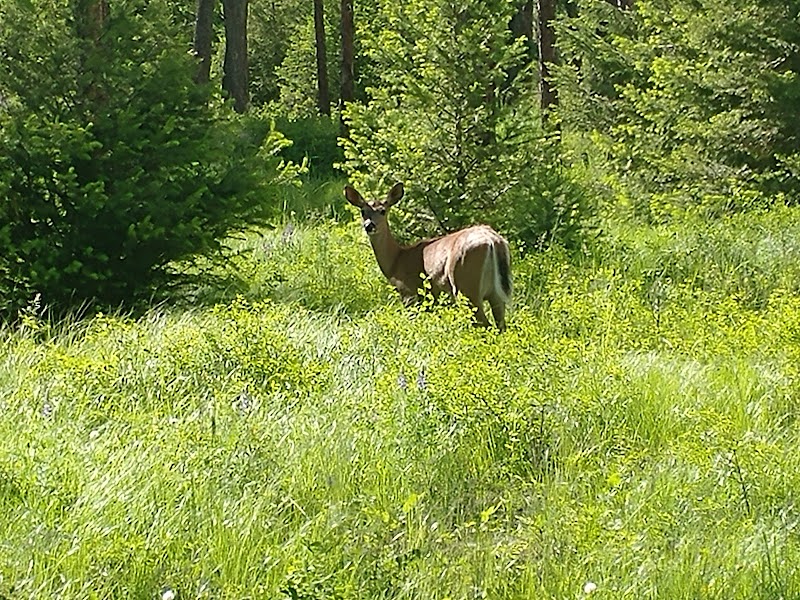
April is one of the best wildlife-viewing months in Glacier. Bears are emerging from dens, ungulates are active in valley terrain, and predator-prey dynamics play out in near-total solitude. The low crowds mean you’re not competing with summer bus traffic for sightings — and you’re seeing animals in their most active post-winter state.
Grizzly Bears
Glacier’s roughly 300 grizzly bears begin emerging from winter dens in March and April, per NPS.gov. Den sites are typically on remote north-facing slopes at 6,000–8,000 ft. Post-emergence bears descend to lower terrain seeking roots, winter-killed ungulate carcasses, and early grasses. Sightings on open lower-elevation slopes increase as April progresses. Bear spray must be worn in an accessible holster — not buried in your pack. Maintain a 100-yard minimum distance. Hiking in groups of 4 or more significantly reduces encounter risk.
Black Bears
Glacier’s estimated 600 black bears also emerge from torpor in April and are commonly seen in forested lowland areas on the west side. Both species require the same safety precautions — bear spray, distance, and noise-making on forested trails.
Deer, Elk, and Moose
Mule deer and white-tailed deer are active in valley meadows at dawn and dusk. Elk are visible in lower valleys as snowmelt exposes early grasses. Spring is widely regarded by locals as one of the best moose-viewing seasons; moose concentrate in marshy stream corridors and the Belly River Valley. Look in wetland areas near Apgar and along US-2 at the park’s southern boundary.
Bighorn Sheep and Mountain Goats
Rocky Mountain bighorn sheep occupy east-side slopes, particularly around the Many Glacier area. The road is closed in April, but the area is approachable on foot if snow conditions allow. Mountain goats — year-round high-elevation residents — can sometimes be spotted at lower terrain in early spring before moving back up to Logan Pass as the snow recedes.
Wolves and Other Predators
Wolf activity is high in spring, and tracks on early-season trails often outnumber human footprints. Coyotes and red foxes are also active throughout the park. The wide-open terrain and minimal human presence in April creates unusually good conditions for observing predator behavior.
Roads and Access in April
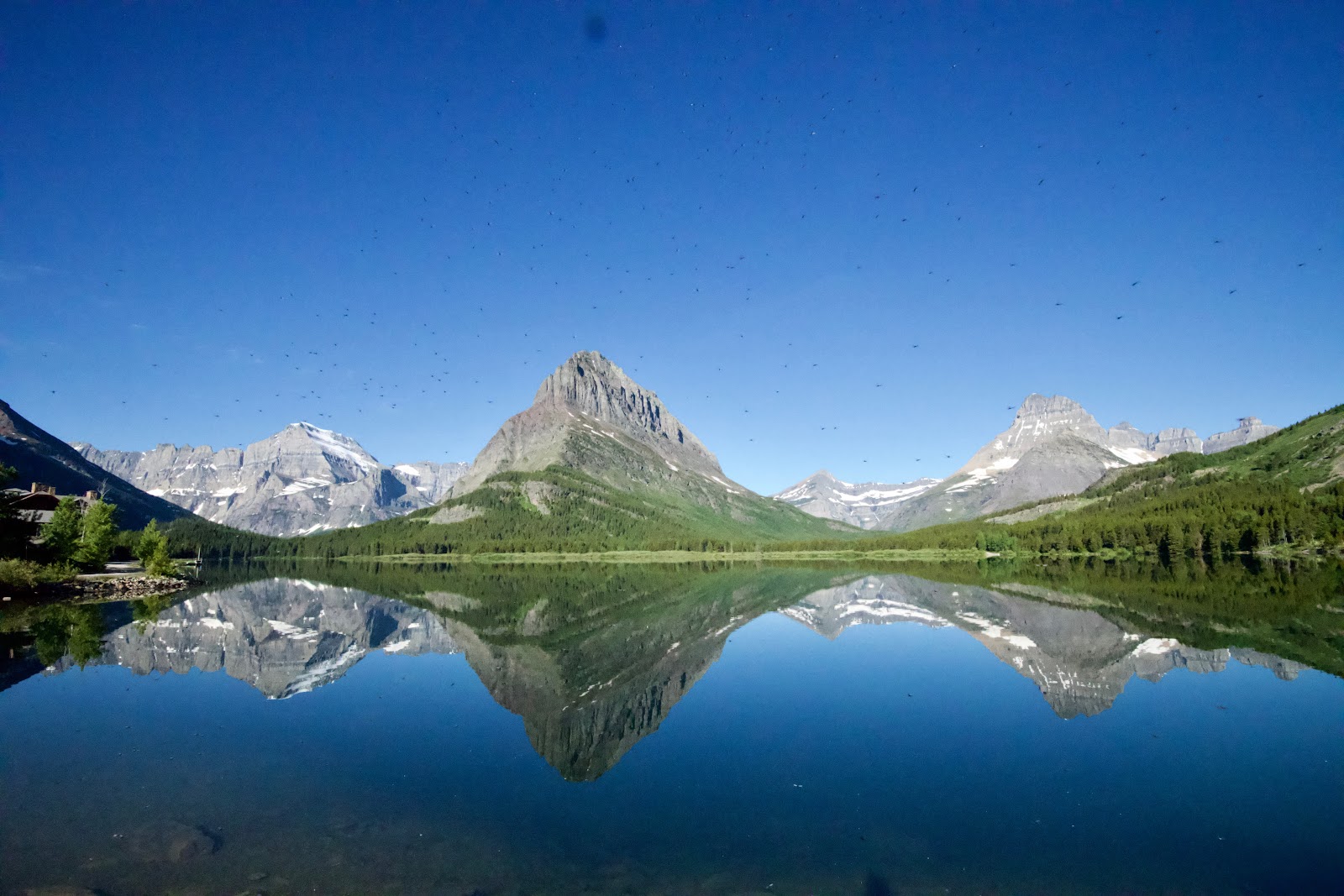
Going-to-the-Sun Road plowing begins around April 1 each year, starting on the east side at St. Mary and working upward toward Logan Pass, per NPS.gov. By early April, crews typically reach the lower mountain sections. By month’s end, hikers and cyclists can often access Avalanche Creek and beyond from the west side. Vehicle access doesn’t come until the full 50-mile road is cleared — historically between late May and mid-July. Logan Pass opened June 16 in 2025.
All secondary roads — Many Glacier, Two Medicine, Camas Creek, and North Fork — remain closed and unplowed throughout April. These roads are not merely gated; they are under significant snow with no turnaround infrastructure. Check daily conditions at NPS.gov before any outing. Year-round vehicle access is maintained on US-2, which runs along Glacier’s southern boundary through the Flathead Valley corridor.
Entrance Fees and Permits in April
Winter entrance fee rates apply from November 1 through April 30, per NPS.gov. April rates are lower than the summer rates most visitors see advertised.
| Pass Type | April (Winter) Rate | Summer Rate (May–Oct) |
|---|---|---|
| Private Vehicle (7-day pass) | $25 | $35 |
| Motorcycle (7-day pass) | $20 | $30 |
| Per Person / Foot / Bike (age 16+) | $15 | $20 |
| Children under 16 | Free | Free |
| Annual Park Pass | $70 | $70 |
| America the Beautiful (Interagency) | $80 | $80 |
Cash is not accepted. Pay by credit or debit card at the entrance station, or purchase a digital pass in advance at Recreation.gov. The America the Beautiful Interagency Annual Pass covers Glacier entry and all other federal recreation sites — a strong value if you visit multiple parks.
Vehicle Reservations in 2026
Glacier National Park confirmed it is dropping the timed-entry vehicle reservation system entirely for 2026. No advance vehicle reservations are required at any time of year. In April, GTSR is closed to vehicles anyway, so this is a non-issue. No advance planning around reservations is needed for an April visit.
Backcountry Permits
Overnight backcountry camping requires a wilderness permit year-round. The winter backcountry permit process (November 1–April 30) is handled through the Apgar Backcountry Office: 406-888-7800. Spring backcountry in April carries significant avalanche risk — check the Flathead Avalanche Center (flatheadavalanche.org) before any above-treeline outing.
Where to Stay Near Glacier in April
All in-park lodges are closed throughout April. Glacier Park Collection properties (Lake McDonald Lodge, Many Glacier Hotel, Rising Sun Motor Inn, etc.) typically open no earlier than late May, per glacierparkcollection.com. Visitors must stay in gateway communities.
| Gateway Town | Distance to West Entrance | Notes |
|---|---|---|
| West Glacier, MT | At the park gate | Closest; limited year-round options |
| Columbia Falls, MT | ~15 miles | Budget-friendly; good base |
| Whitefish, MT | ~25 miles | Most variety; open year-round; airport access |
| Kalispell, MT | ~35 miles | Full amenities; closest major airport |
| East Glacier Park, MT | ~35 miles via US-2 | Some year-round motels; east-side base |
| St. Mary, MT | At east park gate | Very limited in April — confirm ahead |
Camping inside the park: Apgar and St. Mary campgrounds operate in primitive mode — no running water, no flush toilets, no RV hook-ups. Both are first-come, first-served. Bring your own water or a quality filtration system. Running water typically returns to Apgar in early May.
10 Practical Tips for Visiting Glacier in April
- Layer for a 30°F swing. Base layer, insulating mid-layer, waterproof shell. A clear morning can become a blizzard by afternoon — this is not hypothetical in April.
- Carry bear spray and know how to deploy it. Practice unholstering it before you arrive. Spring is the highest-risk season; bears are hungry, mobile, and at lower elevations.
- Check road and trail conditions every morning. Conditions change with every weather system. NPS.gov posts real-time updates daily.
- Fill up before you enter. No gas, restaurants, or stores inside the park in April. Stock food and water for the day in West Glacier, Whitefish, Columbia Falls, or St. Mary.
- Waterproof boots are mandatory. Lower trails have mud, slush, and snowmelt stream crossings. Trail runners will be soaked immediately.
- Pack microspikes or Yaktrax. Icy patches persist on lower trails throughout the month, especially on shaded sections and north-facing slopes.
- Go out at dawn and dusk for wildlife. The park’s prime wildlife windows are before 8 AM and after 4:30 PM. Mid-day offers far fewer sightings.
- Download offline maps before arrival. Cell service is unreliable throughout much of the park. Gaia GPS and AllTrails both support offline download.
- Cash is not accepted at the park. Entrance fees must be paid by card or digital pass at Recreation.gov.
- Check avalanche forecasts for any backcountry travel. The Flathead Avalanche Center (flatheadavalanche.org) publishes daily forecasts. Do not venture above treeline without avalanche training, a beacon, probe, and shovel.

Frequently Asked Questions
Is Glacier National Park worth visiting in April?
Is Going-to-the-Sun Road open in April?
Are grizzly bears out in Glacier in April?
Do you need reservations to visit Glacier National Park in April?
How much does it cost to enter Glacier National Park in April?
What campgrounds are open at Glacier in April?
What is the weather like at Glacier in April?
How We Researched This Guide
- NPS.gov official park pages (operating hours, fees, spring conditions, bear safety, GTSR info, Logan Pass opening history)
- Glacier Park Collection lodging dates and operations guide
- Glacier Conservancy winter activities documentation
- Flathead Avalanche Center avalanche safety data
- Climate data from US weather records and Wanderlog
- Daily Montanan reporting on 2025 GTSR plow progress and 2026 vehicle reservation policy change
Road opening dates and facility schedules are subject to change based on weather and NPS staffing. Always verify current conditions at NPS.gov before your trip. Wildlife sightings are never guaranteed.
Ready to plan your April trip to Glacier? Check current road conditions and park updates before you go.