3-Day Glacier National Park Itinerary: The Best Plan for 2026
Three days in Glacier National Park is enough time to drive the iconic Going-to-the-Sun Road, hike to an alpine lake from Logan Pass, and explore the dramatic Many Glacier valley — if you plan each day deliberately. This itinerary splits your time between the west side (Lake McDonald Valley), the alpine corridor (Logan Pass), and the northeast corner (Many Glacier), hitting the park’s three most distinct landscapes without backtracking.
Entrance fee per NPS.gov: $35 per private vehicle, valid for 7 days. The America the Beautiful Annual Pass ($80) pays for itself on your first visit and covers all 400+ federal recreation sites.
- Three days covers the three core zones: Lake McDonald Valley (west), Logan Pass (alpine), and Many Glacier (northeast).
- No vehicle reservations are required to enter Glacier in 2026 — but Logan Pass parking is limited to 3 hours starting July 1.
- Arrive at Logan Pass trailheads by 6:30 a.m. or earlier in peak season — the lot fills by 7:20 a.m.
- Many Glacier Hiker’s Shuttle runs July 1–September 21, 2026 on a first-come, first-served basis (no advance reservations).
- Avalanche Lake and Trail of the Cedars are not accessible by park shuttle in 2026 — you need a personal vehicle.
- Grinnell Glacier hike is 10.6 miles round trip (or 7.2 miles using the Swiftcurrent Lake boat shuttle).
- Book Lake McDonald Lodge or Many Glacier Hotel 6–12 months in advance — both sell out for peak summer dates.
Some links below are affiliate links.
What Do You Need to Know Before Visiting Glacier for 3 Days?
When to go: Mid-July through mid-August is peak season — the Going-to-the-Sun Road (GTSR) is fully open, wildflowers peak at Logan Pass, and all trails are snow-free. Late June is quieter and snowfields linger at elevation, adding drama without the crowds. September offers golden larches, cooler temperatures, and dramatically shorter lines.
Entrance fees per NPS.gov:
| Pass Type | Cost | Valid |
|---|---|---|
| Private Vehicle | $35 | 7 days |
| Per Person (foot/bike) | $20 | 7 days |
| Motorcycle | $30 | 7 days |
| America the Beautiful Annual Pass | $80 | 12 months, 400+ sites |
Getting there: Glacier’s west entrance near West Glacier is served by Amtrak’s Empire Builder (Chicago–Seattle). Kalispell Airport (FCA) is 30 miles from the west entrance. Fly into Great Falls (GTF) for slightly cheaper fares with a 90-minute drive. Rental cars book out months in advance — reserve before you book flights.

Day 1: Lake McDonald Valley — Forests, Falls & a Glacial Lake
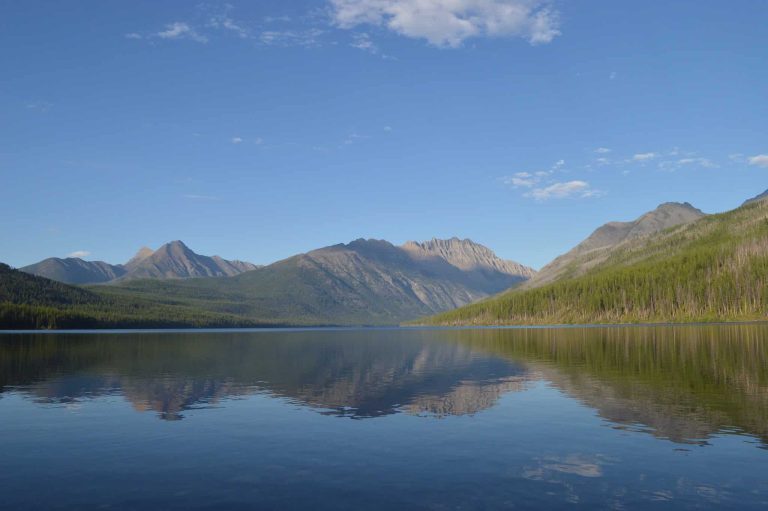
Start your first morning at Apgar Village on the south shore of Lake McDonald, where the still water reflects the surrounding peaks in a mirror-flat panorama. The lake is 10 miles long and 1.5 miles wide — the largest lake in the park per NPS.gov. Arrive early to claim a shore spot before the tour buses roll in.
Morning hike: Trail of the Cedars + Avalanche Lake
Drive 16 miles east on GTSR to the Avalanche Picnic Area. The Trail of the Cedars is a 0.7-mile paved loop through a towering old-growth cedar and hemlock forest — one of the few fully accessible trails in the park. Connect directly to the Avalanche Lake Trail for a 4.6-mile round-trip hike gaining 741 feet to one of the most photogenic spots in the park: a deep turquoise lake ringed by 8,694-foot Bearhat Mountain, with multiple waterfalls cascading off its cliff walls per NPS.gov. Allow 3–4 hours total.
Afternoon: Lake McDonald Lodge and sunset paddling
Settle into your lodging at Lake McDonald Lodge (opens May 15, 2026), a 1913-built Swiss chalet-style inn 10 miles inside the west entrance. Afternoon boat tours depart from the dock in front of the lodge. Rent a kayak or paddleboard from the concession stand for a closer look at the lake’s famous painted pebbles — the brilliant greens, reds, and blues are caused by minerals in the lake bed. In the evening, watch the sunset light up the peaks from the shoreline — the colors typically peak 20–30 minutes after the sun drops behind the ridge.
Day 2: Going-to-the-Sun Road & Logan Pass Alpine Hikes
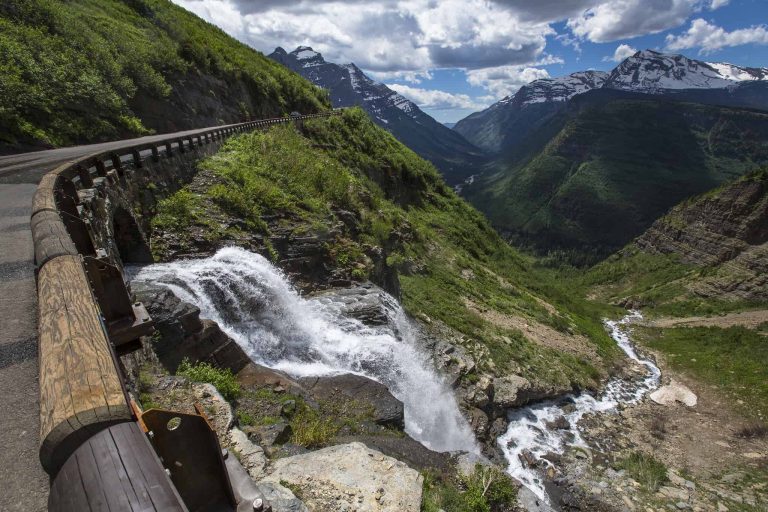
Set an alarm for 5:30 a.m. The Going-to-the-Sun Road stretches 50 miles across the Continental Divide, climbing from 3,200 feet at Lake McDonald to 6,646 feet at Logan Pass — one of the most dramatic paved drives in North America. The full drive takes 2 hours without stops; plan 5–6 hours to do it justice.
Key stops eastbound: The Loop (trailhead for Highline), McDonald Creek Valley overlooks, Bird Woman Falls pull-off, and the dramatic “Big Bend” hairpin at mile 32 where views open to the Garden Wall. Logan Pass Visitor Center sits at the summit and is worth 15 minutes inside for the alpine meadow orientation.
Hike 1: Hidden Lake Overlook (2.6 miles round trip)
Trailhead: Logan Pass Visitor Center, west side. The trail climbs 608 feet on a stair-stepped boardwalk — built to protect the fragile alpine meadow — through subalpine wildflowers to a railing overlook above Hidden Lake. Mountain goats lounge on the rocks within 50 feet of the trail here with remarkable frequency. Allow 1.5–2 hours. Start this hike the moment Logan Pass opens — by 8:00 a.m. the lot has waiting lines per hikinginglacier.com.
Hike 2 (optional extension): Highline Trail to The Loop (11.6 miles one-way)
For strong hikers, this trail departs Logan Pass on the east side and traverses the Garden Wall cliff face — the first 0.25 miles has a fixed cable to grip on the narrow ledge. The full traverse to The Loop trailhead drops 2,300 feet over 11.6 miles with minimal additional climbing. The park runs a free shuttle back to Logan Pass from The Loop. Allow 5–7 hours.
Afternoon: East side stops and St. Mary Lake
Continue east on GTSR past Jackson Glacier Overlook — one of the few glaciers visible directly from the road — then down to the wide-open eastern plains. St. Mary Lake is 10 miles long and flanked by the dramatic peaks of the Lewis Range. Take the short 1.6-mile round trip to St. Mary Falls and Virginia Falls — a rewarding two-for-one with a combined 492-foot drop. Drive back west or overnight in St. Mary.

Day 3: Many Glacier — The Crown Jewel of the Northeast
Many Glacier is widely considered the most scenically concentrated area in the park. The 12-mile dead-end road from Babb ends at Swiftcurrent Lake, encircled by five peaks and the historic Many Glacier Hotel — a 1915 Swiss-chalet lodge that has welcomed guests for over a century. Drive time from West Glacier: 2 hours via US-89 and the Chief Mountain International Highway.
Grinnell Glacier Trail (10.6 miles round trip, 1,600 ft gain)
This is Glacier’s signature hike. The trail climbs through wildflower meadows and along two glacial lakes to the edge of Grinnell Glacier — one of the park’s most accessible remaining glaciers. Using the boat shuttle across Swiftcurrent Lake and Lake Josephine shortens the hike to 7.2 miles round trip, saving roughly 3 miles of flat lakeshore walking. Boat tours depart from Many Glacier Hotel; purchase tickets in advance through Glacier Park Boats. Allow 5–7 hours with boat, 6–8 hours without.
Alternative: Swiftcurrent Nature Trail
This 2.6-mile loop around Swiftcurrent Lake and Lake Josephine is flat and non-technical — excellent for wildlife watching at dawn and dusk. Moose, bears, and bighorn sheep frequent the brushy lakeshore year-round. No permits or shuttle required.
Evening: Red Bus Tour
Glacier’s iconic 1930s White Motor Company “jammers” (named for their manual transmissions) offer narrated 2–4 hour tours departing from all major lodges. The Many Glacier to Logan Pass route is the most popular. Book through Glacier National Park Lodges at least 2 months in advance for peak summer dates.
Which Glacier Hike Should You Prioritize?
With limited time, choosing between Glacier’s marquee trails is the hardest planning decision. This table compares the five most-recommended hikes for a 3-day trip:
| Trail | Distance | Elevation Gain | Difficulty | Best For |
|---|---|---|---|---|
| Hidden Lake Overlook | 2.6 mi RT | 608 ft | Moderate | First-timers, wildlife |
| Trail of Cedars + Avalanche Lake | 5.3 mi RT | 741 ft | Moderate | Families, waterfalls |
| Highline Trail (full traverse) | 11.6 mi one-way | 200 ft net | Strenuous | Epic views, experienced hikers |
| Grinnell Glacier (boat assist) | 7.2 mi RT | 1,600 ft | Strenuous | Glaciers, alpine lakes |
| Swiftcurrent Nature Trail | 2.6 mi loop | Minimal | Easy | Wildlife, accessibility |
Where Should You Stay for a 3-Day Glacier Itinerary?
Best strategy: split stays. Night 1 near West Glacier or at Lake McDonald Lodge; Night 2 at St. Mary, East Glacier, or Many Glacier Hotel; Night 3 back west or at a Whitefish hotel if catching a morning flight.
Inside the park — lodges: Lake McDonald Lodge (open May 15–September 28, 2026) offers 82 rooms starting around $180/night. Many Glacier Hotel is the most remote and most coveted — rooms book within hours of the annual January release. Both book through Glacier National Park Lodges.
Camping inside the park: Apgar Campground (190+ sites, largest in the park) and Fish Creek Campground (178 sites on western Lake McDonald shore) offer the best value near west-side trailheads. Sprague Creek (9 miles from west entrance) has lakeview sites but no RVs allowed. Book through Recreation.gov — peak summer sites release on a rolling 6-month basis and fill within minutes of release.
Outside the park: West Glacier and Whitefish offer lodging from $100–$400/night. Airbnb cabins near the North Fork provide seclusion but require 45-minute drives to major trailheads.
What’s Different About Visiting Glacier in 2026?
The park has made several significant operational changes this year. Per NPS.gov:
| Change | Details |
|---|---|
| No vehicle entry tickets | Timed-entry reservation system fully suspended. Drive in at any time. |
| Logan Pass 3-hour parking limit | Effective July 1, 2026. Highline Trail hikers must use ticketed express shuttle. |
| Many Glacier shuttle — no advance booking | First-come, first-served only, July 1–September 21, 2026. |
| Avalanche Lake not on shuttle | Personal vehicle required for Avalanche Creek area all of 2026. |
| Non-resident fee | $100/person additional fee for non-U.S. visitors on top of standard entrance. |
FAQ
Is 3 days enough for Glacier National Park?
Do you need reservations to visit Glacier National Park in 2026?
When does Going-to-the-Sun Road open in 2026?
What is the best hike in Glacier National Park?
How much does it cost to enter Glacier National Park?
How We Researched This Guide
- NPS.gov — Glacier National Park official fees, visitor info, and 2026 operational changes
- NPS.gov — Visiting Glacier in 2026 (vehicle reservations, Logan Pass parking, Many Glacier shuttle)
- NPS.gov — Avalanche Lake Trail and Hidden Lake Trailhead official descriptions
- Glacier National Park Lodges — Lake McDonald Lodge and Many Glacier Hotel season dates
- Recreation.gov — Campground reservation details for Apgar and Fish Creek
- Glacier Park Boats — Swiftcurrent Lake and Lake Josephine boat tour details
- hikinginglacier.com — Trail distances, elevation data, and parking conditions
Road opening dates and shuttle schedules are weather-dependent and subject to change. Always verify current conditions at NPS.gov/glac before your trip. Lodging pricing is approximate.
Ready to book your 3 days in Glacier? Secure your campsite or lodge reservation before peak season dates sell out